Titleist GTS Drivers Review: A Fitter’s Dream

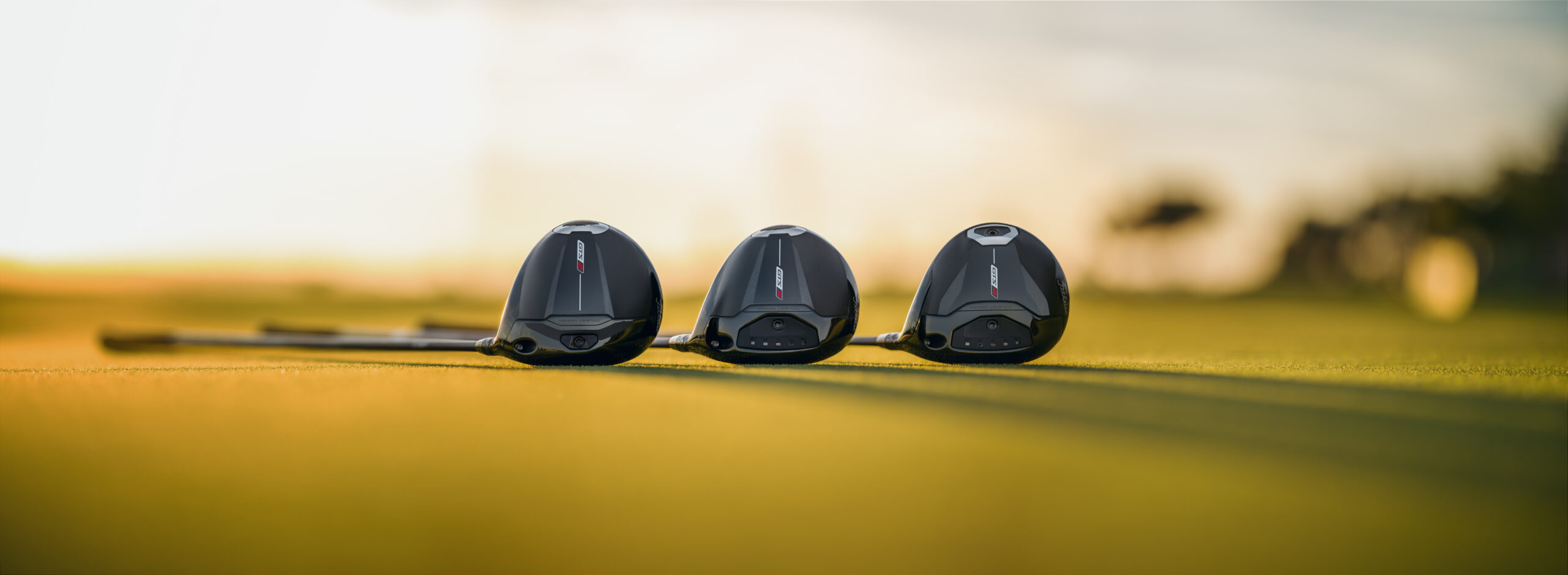
As with every new driver release, the marketing stories arrive quickly. With the new Titleist GTS lineup, there are three major talking points.

The first is the new Split Mass Frame construction. Titleist has now transitioned the thermoform crown into a much larger body structure, allowing engineers to move weight more aggressively throughout the head. This gives the GTS lineup much more extreme CG positioning possibilities than previous generations. The clearest example of this is that all three models now feature a dual weighting system, giving fitters significantly more control over CG depth and MOI positioning.

The second major story is the new SpeedSync face technology. This face design is intended to create more consistent speed retention across the face, particularly on strikes higher in the face where many modern players miss with the driver.

Finally, the accelerated aerodynamics package smooths the edges of the driver and lifts the tail section of the head to help the club move faster through the air.

We hear marketing claims every year. What we really appreciate about the GTS drivers is that Titleist did not completely reinvent what was already a very successful lineup with GT. Instead, they refined it, expanded fitting adjustability, and improved specific performance areas that mattered.

GTS4 Might Be the Story of the Year

The GTS4 could quietly become one of the biggest driver stories of 2026.

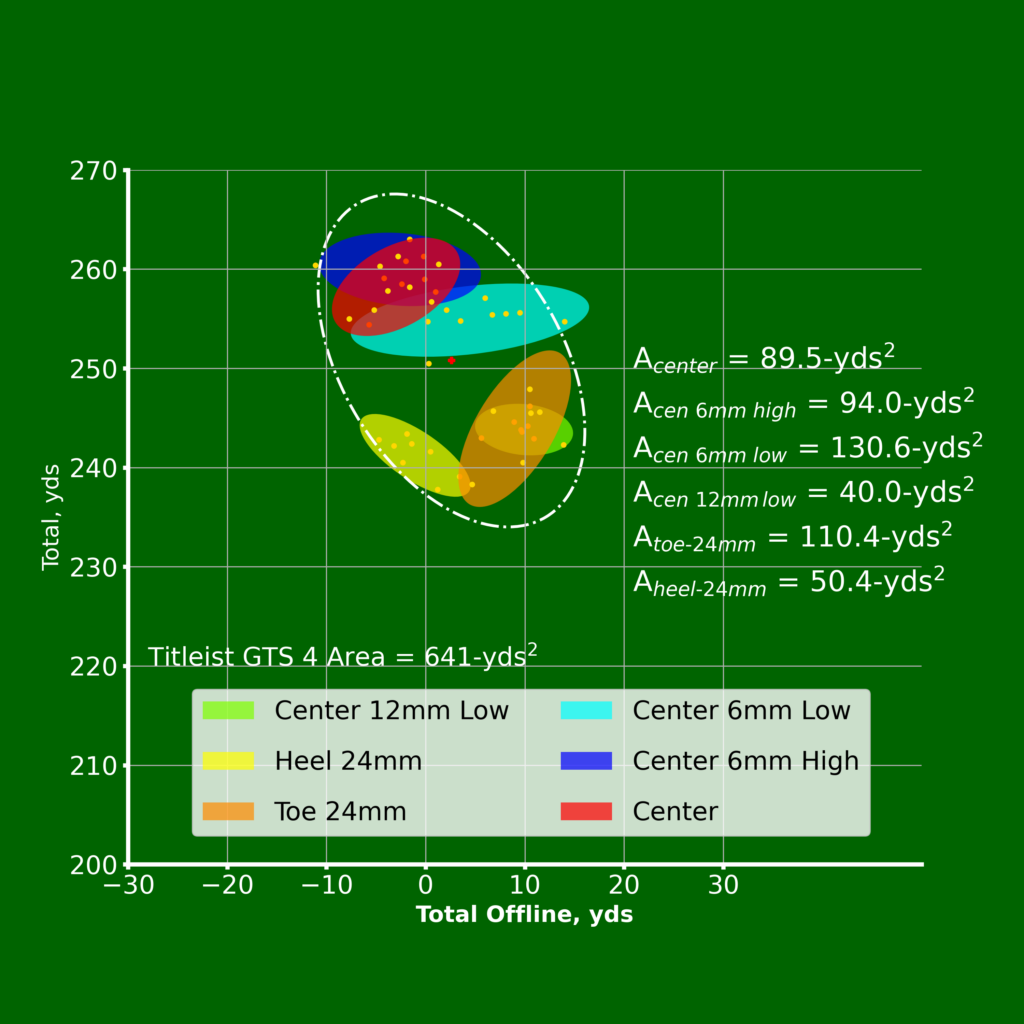
Moving away from the smaller, more demanding low spin designs of previous generations, the GTS4 now takes on a shape much closer to the old TSi3 style profile. The result is a driver that still maintains a low spin identity while becoming dramatically more forgiving.

This is where we saw some of the biggest improvements in our testing. The dispersion charts tighten considerably, making GTS4 a much more playable low spin option for a wider range of golfers. It still gives better players the ability to shape shots, but now with forgiveness levels that bring it much closer to the rest of the GTS family.

For tour players and stronger golfers looking for low spin without sacrificing stability, this could become one of the most important heads in the lineup.
GTS3 Adds Speed and Stability
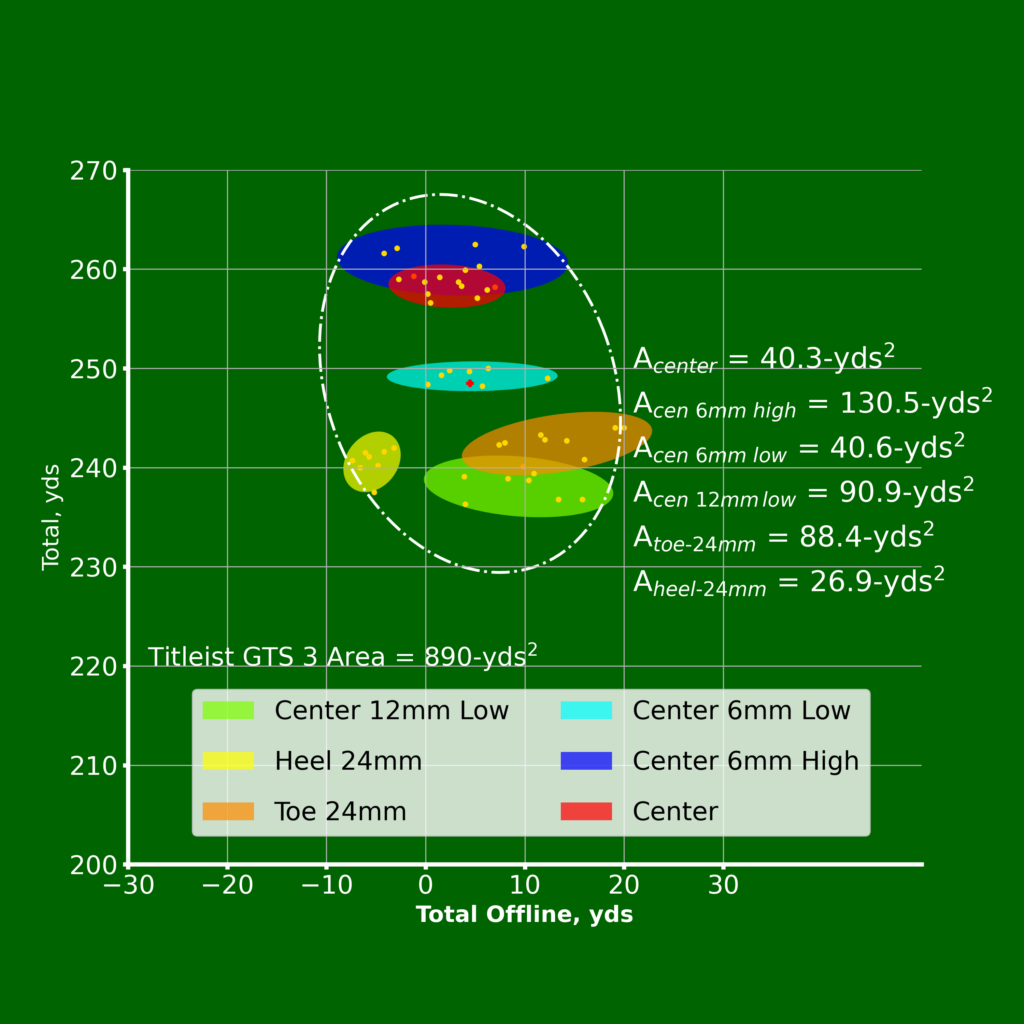
The GTS3 continues to sit in that ideal middle ground between workability and forgiveness.

With the improved aerodynamics and the expanded dual weighting system, fitters now have the ability to aft weight the GTS3 and create more forgiveness than prior generations ever allowed. In our 95 mph robot testing, we saw noticeable improvements in centerline consistency, especially on heel and toe strikes.

This is important because GTS3 players often prioritize control and shaping ability first. Now they are getting additional forgiveness without sacrificing that identity.

The combination of faster aerodynamics and improved weighting flexibility makes GTS3 a very complete modern driver.

GTS2 Continues to Offer Forgiveness

The GT2 has been one of our best-selling drivers for the last two years, so improving it was never going to be easy.

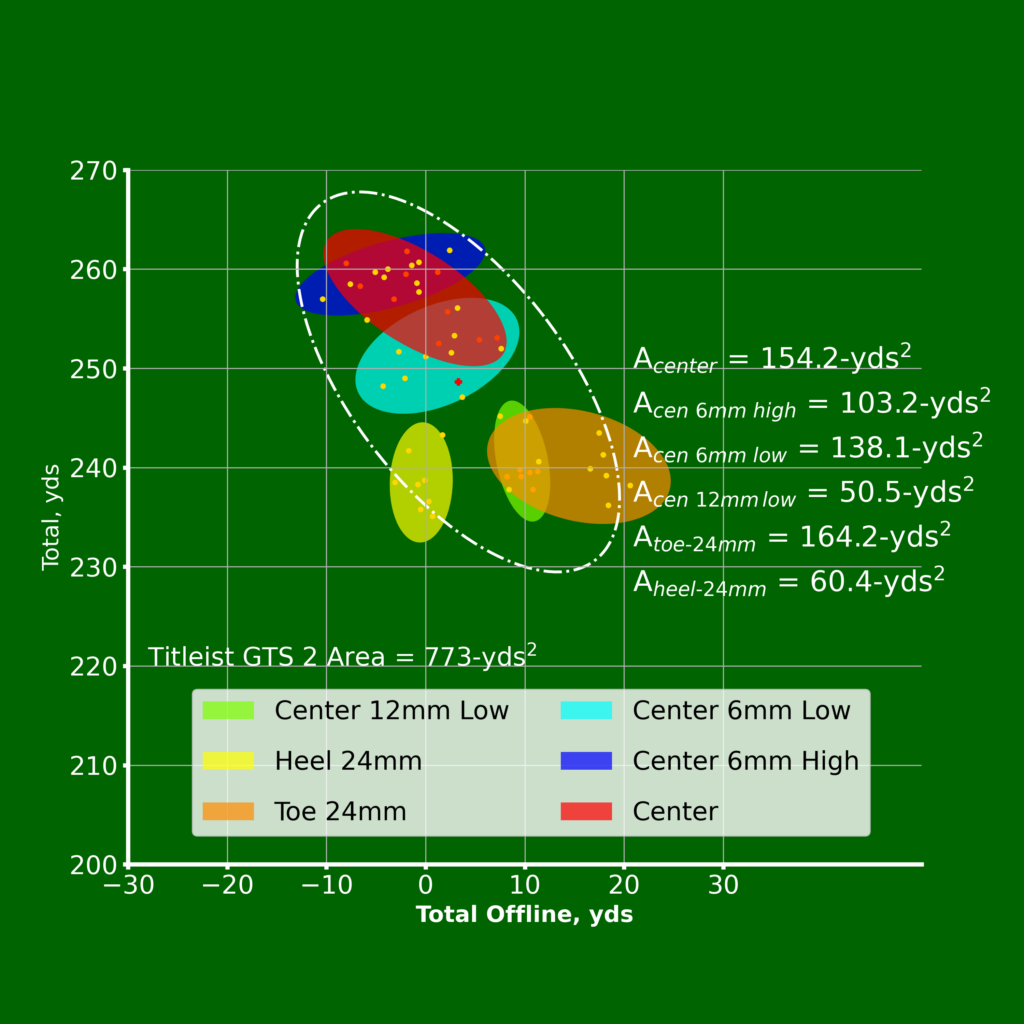
What we found with the GTS2 is that the new dual weighting system gives fitters the ability to create truly deep CG configurations for maximum forgiveness.

At the same time, when the weight is positioned forward, the driver actually becomes slightly more penetrating than the previous generation while still improving stability.

Toe misses are noticeably better and resist hooking more effectively, while heel strikes maintain a more consistent launch pattern.

From a raw data perspective, all three GTS models generally launched about one degree higher in our testing while maintaining very similar spin rates. In the GTS2 specifically, spin actually reduced slightly.

That combination of higher launch with stable or lower spin is extremely beneficial for many golfers. In our 95 mph robot testing, carry distance increased slightly, largely because launch conditions became more optimized.
The Real Story Is Fitting

The biggest takeaway with the GTS lineup is not one single technology. It is fitting flexibility.

Every driver now features a dual weight system combined with the SureFit hosel. With proper weight kits on site, fitters can now optimize:

• CG location

• MOI balance

• Launch and spin windows

• Face closure rates

• Shot shape tendencies

• Overall forgiveness profiles

Finding the perfect combination of hosel setting, CG placement, and MOI balance has never been more important.

Titleist had a difficult task ahead of them. The GT lineup was already extremely good. Instead of chasing radical redesigns, they refined the package, improved fitting versatility, and brought the lineup into a new era of adjustability.

In our opinion, this new GTS lineup is a fitter’s dream.

The challenge for golfers in 2026 is that every major manufacturer now has an excellent driver lineup. There are no bad products anymore. Every driver has its own nuances, and every golfer needs a different balance of speed, launch, spin, forgiveness, and shot shape.

That means fitting matters more than ever.

Book your Cool Clubs fitting today and find out which GTS setup is actually right for your game.

The Truth About Hybrids

Our First Ever Hybrid Test Reveals What Really Matters

For the first time, we’ve taken a full lineup of ‘4 hybrids (21 to 23 degrees)’ from every major manufacturer and tested them under the same conditions.

This is the start of our hybrid testing, and even at our first test speed, the results are already telling a very clear story.

We tested at 85 mph club speed, which fits directly into our standardized testing matrix across the bag. Driver at 95, fairway at 90, hybrid at 85, and irons at 80. This allows us to evaluate performance in a way that actually reflects how a real player swings through the set.

Not All Hybrids Are the Same

One of the biggest misconceptions in golf is that clubs labeled the same must perform the same.

That is not the case here.

Across the category, 4 hybrids ranged from 21 to 23 degrees of loft, which immediately introduces differences in launch, spin, and distance. So while they sit in the same slot in the bag, they are not delivering the same ball flight.

Distance Is Closer Than You Think

When optimized for this speed, the total distance difference between the longest and shortest hybrid in the test was only about seven yards.

The standout distance performers included:
– Ping G440
– Titleist GT2 and GT3
– Quantum Max

But the key takeaway is simple. Distance alone isn’t enough to separate these clubs.

Spin and Flight Tell a Bigger Story

If you look at raw spin numbers, the Titleist GT2 and GT3 produced the lowest spin. These are your more penetrating, lower flight hybrids.

However, when we look deeper at spin relative to launch “SpinLaunch”, a different standout appears.

The Quantum Max delivered the lowest spin per degree of launch. It launches higher than most but does not add excessive spin, creating a very efficient high flight window.

This is an important distinction. High launch with controlled spin is often what players need to maximize carry and stopping ability.

Stopping Power Comes From Descent

Most players rely on hybrids to land softly into greens. From a performance standpoint that comes down to land angle.

The best performers for stopping power in this test were:
– Cobra OPTM
– Qi4D Max

These produced the steepest descent angles, making them strong options for players who need their hybrid to hold greens consistently.

Dispersion Is Where the Real Differences Show Up

While distance and spin numbers are important, dispersion tells you what actually happens on the golf course.

The most consistent hybrids in this test in terms of dispersion were:
– Qi4D Max
– Ping G440

These produced the tightest overall groupings and the most predictable outcomes.

At the other end, we saw much wider dispersion patterns from certain heads, especially when the strike moved away from the center. (See Data Below)

Strike Location Change Everything

One of the most important insights from this test is how each hybrid performs on low face strikes.

This is where the separation between clubs becomes very clear.

When you isolate center strikes, several heads perform extremely well, including:
– Qi4D
– Quantum Max
– GT2 and GT3

But once the impact drops low on the face, dispersion increases dramatically in some models, while others remain far more stable.

This highlights a key point for some players.

Not all forgiveness is created equally. Some hybrids are significantly better at protecting ball speed and direction on thin strikes.

The Takeaway

Every hybrid in this test does something well. Some are built for
– Lower spin and penetrating flight
– Higher launch efficiency
– Maximum stopping power
– Tight dispersion and consistency

But none of them do everything the same. The difference is not in the perfect shot, it is in what happens when you miss it.

Explore the Full Data

This is just the start of our hybrid testing.

We have included the full dispersion charts below for each model so you can see exactly how they compare.

If you are choosing a hybrid, the goal is not to find the longest one.

It is to find the one that performs best for your strike pattern and your ball flight needs.

The Dispersion Charts

Book Your Long Game Fitting Today

Comparing Two Oddly Similar Golf Clubs…

Mizuno Pro M15 vs Ping i540

Two of the best irons in the world… but what actually separates them?
Off the back of huge engagement on our YouTube Channel, one questions kept coming up from the Cool Clubs Community:
How do the Mizuno Pro M15 and Ping i540 really compare?
At first glance, this looks like a simple comparison, But once we dug into the data, it turned into something much more interesting.

On Paper, They Are Almost Identical

When you look at the manufacturer specs, these two irons are nearly twins.

– Similar loft and lie packages
– Very similar blade length from heel to toe
– Comparable top-line thickness
– Nearly matching offset numbers

Even when we moved beyond spec sheets and into 3D scanning, the story stayed the same.

From a shape and geometry standpoint, these clubs live in the same category.

Interestingly, while the Ping i540 may look slightly larger to the eye, our scans show that the Mizuno actually has a slightly larger sole footprint. The Ping reduces its effective footprint through camber and shaping in specific areas, rather than outright size.

Then one number jumped out.

The One Spec Difference That Matters… Or Does It?

Using our 3D measurement method, we found:

Ping i540 has 5.8 degrees more bounce than the Mizuno Pro M15

That is a meaningful difference.
Naturally, you might expect that to create a clear separation in performance. So we tested it.

Robot Testing: Where Things Get Interesting

We put both irons through our robot testing at 80 miles per hour, looking at performance across multiple strike locations.

Off-Center Performance

The first thing that stood out: They are incredibly similar.

Both irons produced tight dispersion patterns across the face.

– M15 total dispersion area: 57 Yards Squared
– i540 total dispersion area: 72 Yards Squared

Yes, the Mizuno is slight tighter overall, but both are exceptionally controlled.

Center Strike Differences

When we isolated center strikes, subtle differences began to appear.

– Ping i540 launched higher
– Ping i540 spun slightly less
– Mizuno produced more RPM per degree of launch

But here is the key point: They still delivered almost identical peak height and landing angle.

So while the delivery is different, the end result is effectively the same.

Distance: Not the Deciding Factor

We then looked at carry distance.

– Mizuno Pro M15 was about 2.5 yards longer

That is measurable, but not meaningful in a fitting context. Which raises a bigger question:

Are golfers really chasing distance in irons… or control?

So What Actually Separates Them?

After all the data, testing, and analysis, here is the truth:

– It is not loft
– It is not shape
– It is not forgiveness
– It is not distance
– It is not even ball flight in a meaningful way

These two irons are far closer than most golfers would ever expect.

Even the 5.8 degrees of additional bounce in the Ping does not create a clear winner. It simply means that they will interact with turf differently depending on your delivery.

Taking It One Step Further

The robot gave us an incredible amount of insight, but numbers alone never tell the full story.

So we took this one step further.

We brought both irons into the Cool Clubs hitting bay to see how they perform in the real world, with real swings, and real delivery differences.

Because ultimately, that is where the separation happens.

Click here to watch the full YouTube deep dive and see these two irons go head to head

The Real Answer

This is exactly why our community has been so interested in this comparison.

Because when two irons are this close, there is only one way to separate them:

A proper fitting.

The right answer is not which iron is better.

The right answer is: Which iron is better for you.

Ready to Find Out?

If you are serious about your iron performance, guessing is not good enough.

Book your Cool Clubs iron fitting today and let the data decide.

Introducing the Quantum TI Fairway Wood

Key Takeaways from the Data

With the latest addition to the Quantum lineup, Callaway has introduced a new titanium fairway wood designed to push performance even further.

Looking at the dispersion data and key performance numbers, there are some very clear differences between the three models that golfers should understand before choosing what fits their game.

Quantum Max

The Quantum Max is built for stability and ease of launch.

From the data, it produces tighter dispersion than the TD and significantly reduces the penalty on off centre strikes. It also trends toward higher launch and spin characteristics, making it a strong option for players who need help getting the ball airborne or want more stopping power into greens.

For golfers with moderate speed or those playing higher lofted fairway woods, this is a very reliable and playable option.

Quantum TD (Triple Diamond)

The Quantum TD performs exactly as you would expect from a more compact, player focused design.

While center strike performance is strong, the data shows a significant increase in dispersion on heel and toe strikes. This means it relies heavily on consistent strike location to deliver its best results.

It also shows the most left side bias in the dataset, making it the most workable head for players who like to shape the ball. Combined with its lower spin profile, it is well suited to stronger players looking to flight the ball down or control trajectory in the wind.

Quantum Ti

The new Quantum Ti stands out immediately in the data.

It produces the highest carry and ball speed from center strike, but more importantly, it delivers the tightest overall dispersion of the three models. Across both left to right and front to back consistency, it shows the smallest spread, particularly on low face strikes and heel misses.

Spin sits in a mid to low window, giving a strong balance of distance and control.

What separates it is not just distance, but how well it maintains performance across the face. The difference between center strikes and mishits is significantly smaller than the other models.

The Real Story

All three models perform very similarly when struck from the center.
The difference comes from when you miss.

– The Quantum TD shows the largest increase is dispersion
– The Quantum Max improves stability and launch
– The Quantum Ti delivers the tightest overall pattern with the highest speed

Final Thoughts

The Quantum Ti is a standout addition to the lineup.

It combines speed, distance, and consistency in a way that is clearly reflected in the data. For players looking for performance without giving up control on mishits, it offers a very strong option.

Get Fit

Every player delivers the club differently, and the right fairway wood depends on how you strike it.

Make sure you test the Quantum Ti, along with the full lineup, in a Cool Clubs long game fitting.

Book your fitting today: coolclubs.com

Driver Fitting: Why Cool Clubs Delivers the Most Advanced Fitting in Golf

What is a Driver Fitting?

A driver fitting is a process where a golfer is matched with the optimal clubhead, shaft, length, and specifications to improve distance, accuracy, and consistency based on their swing and goals.

At Cool Clubs, this process goes far beyond basic launch monitor numbers. It is a fully integrated system built on over 20 years of research, engineering, and real world testing.

Why Cool Clubs Driver Fitting is Different

Most fittings focus on what the ball does.

Cool Clubs focuses on why it happens and how to improve it.

Cool Clubs has been in the industry for more than 20 years, with roots in Hot Stix and Custom Clubs of Connecticut. From the beginning, the philosophy has remained the same:

  • Data driven
  • Performance based
  • Brand neutral

What separates Cool Clubs is its independent research and development, something no other fitting company in the world operates at the same level.

This allows every decision in the fitting to be:

  • Measurable
  • Comparable
  • Repeatable
  • Built around performance, not marketing

How a Cool Clubs Driver Fitting Works

1. Start with your current equipment

Every fitting begins with what you actually play. You bring your current driver, which is measured using proprietary Cool Clubs technology and software.

This step is critical because it allows the fitter to understand:

How your swing interacts with your equipment
Not just the numbers, but the cause behind them

2. Define your goals

Before hitting balls, your fitter conducts a detailed interview. This identifies:

Distance vs accuracy priorities
Ball flight preferences
Miss patterns
Short term and long term goals

This ensures the fitting is built around you, not a generic outcome.

3. Use data to guide the first swings

Using Cool Clubs proprietary software and research database across all major manufacturers, the fitter can immediately narrow down the best starting options. This includes:

Clubhead center of gravity
Loft requirements
Impact tendencies
Desired ball flight

From your very first swings, the process is already optimized toward efficiency and performance.

4. Dial in clubhead performance

The fitter evaluates:

Launch and spin
Impact location
Face control
Directional tendencies

This allows precise selection of:

Head model
Loft
Adjustability settings

5. Optimize shaft using advanced motion analysis

This is where Cool Clubs separates itself from the rest of the industry. Using 3D Motion, we can analyze:

How you load and unload the shaft
How you accelerate through the swing
Not just clubhead speed, but how speed is created

This data is paired with our proprietary S3 shaft analysis system. This allows filtering shafts based on:

EI profile
Total Weight
Balance point
Torque

6. Build the club as a complete system

Between head and shaft selection, the fitter also optimizes:

Club length for speed and control
Head weight and balance
Shaft weight and profile
Grip weight and size

All components are matched together so the club functions as one unified system. This ensures:

Consistency
Efficiency
Control

7. Validate performance with real results

At this stage, you are already seeing measurable improvements. More importantly, you understand:

Why the performance is better
How the equipment is helping your swing

This is not a sales process. It is a performance experience.

8. Choose based on performance and budget

Cool Clubs uses a good, better, best approach. You are not pushed toward the most expensive option. Instead, you are guided through:

Performance differences
Price considerations
Brand preferences

This allows you to make a confident, informed decision

9. Exact build, guaranteed performance

Once selected, your driver is built to the exact specifications identified during the fitting, because here at Cool Clubs we do both the fitting and the building to ensure you are getting the exact club you need.

There is no breakdown between recommendation and execution
The club you receive matches exactly what you tested

This ensures the performance you saw in the fitting translates to the golf course.

Indoor or Outdoor Fitting Options

Cool Clubs offers both indoor and outdoor environments. This allows you to choose based on:

  • Preference
  • Availability
  • Testing conditions

Both environments are supported by the same advanced technology and fitting process.

Who Should Get a Driver Fitting?

A driver fitting could be ideal for a lot of different golfers such as:

Golfers looking to increase their distance
Players struggling with accuracy
Anyone who is unsure if their current driver fits their swing
Competitive players seeking maximum performance

Whether you are a beginner or an elite player, the process adapts to your level and goals.

Why Golfers Choose Cool Clubs

Cool Clubs has built it’s reputation through:

Proven Results
Advanced Technology
Independent Research
Word of mouth and referrals

This is why the company continues to expand into global retail locations, making high level fitting accessible to more golfers.

The Bottom Line

The driver fitting at Cool Clubs is not about trying different clubs. It is about:

Understanding your swing
Matching equipment precisely to you needs
Delivering measurable performance gains

That is what makes it one of the most advanced and trusted fitting experiences in golf

Ready to Get Fit?

If you are serious about improving your driving performance, a properly fit driver is one of the fastest ways to see results. Book your Cool Clubs driver fitting and experience the difference that a data driven fitting can make.

Book your fitting today: https://coolclubs.com/book-fitting/

Hybrid vs 7 Wood vs Long Iron

Which Club is Right For You?

Which club is right for your game? A Hybrid? A 7 Wood? Or maybe a long iron?

At Cool Clubs, we not only have the tools, but the best fitters in the game to help you understand which club truly fits your swing, your course conditions, and your personal needs. Because the reality is simple:

No club is perfect for every golfer.

That is why fitting exists.

But before you book a session, lets walk through some general idea to help you understand the benefits of each option.

The Rise of the 7 Wood

We are seeing a noticeable trend, especially on tour, toward 7 woods.

Now the obvious question is:

Does what tour players use really matter for the average golfer?

Often, not necessarily.

But in this case, it might.

A typical 7 wood sits around 21 degrees of loft. In today’s loft structures, that same number could represent a 4 iron, a 4 hybrid, or a 7 wood. Three clubs. Same loft. Completely different performance.

So what actually separates them?

It Starts With Head Design

If we compare the head shapes:

The iron had the shortest front to back dimension
The hybrid is slightly wider
The fairway wood is the widest

That difference is not just cosmetic. It directly impacts performance.

A wider head allows the center of gravity to sit lower. A lower center of gravity helps the ball launch higher and spin more easily.

What does that mean in practical terms?

More Launch. More Spin. More Carry Distance.

For many golfers, that is a huge advantage. But not for everyone.

Speed and Launch

Can a 4 iron launch as high as a 7 wood?

No.

Can it be swung as fast?

Also no.

Fairway woods are built with longer shafts and lighter head weights. They also use smaller tip diameter shafts that help promote higher launch. The result is simple:

More speed plus more launch equals more carry.

For golfers who struggle with speed or consistent contact, this combination can transform long approach shots.

Forgiveness and Stability

As head size increases, stability increases.

In theory, a mishit with a fairway wood will retain more ball speed and stay closer to its intended start line when compared to a hybrid or a long iron.

That means:

Less distance loss on mishits
Less curvature offline
More consistent results

For the average golfer, that consistency matters far more than the ability to shape a perfect cut on demand.

Controlling the Landing

Most players use these clubs to hit into greens from longer distances.

Here is where trajectory becomes critical.

A long iron produces the lowest flight.

A hybrid sits in the middle.

A fairway wood produces the highest flight.

Why does that matter?

Because height gives you stopping power.

If you rely on the ground to release the ball toward the target, you are at the mercy of conditions. Wet fairways. Firm greens. Bunkers guarding the front. Water short. Uneven lies.

A higher flight allows the ball to land steeper and stop faster. That means you control where it lands and how far it rolls.

Control at the landing point is control over scoring.

So Is the 7 Wood Always Best?

Simply put, No.

If you play links golf, if you hit a high ball flight, if you need to chase the ball under the wind…

A long iron might be the better option for your game.

Hybrids sit directly between the two. and the name says it all. A hybrid blends characteristics of both irons and woods.

Hybrids can offer:

More launch than an iron
More workability than a fairway wood
Better performance from uneven lies or rough

Some players have struggled with hybrids in the past. But modern adjustability and proper fitting solve most of those issues. At Cool Clubs we see it everyday.

Forgiveness vs Creativity

Fairway woods tend to be the most forgiving. That stability can slightly reduce shot shaping ability.

Hybrids and long irons allow more creativity and workability. Skilled players may prefer that flexibility.

The question is not which club is better. The question is what do you need more:

Consistency and predictability or shot shaping and trajectory manipulation.

For most golfers, the answer is consistency.

Why Tour Usage Matters Here

Tour players are increasingly choosing 7 woods because they can hit very high shots at long distances and stop the ball with control.

That benefit is not exclusive to elite players.

In fact, it may help average golfers even more.

More speed.

More height.

More forgiveness.

More stopping power.

That is a compelling combination.

The Real Answer is Fitting

This is not a pitch for a specific brand.

It is an invitation to understand your options.

The most important thing is proper gapping in your long game. Your long clubs must transition efficiently into your mid and short irons. Every yard matters.

There are benefits to all three options. But we are absolutely seeing strong performance trends toward 7 woods for a wide range of players.

If you are unsure which direction fits your game, we encourage you to come see us for a long game fitting.

Let our fitters analyze your speed, strike pattern, launch conditions, and course needs. We will help you build a setup that maximizes distance, control, and scoring potential.

Because the right club is not about trends.

It is about what performs best for you.

Book your fitting today: https://coolclubs.com/book-fitting/

JACK GILBERT 2/25/2026