

When golfers think about cavity back clubs versus blades, the conversation usually starts with irons.
Cavity backs offer more forgiveness.
Blades offer more precision.
Most golfers understand that trade off.
But what about wedges?
Surprisingly, this is a topic that rarely gets discussed, despite the fact that it may impact more golfers than almost any other equipment decision in the bag.
At Cool Clubs, we recently decided to put this question to the test.
Do the same cavity back benefits we see in irons carry over into wedges?
And if they do, how far down the bag should cavity back technology go?
The results were eye opening.
The Test
For this comparison, we took two very different approaches to wedge design.
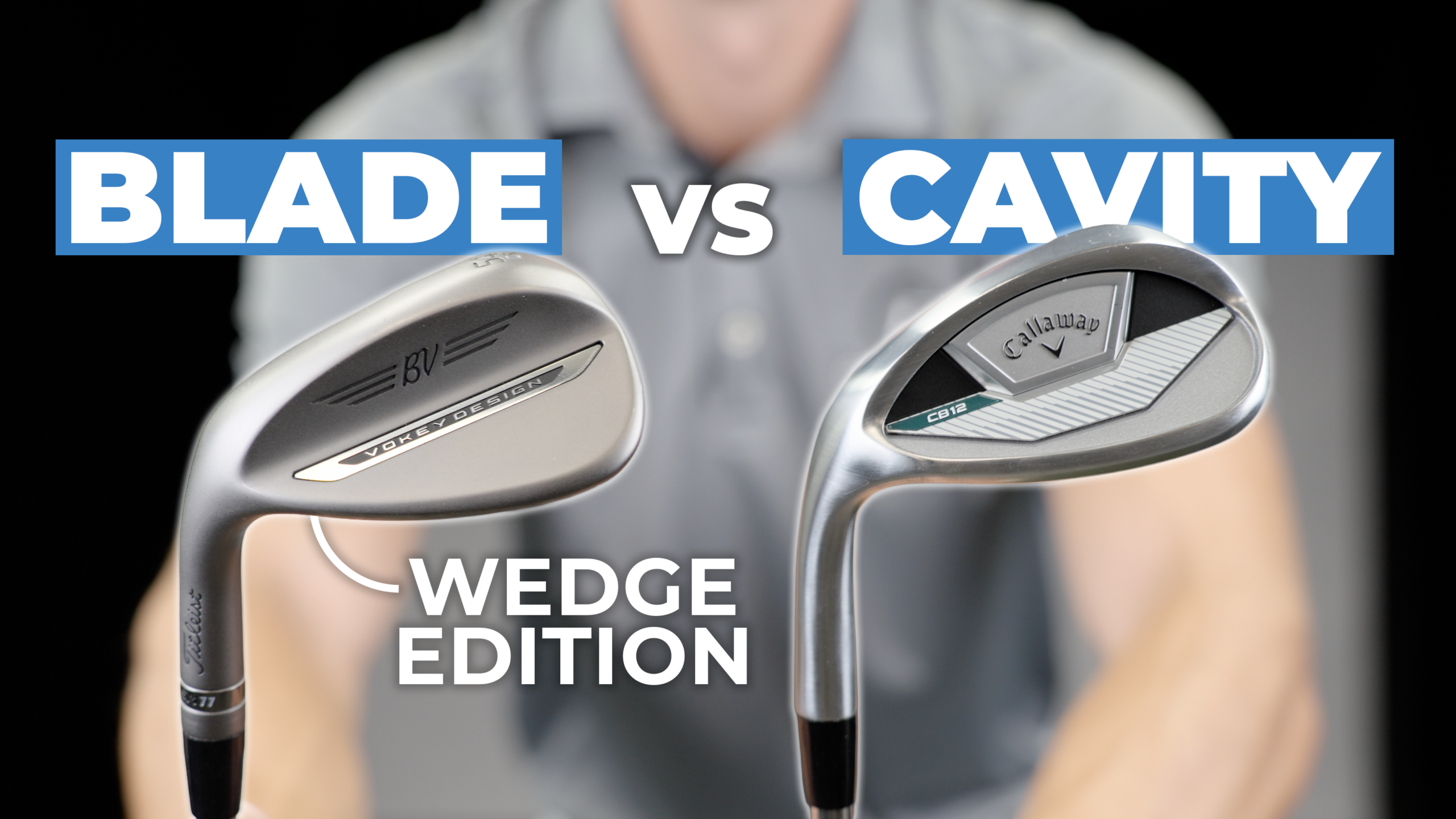
On one side was one of the most respected blade wedges in golf, the Titleist Vokey SM11 54°.
On the other was one of the most technology packed wedges on the market, the Callaway CB12 cavity back wedge.
At first glance, these clubs could not be more different.
One is compact, traditional, and designed with maximum shot making versatility in mind.
The other is larger, more forgiving, and built around helping golfers make more consistent contact.
The question was simple:
Does forgiveness matter in wedges the same way it matters in irons?
Why Most Golfers Already Play a Cavity Back Gap Wedge
Most quality club fittings already acknowledge the importance of forgiveness in scoring clubs.
When a golfer is fit into a modern game improvement or players distance iron set, most fitters will recommend a cavity back gap wedge.
Why?
Because it creates a smoother transition from the pitching wedge.
Distance gapping improves.
Confidence improves.
The club looks familiar at address.
Full swing performance remains consistent.
But what happens once we move into the sand wedge and lob wedge?
Traditionally, most golfers immediately transition back into blade wedges.
That’s simply how the industry has operated for years.
But should it?

The Results Were Clear
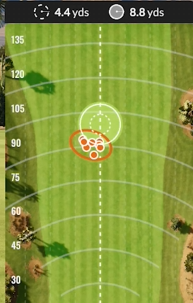
Our testing showed a very clear trend.
When impact quality started to vary, the cavity back wedge maintained carry distance significantly better than the blade wedge.
This was true even on shorter wedge shots.
Interestingly, launch angles varied more with the cavity back wedge, but the resulting carry distances stayed remarkably consistent.
That matters.
A lot.
Most golfers are not trying to hit a specific launch angle with their 54 degree wedge.
They’re trying to hit the ball the correct distance.
When distance control improves, confidence improves.
And confidence often leads to lower scores.
Why Better Players Still Love Blade Wedges
That doesn’t mean blade wedges are going anywhere.
Far from it.
Elite players have different priorities.
Many highly skilled golfers manipulate trajectory constantly.
They flight wedges down.
They hit them high.
They hit soft cuts.
They hit little draws.
They use trajectory and spin to create specific landing conditions.
Blade wedges continue to offer tremendous versatility for players who have the skill to take advantage of it.
In many cases, those players are willing to give up some forgiveness in exchange for maximum control.
That trade off still exists.
Technology Changes the Equation
When you compare a blade wedge and a cavity back wedge, there is much more happening than simply adding forgiveness. Even if you match:
Loft
Length
Lie angle
Shaft
Swing Weight
The Clubs are still fundamentally different. Most cavity back wedges feature:
Low centers of gravity
Wider Soles
Increased perimeter weighting
More forgiving face designs
Meanwhile, blade wedges rely heavily on mass placement through the forging or casting process to create feel, spin, and versatility.
The design goals are completely different.
And the golfer each club serves is often completely different as well.
The Bounce and Grind Conversation
One area golfers absolutely need to consider is sole design.
Many cavity back wedges require wider soles to accommodate their technology.
That often results in higher bounce designs.
For some golfers, that’s fantastic.
For others, it can create challenges.
Players with steep attack angles who play softer conditions often benefit tremendously from wide sole, high bounce designs.
The extra forgiveness through the turf can be a major advantage.
However, golfers who play firm conditions, tight lies, or hardpan surfaces may need something more versatile.
The good news is that modern cavity back wedges are improving rapidly in this area.
The Callaway CB12 we tested featured a surprisingly versatile sole design that allowed for much more shot making capability than many golfers would expect from a cavity back wedge.
This is why fitting matters.
Not all cavity backs are created equal.
Which Wedge Is Right for You?
The answer depends entirely on your game.
If you’re a highly skilled player who manipulates trajectory and spin constantly, a blade wedge may still provide the ultimate toolset.
If you’re primarily focused on making solid contact, controlling carry distance, and improving consistency around the greens, a cavity back wedge deserves serious consideration.
What our testing proved is that cavity back wedges are no longer just a beginner’s option.
Modern technology has advanced to the point where many golfers can gain meaningful performance benefits without giving up nearly as much versatility as they once did.
The only way to know for sure is to test them.
Get Fit for Your Wedges
Wedges are scoring clubs.
Small differences can have a huge impact on your performance.
Whether you’re considering a traditional blade wedge, a modern cavity back design, or a blend of both, a proper fitting can help you understand exactly what works best for your swing, your course conditions, and your scoring goals.
Book your wedge fitting with Cool Clubs and discover the ideal wedge setup for your game.
You may find that the biggest game changer in your bag isn’t your driver.
It might be your sand wedge.
