

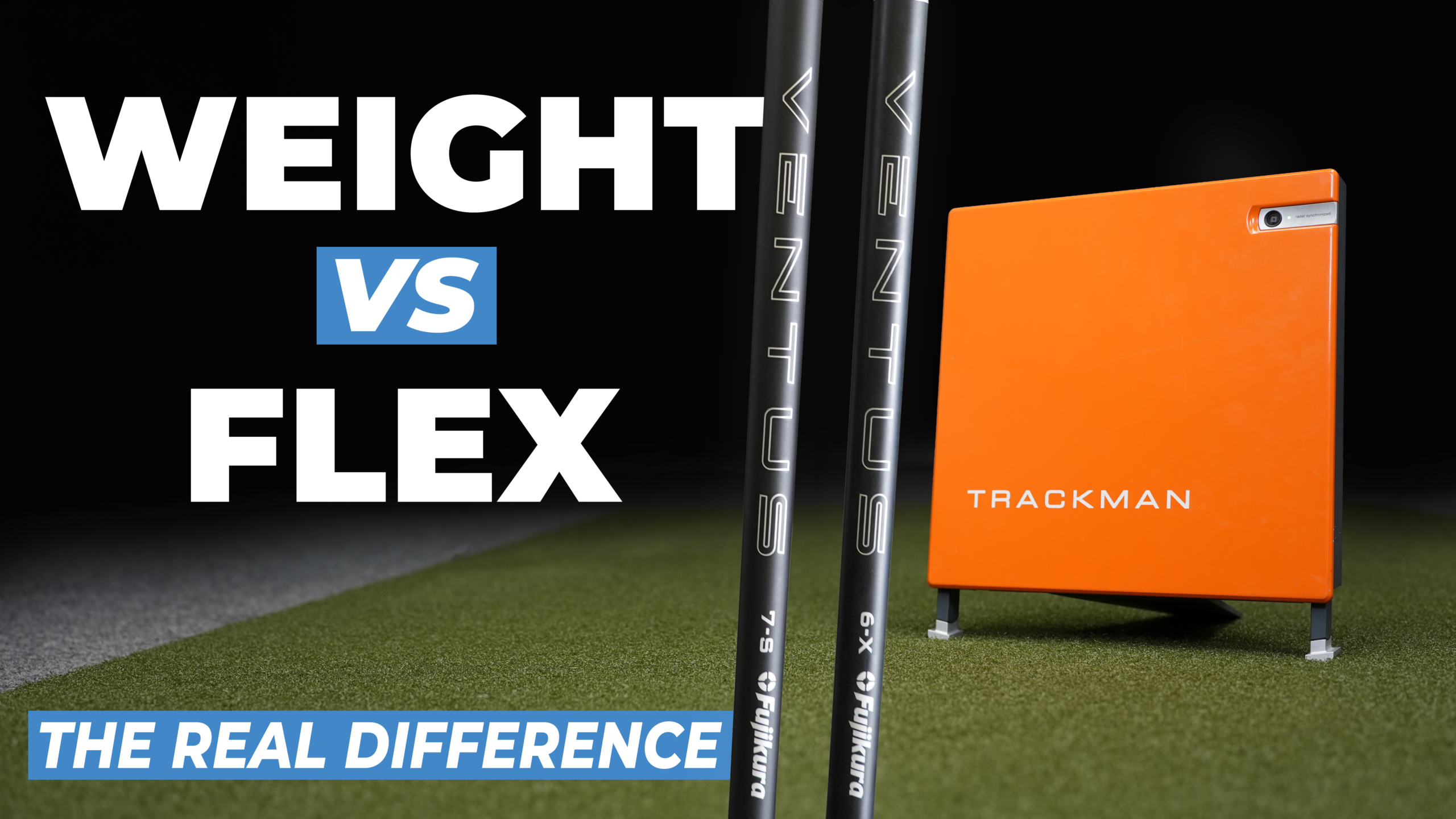
Golf shafts are confusing.
Walk into a retail store and you will see the same words everywhere.
Regular.
Stiff.
X Stiff.
But here is the problem.
Those words do not mean the same thing from one brand to the next.
A stiff shaft from one manufacturer may not measure anything like a stiff shaft from another. An X flex in one product line may perform more like a stiff in another. Even premium shafts are not always being measured with the same equipment, the same standards, or the same terminology.
So how is a golfer supposed to know what is actually right for them?
That question is exactly why Cool Clubs built something no one else in the industry had ever created.
A universal flex scale.
What Is a Universal Flex Scale?
A universal flex scale allows us to compare golf shafts on an apples to apples basis.
Not by the label printed on the shaft.
Not by marketing language.
Not by guessing.
By measured data.
Cool Clubs is the only company in the world that developed its own machine to capture everything we need to know about a golf shaft.

That includes:
EI curve.
Deflection.
Balance point.
Mass.
Torque.
Frequency.
Where the shaft bends.
How the shaft bends.
How the shaft compares to other shafts
Over time, we have measured and stored data on more than 30,000 golf shafts.
Pair that with more than 30 years of fitting knowledge, and you get the most complete shaft comparison system in the industry.
That is what allows Cool Clubs to compare a 60 gram stiff shaft from one brand to a 40 gram X flex from another and actually understand what is happening.
Not just what the label says.
Why Flex Labels Can Be Misleading
Most golfers think shaft flex is simple.
Stiff is stiffer than regular.
X is stiffer than stiff.
But that is not always how shafts measure.
Two shafts with the same flex label can feel completely different. Two shafts with different flex labels can sometimes work for the same player.
Why?
Because flex is not one single thing.
A shaft has weight.
Torque.
Balance point.
Tip stiffness.
Butt stiffness.
Midsection stiffness.
Overall bend profile.
How a player loads the shaft matters too.
That is why you cannot make the right decision by looking at one label.
You need to understand the entire shaft.
Why We Tested Weight vs Flex
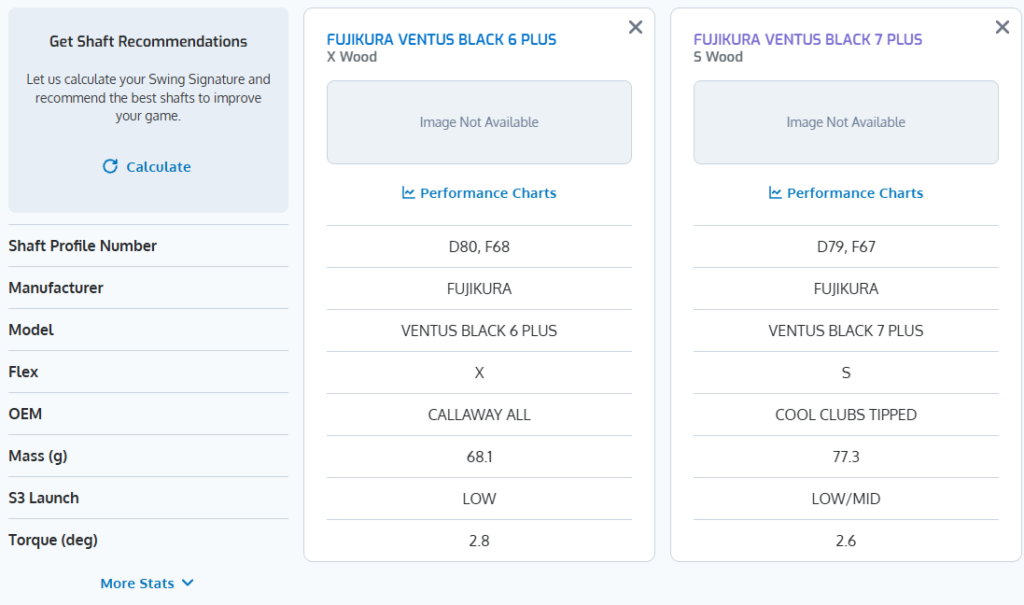
This is what led us to create a video around one of the most common questions in fitting:
What matters more, shaft weight or shaft flex?
To test it, Jackson compared two Fujikura Ventus Black Plus shafts.
A 60 gram X flex.
A 70 gram stiff flex.
On paper, most golfers would assume those are very different shafts.
One is lighter and labeled X.
The other is heavier and labeled stiff.
But on the Cool Clubs universal flex scale, both shafts show up as playable for a similar type of golfer when it comes to speed and shaft load.
That gave us the perfect opportunity to go deeper.
If both shafts can work for the same player, what actually makes them different?
What the Data Showed
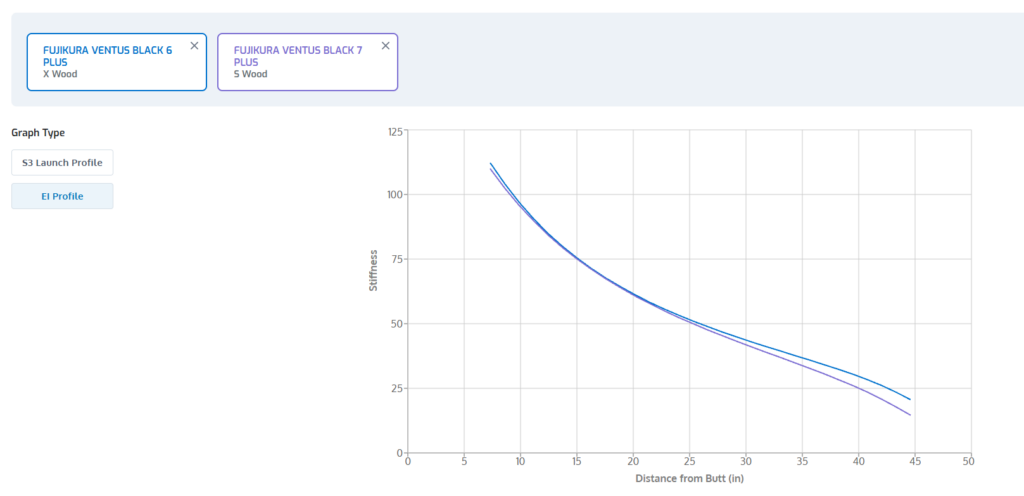
When you look at mass alone, the difference is clear.
The 60 gram shaft measured 68.1 grams.
The 70 gram shaft measured 77.3 grams.
That is a real difference in total weight.
The 70 gram shaft also had slightly lower torque, by about a quarter of a degree.
The EI curves, however, were almost identical, with one key difference: the 6X was stronger in the tip section.
Frequency was slightly higher in the 6X.
Balance point was slightly higher in the 7S.
So what does that mean?
It means there is always more going on than the number printed on the shaft.
The heavier shaft is not just heavier.
The X flex is not just stiffer.
Each shaft has its own full profile, and each part of that profile can influence what a player feels and how the club performs.
Why This Matters in a Fitting
This is where Cool Clubs technology becomes so powerful.
When a player tells us something feels too loose, too heavy, too boardy, too active, too light, or too hard to square, we are not guessing.
We can look at the data.
We can isolate the part of the shaft that may be causing that feel.
Is it weight?
Is it torque?
Is it balance point?
Is it tip stiffness?
Is it the midsection?
Is it how the shaft loads during the swing?
That level of detail helps us make better decisions.
It also helps golfers understand why one shaft works and another does not.
Weight vs Flex Is Not a Simple Answer
Golfers often say things like:
“I need something heavier.”
“I need something stiffer.”
“I need less torque.”
“I need an X flex.”
Sometimes they are right.
Sometimes they are describing a feel that comes from a completely different part of the shaft.
That is why fitting matters.
The right shaft is not just about weight.
It is not just about flex.
It is about how the entire shaft works with your swing.
Two shafts can both fit your speed and load profile, but still produce different feels, different timing, different face control, and different ball flights.
That is exactly what Jackson tested in the video.
Find the Shaft That Actually Fits You
At Cool Clubs, we are not fitting based on shaft labels.
We are fitting based on measured data, player feedback, ball flight, 3D motion capture, and decades of fitting knowledge.
If you want to know everything you can possibly know about your golf swing, your ball flight, and the shaft that is right for you, book a fitting with Cool Clubs.
Use the technology.
See your swing in 3D.
Understand your equipment.
And finally know which golf shaft helps you play better, and why.