

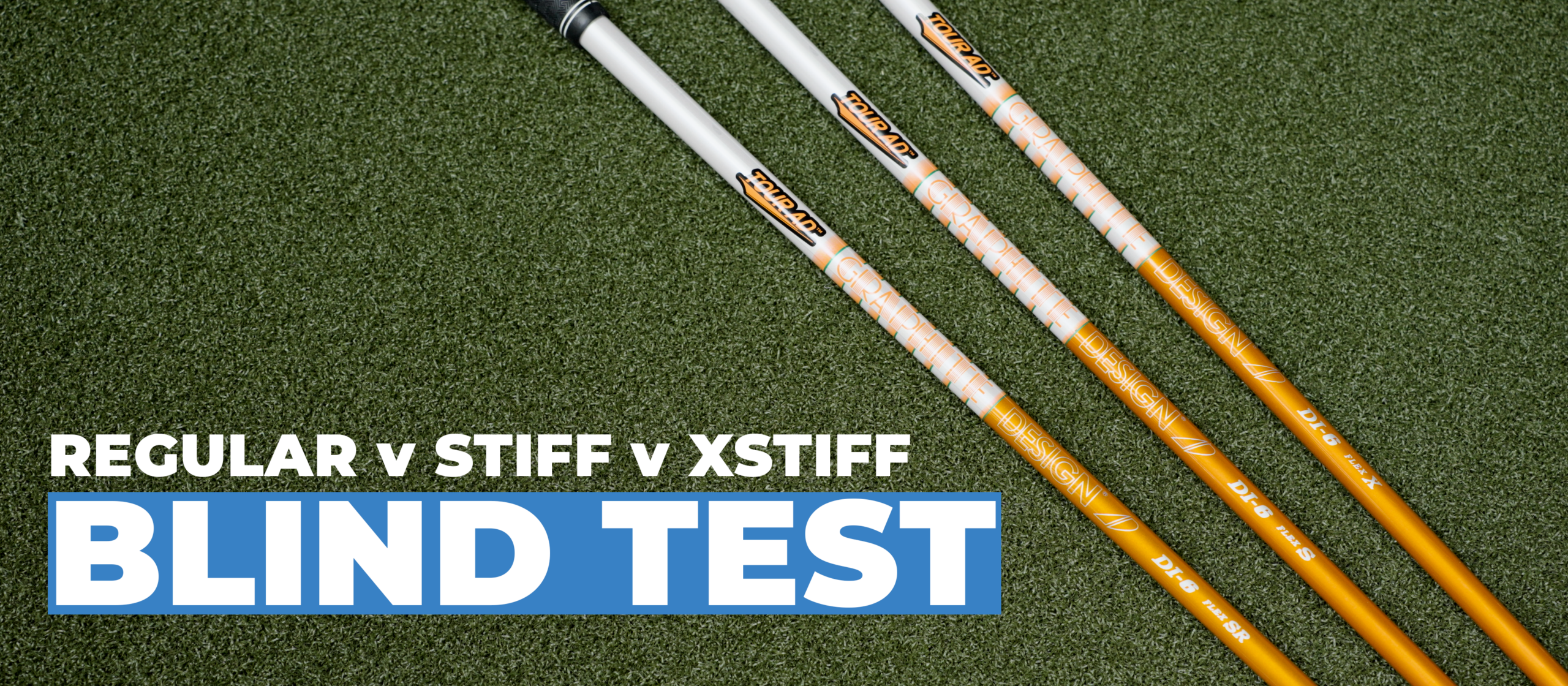
What if you forgot everything you thought you knew about shaft flex and simply let the results speak for themselves?
That’s exactly what we did in our latest blind test.
We took one of the most recognizable and successful shaft designs in golf, the Graphite Design Tour AD DI, and tested three different flexes: DI-SR, DI-S and DI-X.
Every shaft was built to exactly the same length and tested in exactly the same driver head. But we added one very important step.
We hid the shafts.
Each one was wrapped in a blank cover so the player had no idea which flex he was hitting. No labels. No preconceived ideas. No knowing whether the next shaft was supposed to feel softer or stiffer.
We simply let him hit golf shots.
Could He Tell the Difference?
We gave the player as many shots as he wanted with each shaft. There were two things we wanted to understand.
First, could he clearly identify the difference between the SR, S and X flexes purely through feel and performance?
Second — and perhaps more importantly — what would happen if we allowed feel, ball flight and the data to decide which shaft performed best?
That’s where this test became fascinating.
Our player generates plenty of speed and would traditionally be someone you might expect to fit into an X-flex shaft. Yet the results suggested that the S-flex was potentially the better-performing option.
Even more interestingly, despite the differences written on the shafts underneath those covers, the player couldn’t consistently identify which flex he was hitting.
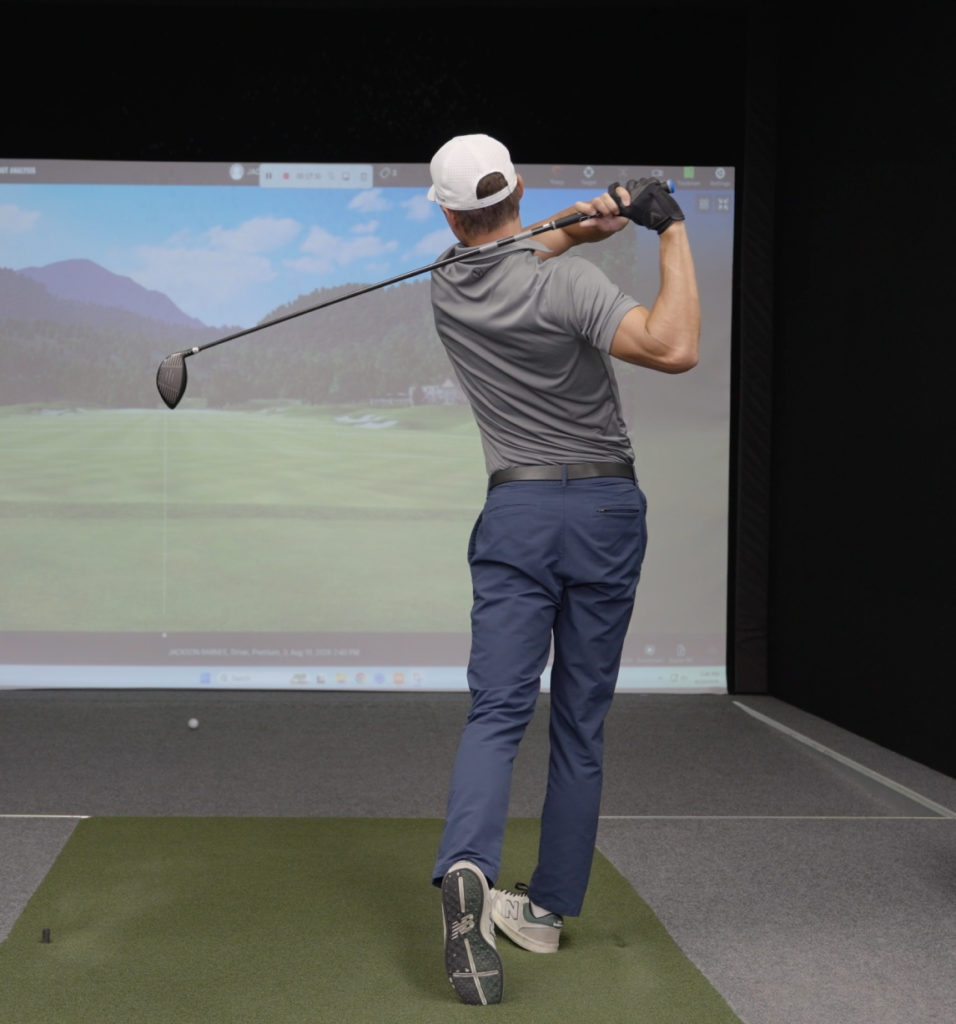
How Much Does Ego Influence a Fitting?

Our blind testing has started to expose something we think is incredibly important in club fitting: bias doesn’t only come from the golfer.
A player walks into a fitting with expectations.
“I need X-flex.”
“Regular is too soft for me.”
“I’ve always played stiff.”
But fitters have expectations too. Based on speed, delivery and experience, a fitter naturally develops an idea of what a golfer should play.
Those expectations can be useful. Expert guidance is an essential part of a great fitting. But what happens when you temporarily remove those assumptions and simply allow the golfer to hit?
The player can focus on the things only they can tell us: How does it feel? Do they like the ball flight? Do they feel comfortable swinging it? Does it produce the shots they want to see?
The fitter can focus on what the data tells us.
Together, those two pieces can lead us toward the answer without the name or flex printed on the shaft influencing the decision.
Swing Your Swing
That’s ultimately what we want golfers to do during a fitting.
Swing your swing.
Let the equipment do what it was designed to do. Give honest feedback about what you feel and what you see. Let the technology measure what actually happened. And let an expert fitter bring those pieces together.
Our fitting software continues to get better at understanding how products perform and which golfers they may work for. But the golfer remains the driving force behind the fitting.
Your feel matters.
Your ball flight matters.
The shots you need to play matter.
The golf courses and conditions you play most often matter.
The goal isn’t to leave with the flex you thought you needed when you walked through the door. It’s to leave with the equipment that helps you play your best golf.
Because ultimately, it doesn’t matter what’s written on the golf shaft.
It matters what you write on the scorecard.