

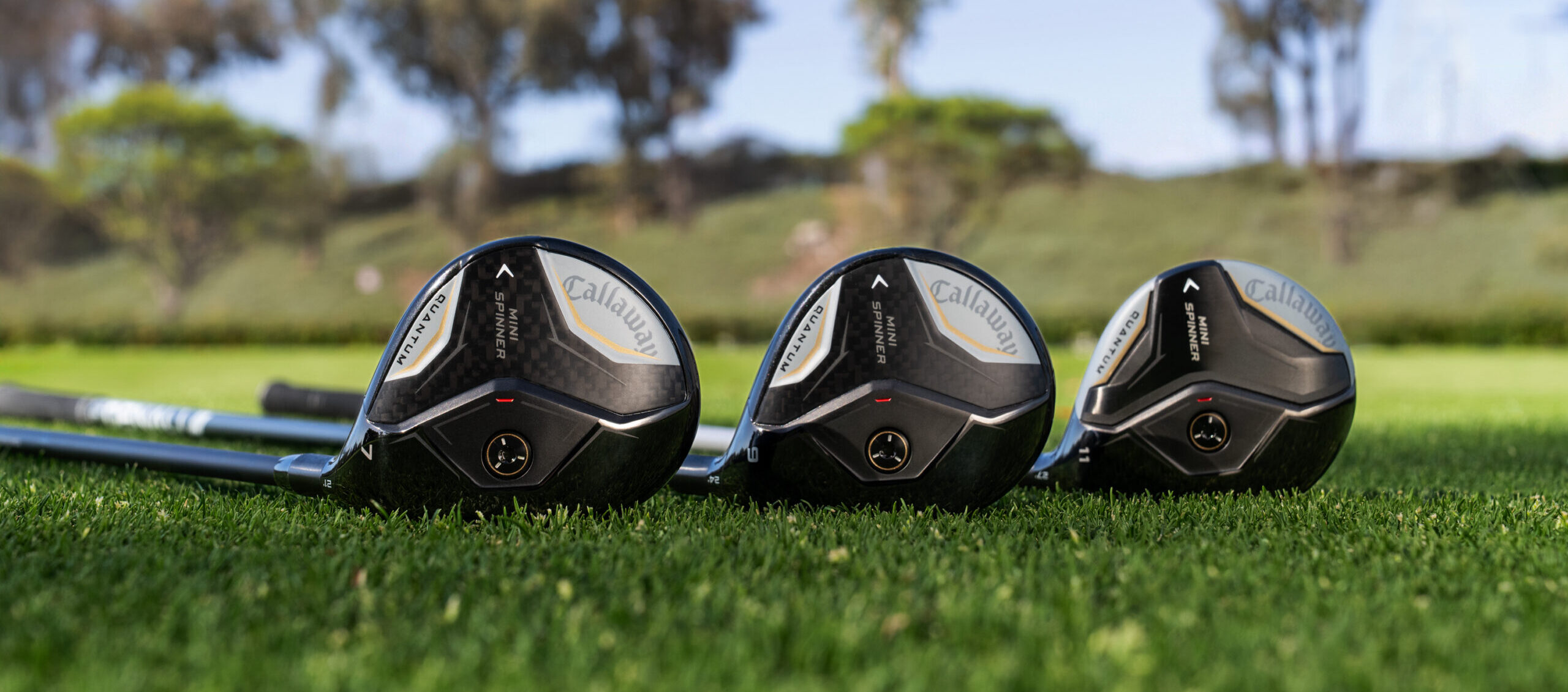
When Callaway launched the new Mini Spinner, one question immediately came to mind.
Where does it actually fit?
Today’s golfer has more long game options than ever before. Four irons, hybrids, utility woods, seven woods and now “Mini Spinners”. For many golfers, deciding what belongs in the bag has become just as difficult as hitting the shots themselves.
Rather than speculate, we decided to let the data answer the question.
Using the Cool Clubs ADC Robot, we compared the Callaway Mini Spinner against the 4 Iron, 4 Hybrid, Utility Wood, and Quantum 7 Wood using realistic club speeds and repeatable swings. The goal wasn’t simply to find the longest club. It was to understand how each club flies through the air, lands on the green, and ultimately helps golfers hit different shots.
The Family Starts to Make Sense
Looking at the data, a very clear progression appears.
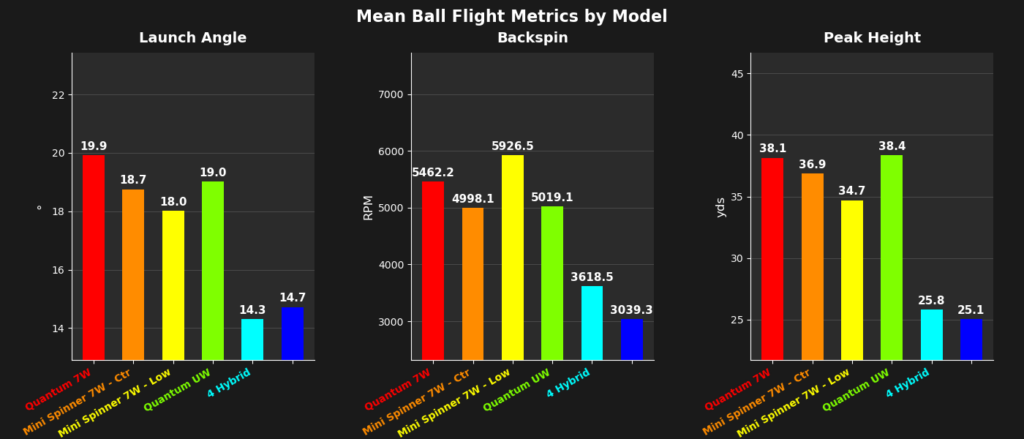
The 4 Iron produces the flattest trajectory with the least spin and the most rollout. It is designed to chase down the fairway and perform in windy conditions.
The 4 Hybrid adds roughly 600 rpm of spin while maintaining a very similar launch window. It lands slightly steeper and offers more forgiveness without dramatically changing distance.
Then comes the Utility Wood.
This is where the trajectory changes dramatically. Launch jumps nearly five degrees, peak height increases by more than 12 yards, and descent angle approaches 48 degrees. Rollout drops from almost 20 yards with the 4 Iron to just over 12 yards.
The Utility Wood is clearly designed to help golfers launch the ball higher and stop it faster.
So where does the Mini Spinner fit?
The Mini Spinner Is Not Just Another Fairway Wood
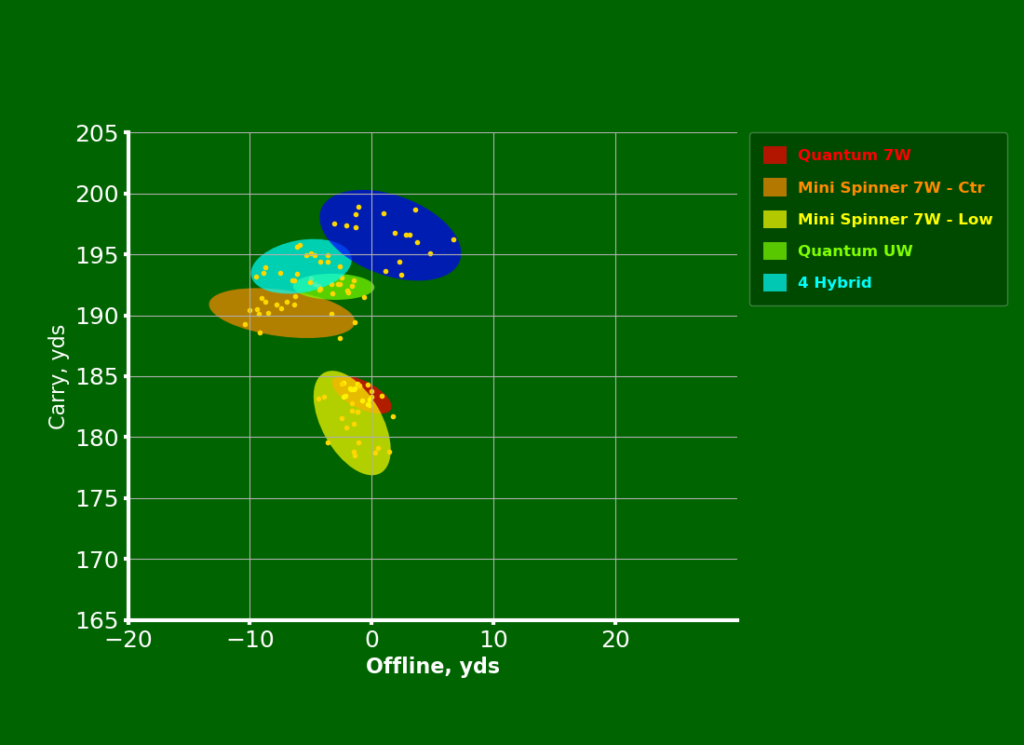
At first glance, the Mini Spinner’s center strike looked remarkably similar to the Utility Wood.
Launch, peak height, carry distance and rollout all sat within a very narrow window.
That initially left us wondering why Callaway would produce another club that appeared to overlap so closely.
The answer came after speaking with Callaway’s engineering team.
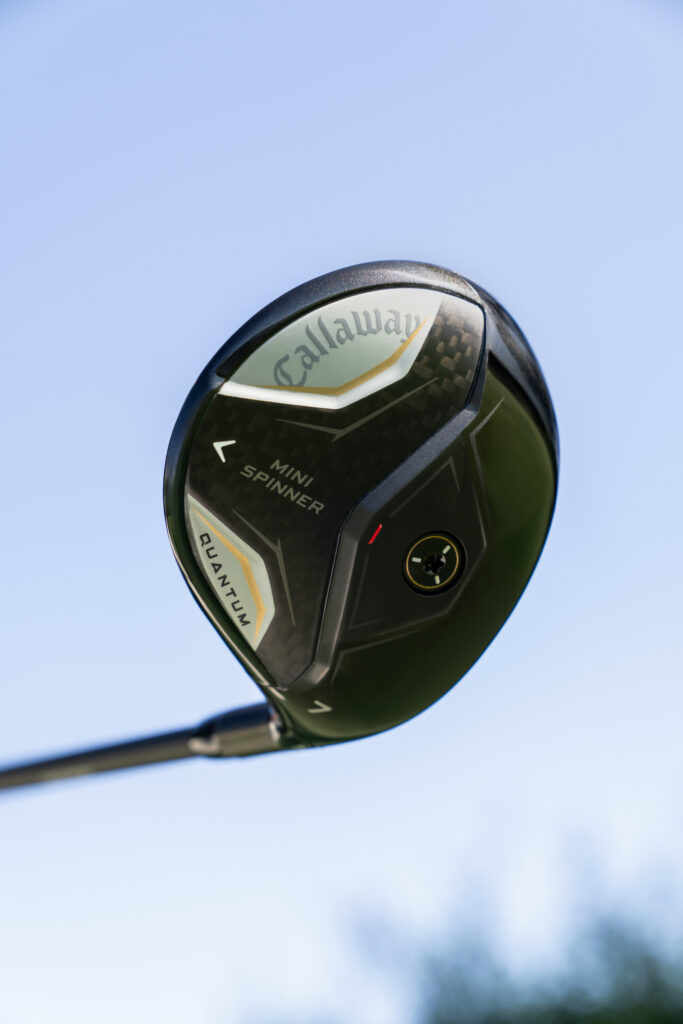
Unlike a traditional fairway wood, the Mini Spinner features a noticeably deeper face. Because of this design, Callaway expects many golfers, even better players, to strike the ball slightly below the true geometric center of the face during normal play.
That prompted us to run another robot test.
Instead of striking the exact center of the face, we moved impact just six millimeters lower.
The results completely changed our understanding of the club.
The Shot It Was Designed For
The lower impact location produced almost 5,930 rpm of spin, the highest spin of any club in this category.
Interestingly, launch angle remained very playable, while descent angle stayed close to 47 degrees and rollout remained just over 11 yards.
This tells us something important.
The Mini Spinner wasn’t simply designed to produce maximum distance.
It was designed to produce a very specific golf shot.
A player wanting to attack long par fives, hold firm greens from over 200 yards, or replace a long iron without watching the ball bounce through the back now has another option.
Instead of relying on perfect center contact to achieve this flight, the deeper face actually works with the strike pattern Callaway expects many golfers to produce.
That is an intentional piece of engineering rather than an accident.
The Importance of Roll
One of the most revealing numbers from our testing wasn’t carry distance at all.
It was rollout.
The 4 Iron rolled approximately 20 yards after landing.
The 4 Hybrid rolled around 18 yards.
The Utility Wood and Mini Spinner rolled roughly 12 yards.
The lower strike Mini Spinner rolled only about 11 yards while generating the highest spin in the test.
Those eight or nine yards of rollout represent the difference between running through the back of a green and stopping next to the flag.
For many golfers, that’s far more important than gaining a couple of extra yards of carry.
What We Learned
The Mini Spinner isn’t replacing the Utility Wood.
It isn’t replacing the 7 Wood.
And it certainly isn’t replacing a Hybrid.
Instead, Callaway has created another launch and spin window that gives golfers, particularly stronger players, another way to control trajectory and stopping power.
The robot testing reinforced something we talk about all the time at Cool Clubs.
Distance is only one part of the equation.
How high the ball flies, how much it spins, how steeply it lands, and how far it rolls after landing often have a much bigger influence on scoring.
The Mini Spinner may look like another option on the shelf.
The data shows it’s actually another shot.