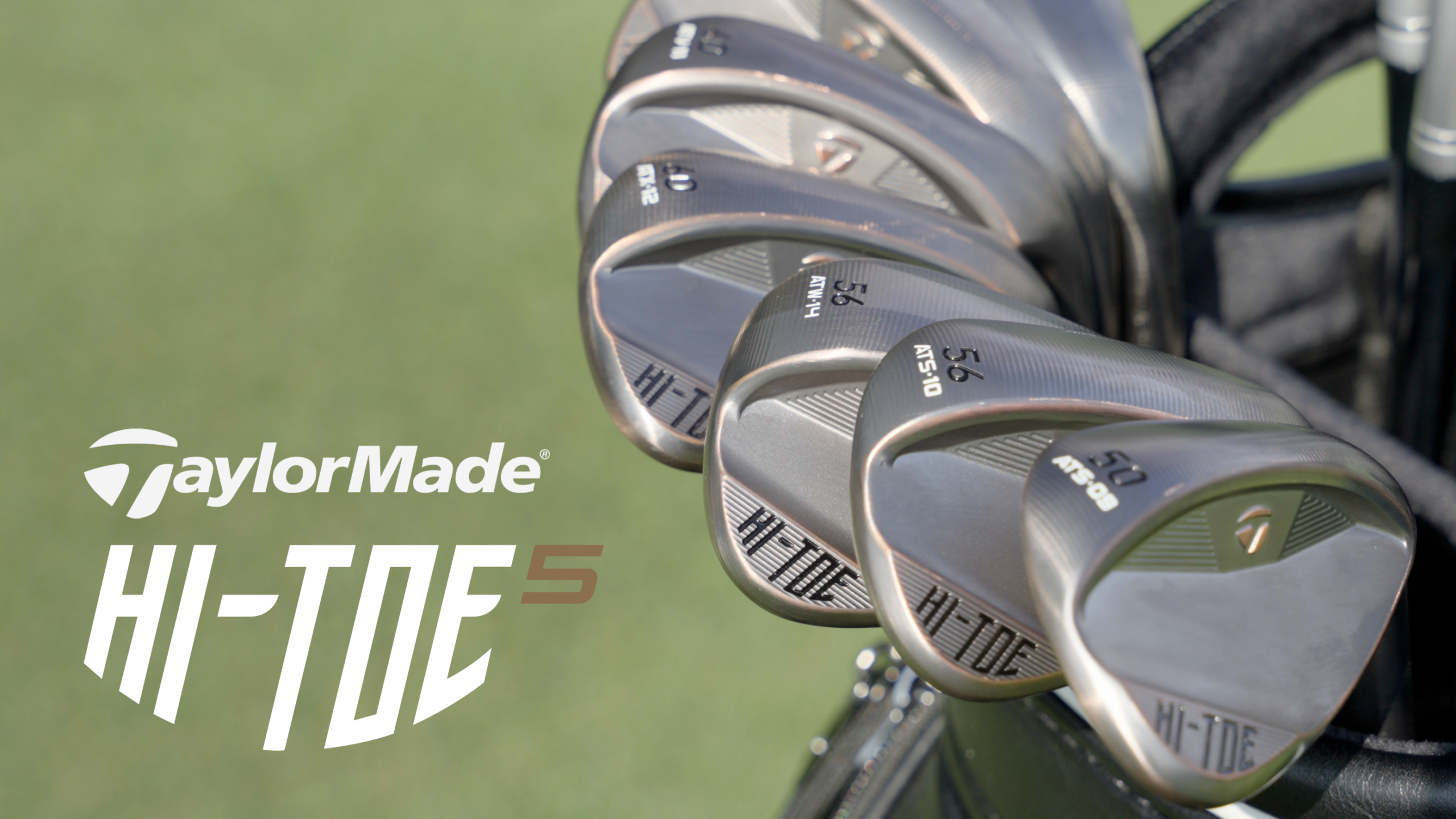
TaylorMade Hi-Toe 5 Wedges: Control and Consistency

TaylorMade’s Hi-Toe wedge has always been about giving golfers creativity around the greens. With the new Hi-Toe 5, TaylorMade has taken that idea further, combining a completely forged construction, a striking new look and five distinct grind options designed to handle different swings, lies and course conditions.

We headed to TaylorMade’s Kingdom in California to put the new Hi-Toe 5 through its paces. Jack was joined by one of the engineers behind the product to break down not only what has changed, but something that can be far more important when choosing a wedge: which grind should you actually be playing?

The Big Story: Forged Feel

The first thing that separates Hi-Toe 5 is feel.

TaylorMade has moved to a fully forged construction using soft carbon steel, with precision geometry designed to produce premium feel and feedback from a variety of lies and conditions.

That forged construction is something you notice quickly when you start hitting different shots around the green. There is a softness and responsiveness at impact that gives Hi-Toe 5 a much more premium sensation, particularly on the partial shots where feedback becomes so important.

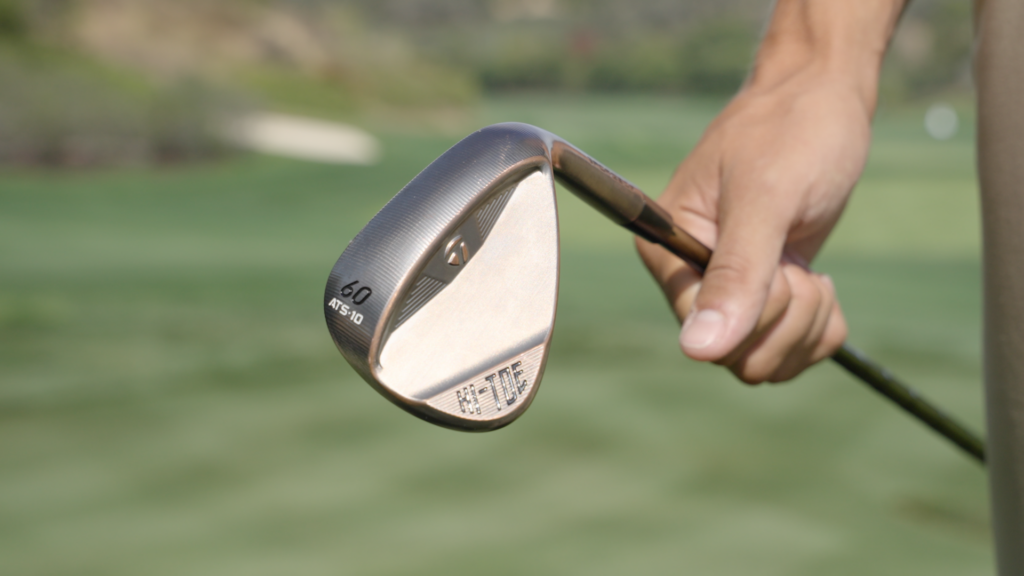
Combine that with the new visual package and TaylorMade has produced a wedge that looks every bit as premium as it feels. The larger overall profile, expanded toe area and full-face grooves are designed to inspire confidence when you start manipulating the face around the greens. TaylorMade has also pushed the center of gravity higher to help create a lower, more penetrating flight while maintaining high spin and control.
Spin When Conditions Aren’t Perfect
Of course, feel is only part of the equation.

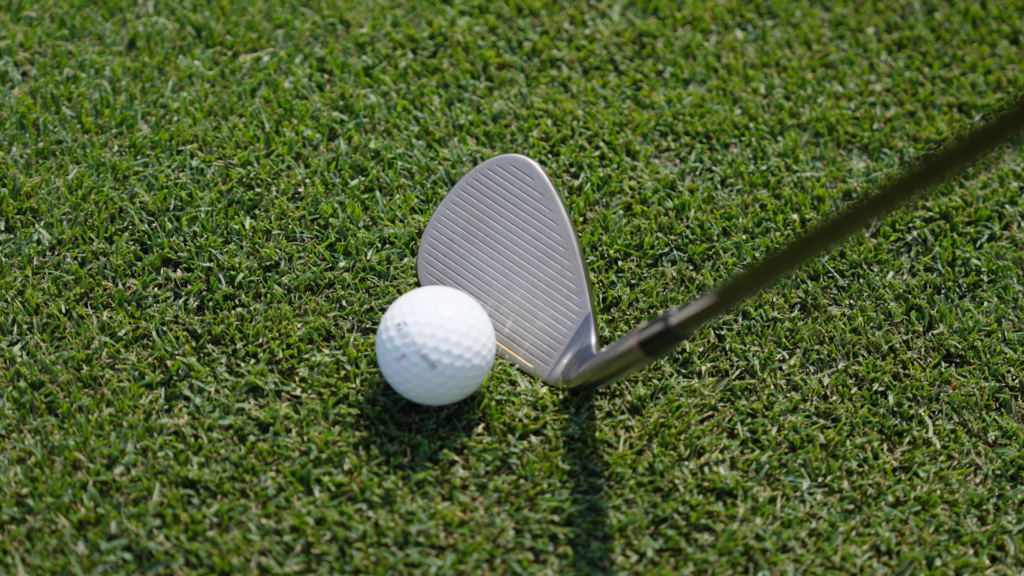
Hi-Toe 5 uses aggressive saw-milled grooves manufactured to extremely tight tolerances. TaylorMade says the steeper groove walls and sharp radii are designed to maximize spin from different lies.

The RAW face is also paired with TaylorMade’s Spin Tread Technology. Laser-etched channels help move moisture away from the face and increase friction at impact, with the goal of retaining more spin when you’re playing from wet grass or less-than-perfect conditions.

But the really interesting part of Hi-Toe 5 may be underneath the club.

Five Grinds and Five Different Jobs

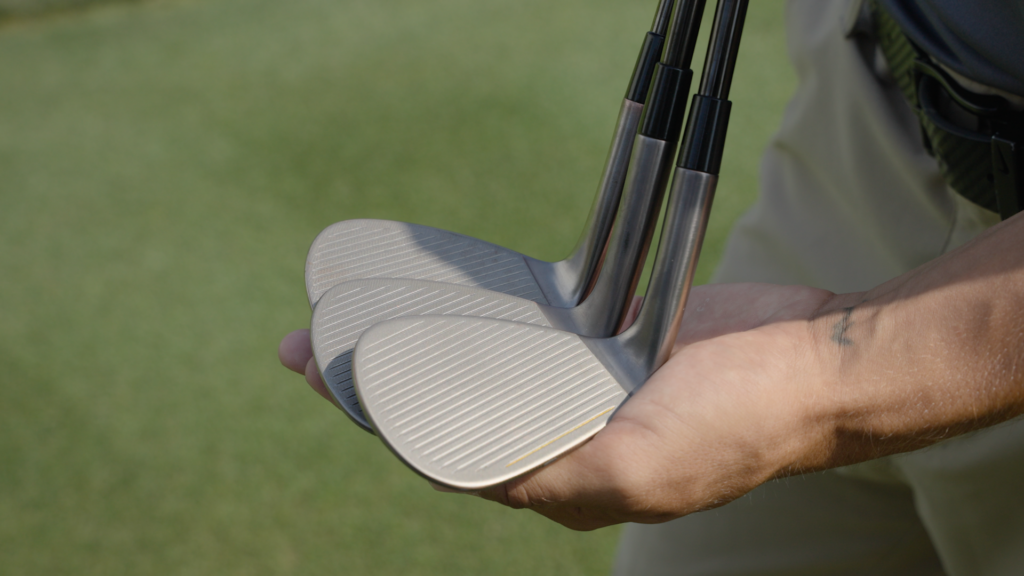
TaylorMade offers Hi-Toe 5 in five grinds: ATS, ATV, ATW, ATX and ATC. The idea is to cover a wide range of playing conditions and swing types while giving golfers different combinations of versatility and forgiveness.

This was one of the most valuable parts of our testing at The Kingdom. Rather than simply hitting each wedge from the same spot, Jack was able to work through the different grinds with the engineer who helped design them, changing lies, conditions and shot types to understand where each option fits.

Jack’s Standouts: ATV and ATX

Two grinds really stood out to Jack during testing: ATV and ATX.

The reason was versatility.

What impressed us wasn’t simply a number on the sole. It was the range of shots these grinds allowed Jack to play as the lie and situation changed.

For the golfer who wants to manipulate the face, change trajectory and use one wedge for a variety of shots around the green, these were two of the most interesting options in the lineup.

And that gets to the bigger point with Hi-Toe 5: choosing a wedge shouldn’t simply be about choosing a loft.

How you deliver the club, the turf you normally play from, the type of sand at your course and the shots you like to hit can all influence which grind makes the most sense.

Struggle from Bunkers? Pay Attention to the ATW
If there was one option that could potentially make an immediate difference for a huge number of recreational golfers, though, it was the ATW.

The ATW is the highest listed bounce in the Hi-Toe 5 family.

During our bunker testing, this thing was impressive.

For golfers who struggle with traditional bunker technique, the ATW could be a really interesting option. Rather than feeling like you need to manufacture the perfect splash shot every time, Jack found he could make something much closer to a normal golf swing and let the wedge help get the ball out.

That is a big deal.

There are plenty of golfers who lose shots simply because they don’t have the time or technique to become great bunker players. A wedge that gives them more margin for error could potentially take a lot of stress out of that part of the game.

The ATW won’t be the right answer for everybody, and that’s exactly why TaylorMade has five grinds. But for the golfer whose immediate reaction when the ball enters a bunker is concern rather than confidence, the ATW deserves some serious attention.

Which Hi-Toe 5 Grind Should You Play?

That’s ultimately the question we wanted to answer at The Kingdom.

The Hi-Toe 5 story starts with the premium forged feel and the fantastic new visual, but the real opportunity for golfers comes from matching the right sole to the way they actually play.

For Jack, the ATV and ATX stood out for their versatility, while the ATW was arguably the biggest eye-opener of the test, particularly for golfers who need more help from the sand.

But there isn’t one grind that’s automatically best.

There is a grind that’s best for you.

That’s why we’d recommend watching our full test from TaylorMade’s Kingdom in California, where Jack works through the different Hi-Toe 5 options with the engineer behind the product. You’ll see how the different grinds react from different lies and conditions, and get a much clearer understanding of which one could suit your game.
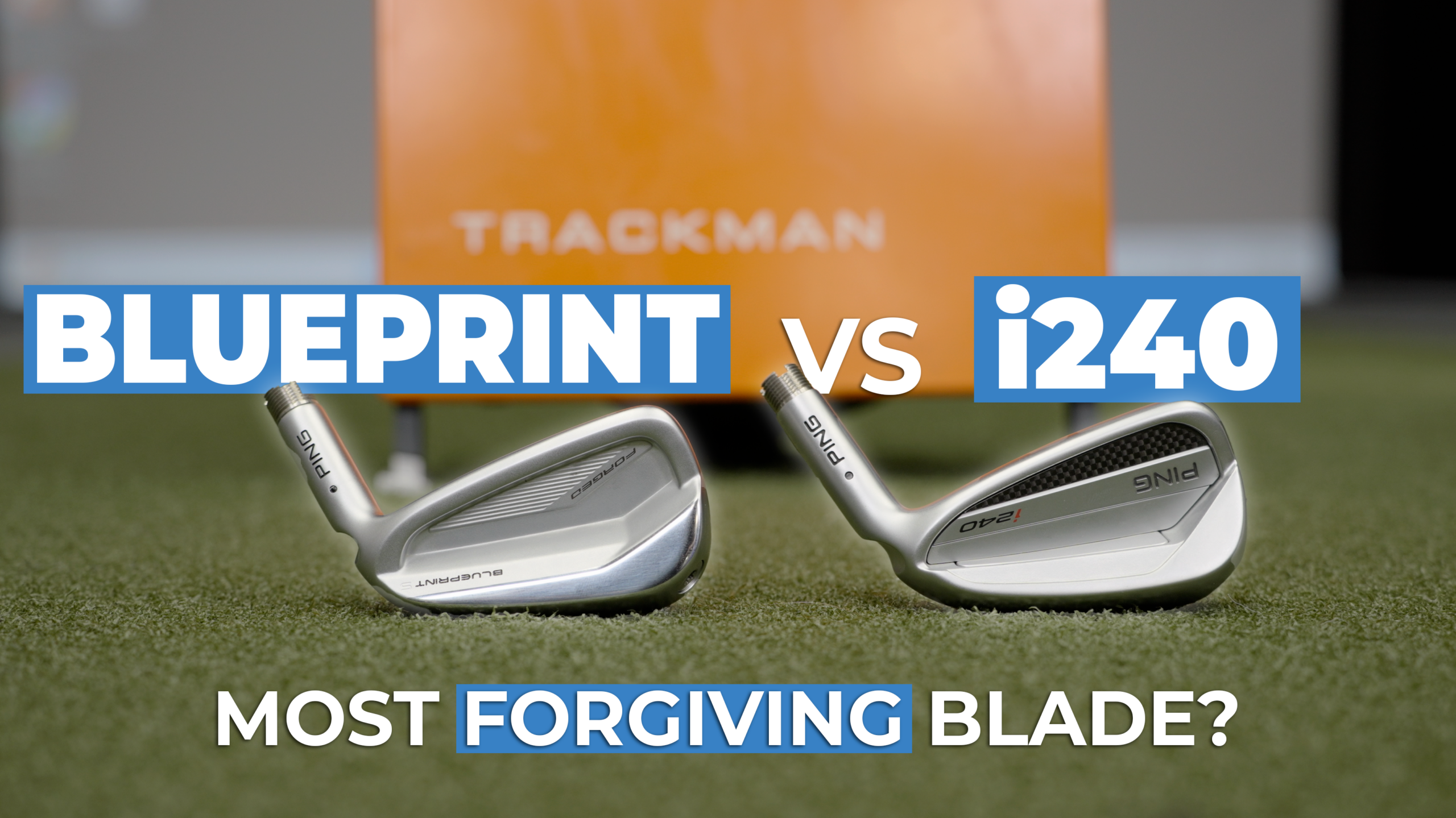
Watch the Full TaylorMade Hi-Toe 5 Test

PING i240 vs PING Blueprint S: Which Iron Fits Your Game?

If you’ve watched our video, you’ve already seen just how close these two irons are. In fact, one of the biggest surprises from our testing was just how little separated them.

That raises an interesting question. Why does PING have two irons that appear to sit in the same category?

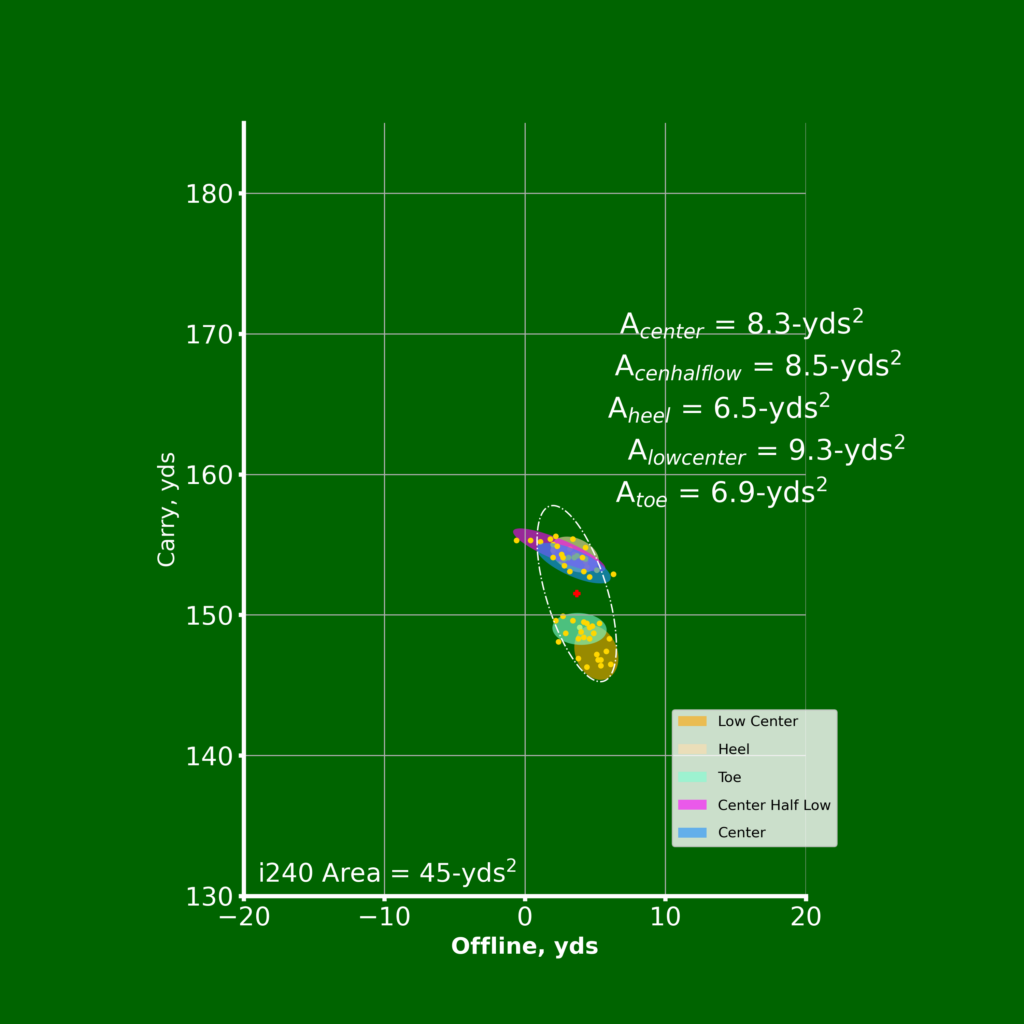
Jack and Jackson set out to answer exactly that. Alongside our fitting bay testing, we put both models through 3D scanning and robot testing to understand where the real differences lie.

In this blog, you’ll find the 3D scan data, the robot testing results, and a link back to the full video if you haven’t seen the fitting bay comparison yet.

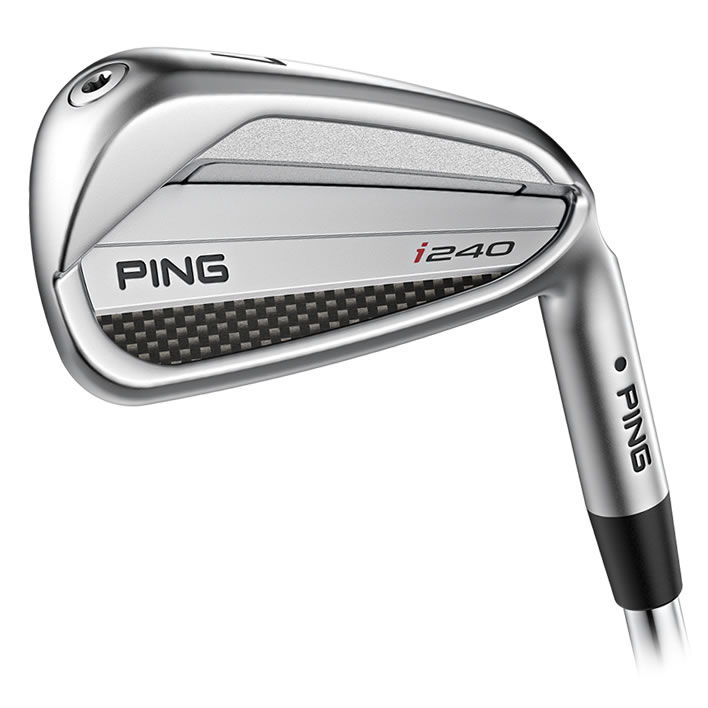
PING i240

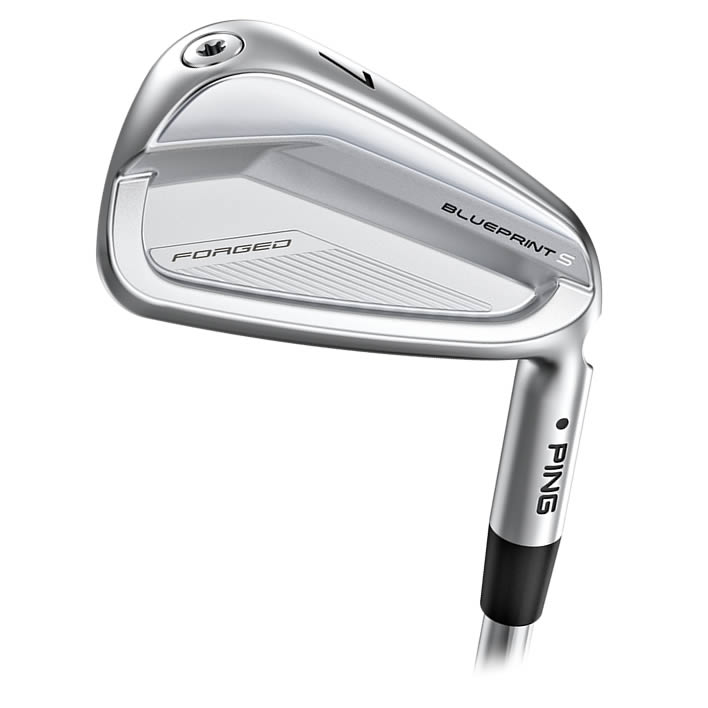
PING Blueprint S

The Numbers Are Almost Identical

Looking purely at the specifications, it’s easy to see why these irons perform so similarly.

Both feature a 33 degree 7 iron, placing them in virtually the same performance category for launch, spin, and distance.

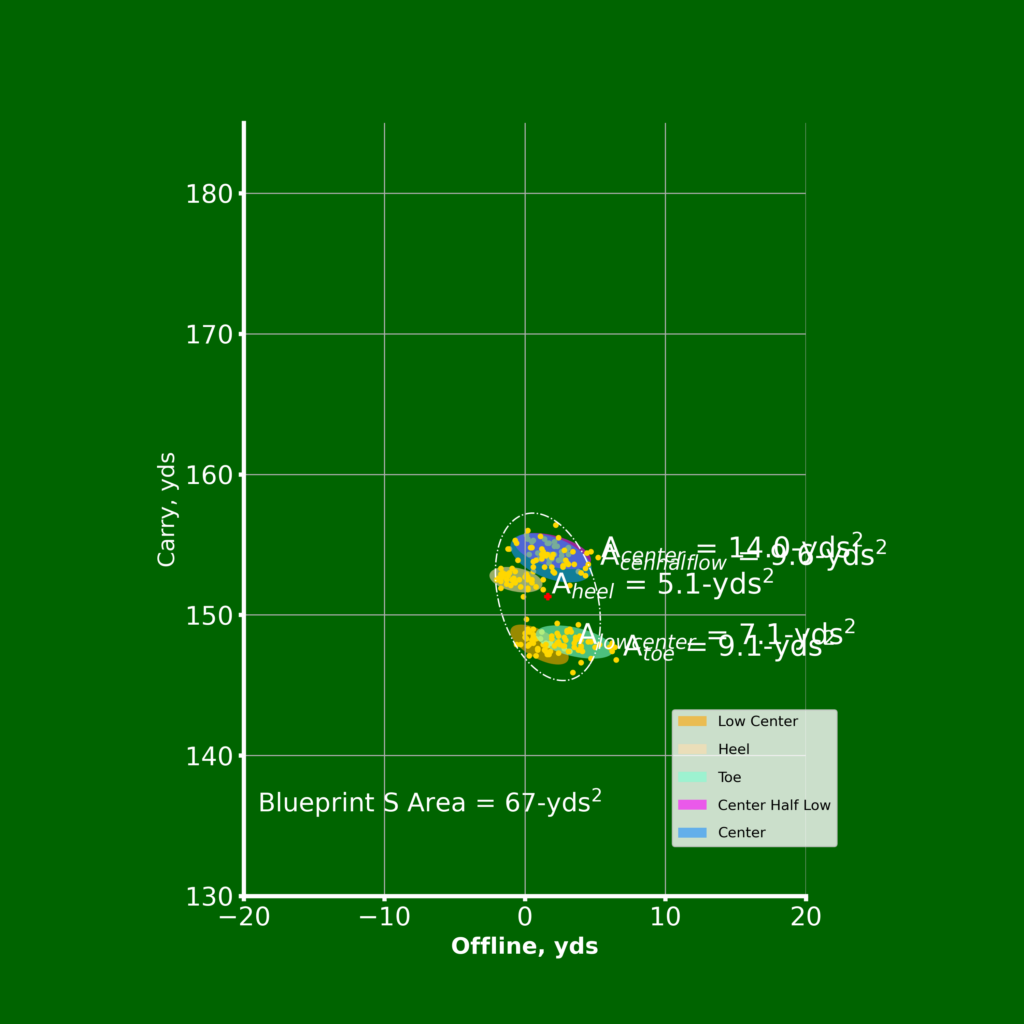
When we tested them on the robot, the results were remarkably close:

Ball Speed
Launch Angle
Spin Rate
Peak height
Descent angle
Carry distance

The center strikes and mishits produced almost identical performance, proving that both irons deliver exceptional consistency.

So if the performance is so similar…

What separates them?

It’s Not About Flight. It’s About The Player.

This is where the story gets interesting.

These irons are aimed at different golfers, not because they produce dramatically different ball flights, but because they inspire confidence in different ways.

If you’re a PING player looking to move away from a game improvement iron, but you’re not quite ready for a traditional blade, you should absolutely hit these two models head to head during a fitting.

Both showcase PING’s outstanding engineering and provide excellent forgiveness for this player category.

The decision comes down to what you want to see at address, how you interact with the turf, and how much shot shaping you like to create.

Ping i240: Comfortable Forgiveness

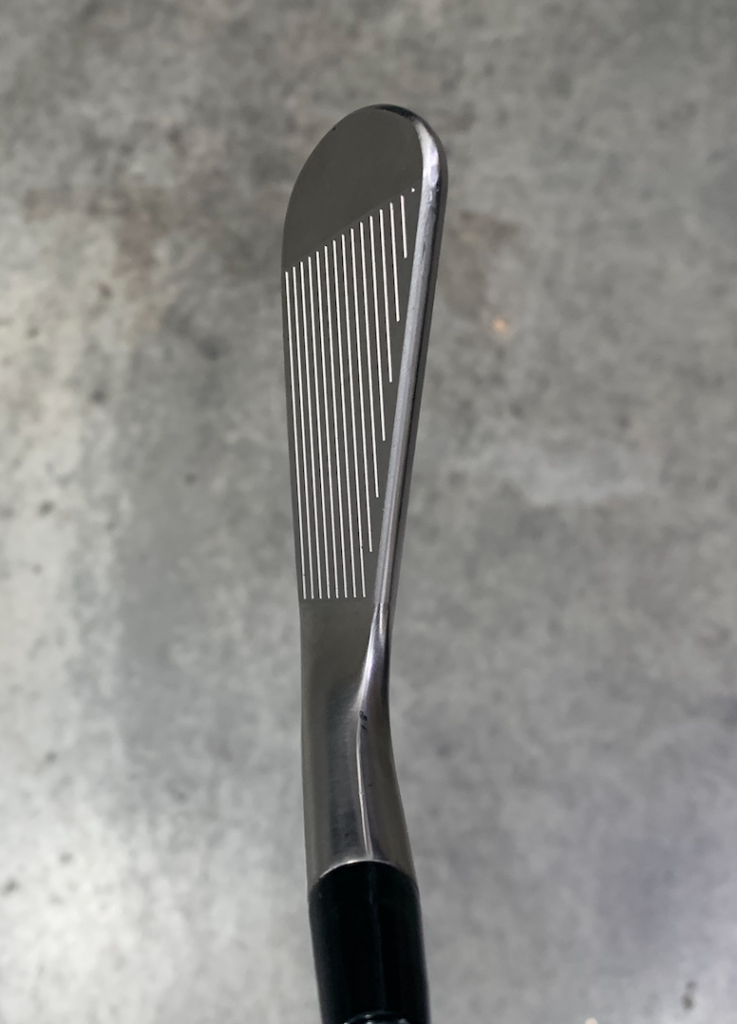
Our 3D scans highlight several key differences.

Compared to the Blueprint S, the i240 offers:

A thicker top line
More offset
A larger footprint
A longer blade length

All of these design elements work together to create confidence at address.

The larger profile gives many golfers the feeling that there’s simply more club behind the ball. The wider sole also helps the club move through the turf with confidence, reducing the feeling that the club wants to dig.

Perhaps the most impressive part is that PING has packaged this confidence into an iron with a traditional 33 degree loft.

Many irons this size achieve forgiveness by strengthening lofts and chasing distance.

The i240 doesn’t.

Instead, it delivers traditional launch conditions while providing a confidence inspiring look that many golfers appreciate.

PING Blueprint S: Blade Looks. Modern Forgiveness.

The Blueprint S takes a very different approach.

It delivers many of the visual characteristics golfers associate with a blade while retaining forgiveness that rivals the i240.

That’s an engineering achievement in itself.

The Blueprint S is one of the most forgiving compact cavity back irons on the market.

Its forged construction produces outstanding feel, while the compact shape appeals to golfers looking for maximum precision.

The golfer who chooses the Blueprint S will often:

Have a more consistent low point
Enjoy shaping shots
Prefer a cleaner, more compact look
Appreciate a quieter sound and feel through impact

Despite the smaller package, the robot testing shows that forgiveness remains excellent.

Which One Should You Choose?

That’s exactly why these irons need to be tested side by side.

Neither is objectively better.

They’re simply designed to give two different golfers confidence while producing nearly identical launch conditions.

If you prefer a larger profile that inspires confidence without sacrificing spin and control, the i240 is incredibly impressive.

If you want the compact appearance of a blade with forgiveness that exceeds what you’d expect from its size, the Blueprint S is equally compelling.

The only way to know which one suits your swing is to hit them both.

Watch the fitting bay video, study the robot data, and then experience them for yourself.

Book Your Iron Fitting

Ready to find out which PING iron fits your game?

Book a Tour Iron Fitting Experience at Cool Clubs and compare the PING i240 and PING Blueprint S head to head using industry leading technology, expert fitters, and the world’s largest shaft matrix.

Confidence comes from knowing your equipment is built for your swing. A professional fitting is the fastest way to find out which of these outstanding irons belongs in your bag.

Shaft Weight vs Shaft Flex: What Really Matters?

Golf shafts are confusing.

Walk into a retail store and you will see the same words everywhere.

Regular.

Stiff.

X Stiff.

But here is the problem.

Those words do not mean the same thing from one brand to the next.

A stiff shaft from one manufacturer may not measure anything like a stiff shaft from another. An X flex in one product line may perform more like a stiff in another. Even premium shafts are not always being measured with the same equipment, the same standards, or the same terminology.

So how is a golfer supposed to know what is actually right for them?

That question is exactly why Cool Clubs built something no one else in the industry had ever created.

A universal flex scale.

What Is a Universal Flex Scale?

A universal flex scale allows us to compare golf shafts on an apples to apples basis.

Not by the label printed on the shaft.

Not by marketing language.

Not by guessing.

By measured data.

Cool Clubs is the only company in the world that developed its own machine to capture everything we need to know about a golf shaft.

That includes:

EI curve.

Deflection.

Balance point.

Mass.

Torque.

Frequency.

Where the shaft bends.

How the shaft bends.

How the shaft compares to other shafts

Over time, we have measured and stored data on more than 30,000 golf shafts.

Pair that with more than 30 years of fitting knowledge, and you get the most complete shaft comparison system in the industry.

That is what allows Cool Clubs to compare a 60 gram stiff shaft from one brand to a 40 gram X flex from another and actually understand what is happening.

Not just what the label says.

Why Flex Labels Can Be Misleading

Most golfers think shaft flex is simple.

Stiff is stiffer than regular.

X is stiffer than stiff.

But that is not always how shafts measure.

Two shafts with the same flex label can feel completely different. Two shafts with different flex labels can sometimes work for the same player.

Why?

Because flex is not one single thing.

A shaft has weight.

Torque.

Balance point.

Tip stiffness.

Butt stiffness.

Midsection stiffness.

Overall bend profile.

How a player loads the shaft matters too.

That is why you cannot make the right decision by looking at one label.

You need to understand the entire shaft.

Why We Tested Weight vs Flex

This is what led us to create a video around one of the most common questions in fitting:

What matters more, shaft weight or shaft flex?

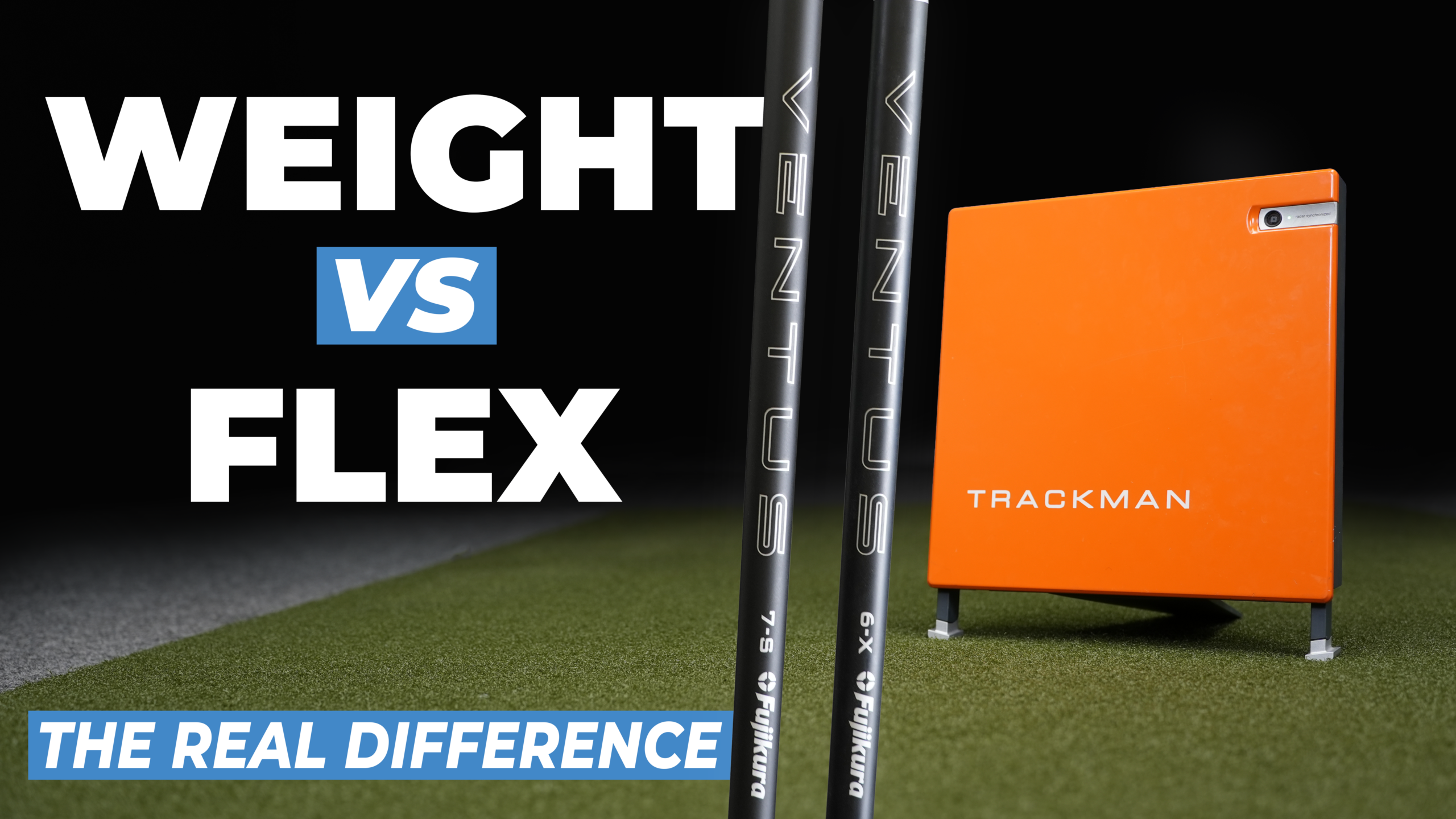
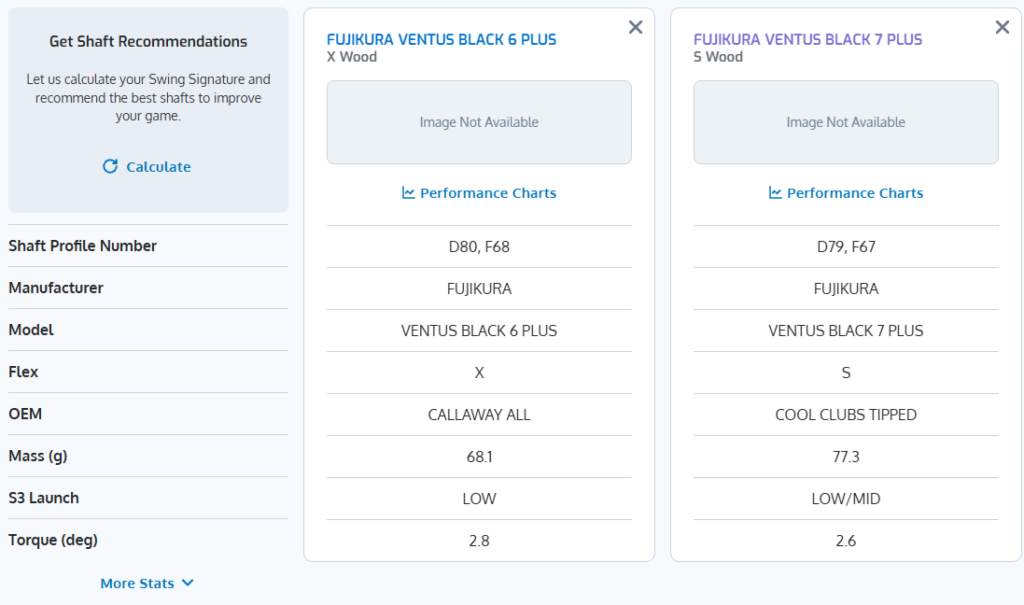
To test it, Jackson compared two Fujikura Ventus Black Plus shafts.

A 60 gram X flex.

A 70 gram stiff flex.

On paper, most golfers would assume those are very different shafts.

One is lighter and labeled X.

The other is heavier and labeled stiff.

But on the Cool Clubs universal flex scale, both shafts show up as playable for a similar type of golfer when it comes to speed and shaft load.

That gave us the perfect opportunity to go deeper.

If both shafts can work for the same player, what actually makes them different?

What the Data Showed

When you look at mass alone, the difference is clear.

The 60 gram shaft measured 68.1 grams.

The 70 gram shaft measured 77.3 grams.

That is a real difference in total weight.

The 70 gram shaft also had slightly lower torque, by about a quarter of a degree.

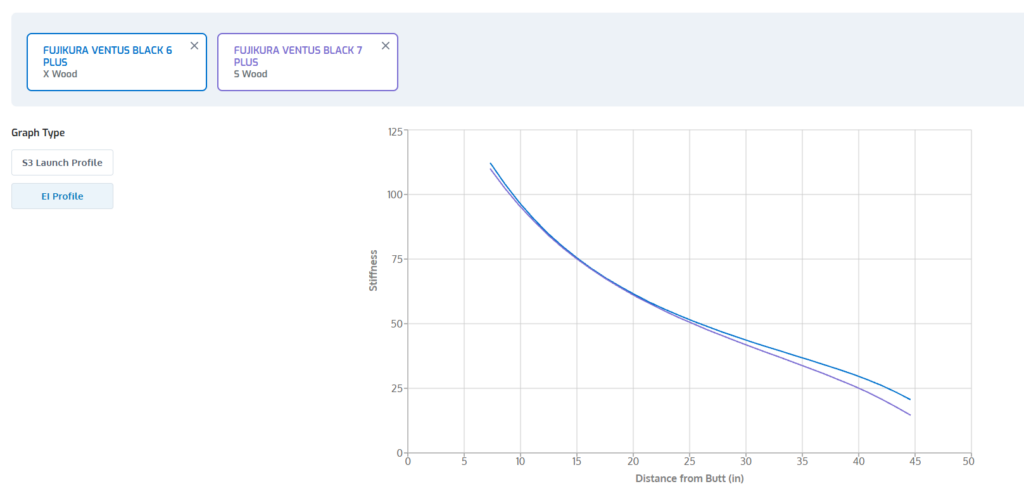
The EI curves, however, were almost identical, with one key difference: the 6X was stronger in the tip section.

Frequency was slightly higher in the 6X.

Balance point was slightly higher in the 7S.

So what does that mean?

It means there is always more going on than the number printed on the shaft.

The heavier shaft is not just heavier.

The X flex is not just stiffer.

Each shaft has its own full profile, and each part of that profile can influence what a player feels and how the club performs.

Why This Matters in a Fitting

This is where Cool Clubs technology becomes so powerful.

When a player tells us something feels too loose, too heavy, too boardy, too active, too light, or too hard to square, we are not guessing.

We can look at the data.

We can isolate the part of the shaft that may be causing that feel.

Is it weight?

Is it torque?

Is it balance point?

Is it tip stiffness?

Is it the midsection?

Is it how the shaft loads during the swing?

That level of detail helps us make better decisions.

It also helps golfers understand why one shaft works and another does not.

Weight vs Flex Is Not a Simple Answer

Golfers often say things like:

“I need something heavier.”

“I need something stiffer.”

“I need less torque.”

“I need an X flex.”

Sometimes they are right.

Sometimes they are describing a feel that comes from a completely different part of the shaft.

That is why fitting matters.

The right shaft is not just about weight.

It is not just about flex.

It is about how the entire shaft works with your swing.

Two shafts can both fit your speed and load profile, but still produce different feels, different timing, different face control, and different ball flights.

That is exactly what Jackson tested in the video.

Find the Shaft That Actually Fits You

At Cool Clubs, we are not fitting based on shaft labels.

We are fitting based on measured data, player feedback, ball flight, 3D motion capture, and decades of fitting knowledge.

If you want to know everything you can possibly know about your golf swing, your ball flight, and the shaft that is right for you, book a fitting with Cool Clubs.

Use the technology.

See your swing in 3D.

Understand your equipment.

And finally know which golf shaft helps you play better, and why.

Where Does Callaway’s Mini Spinner Really Fit?

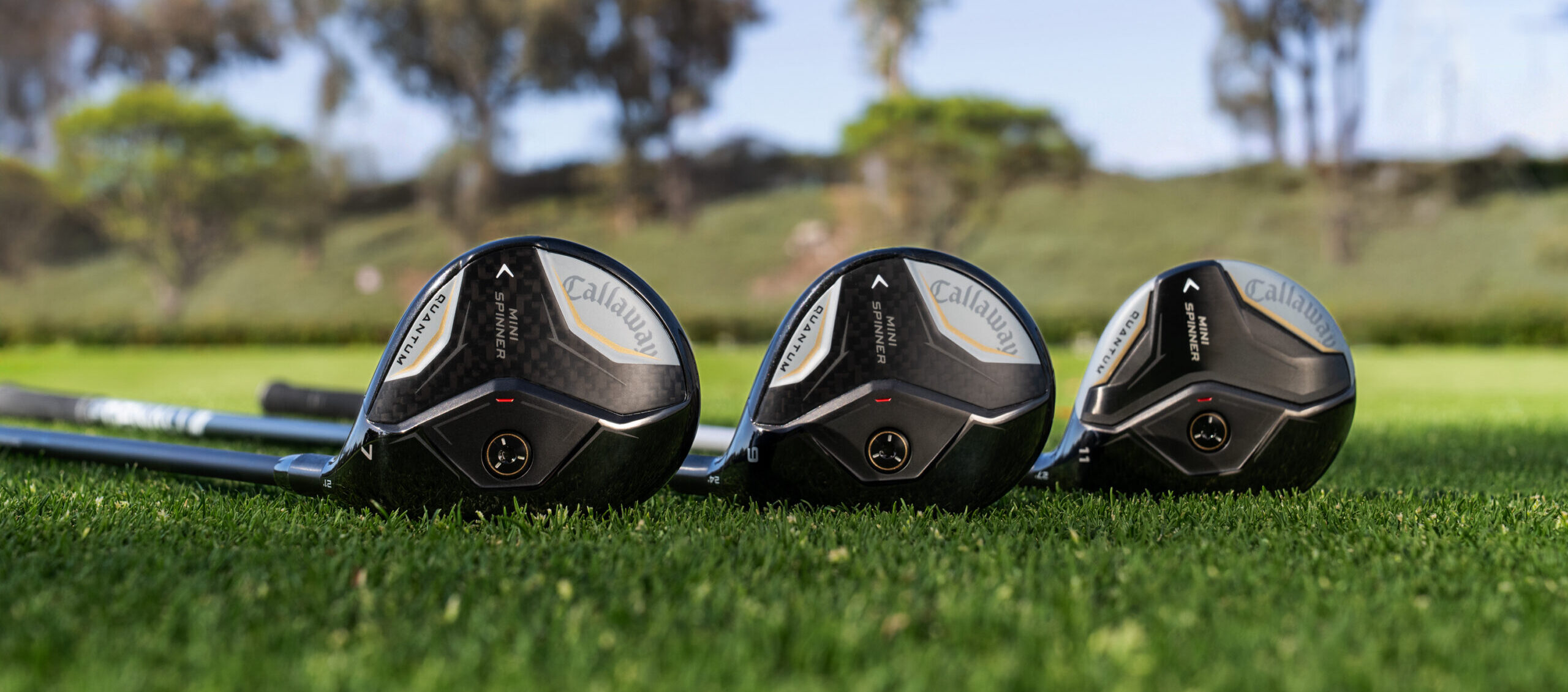
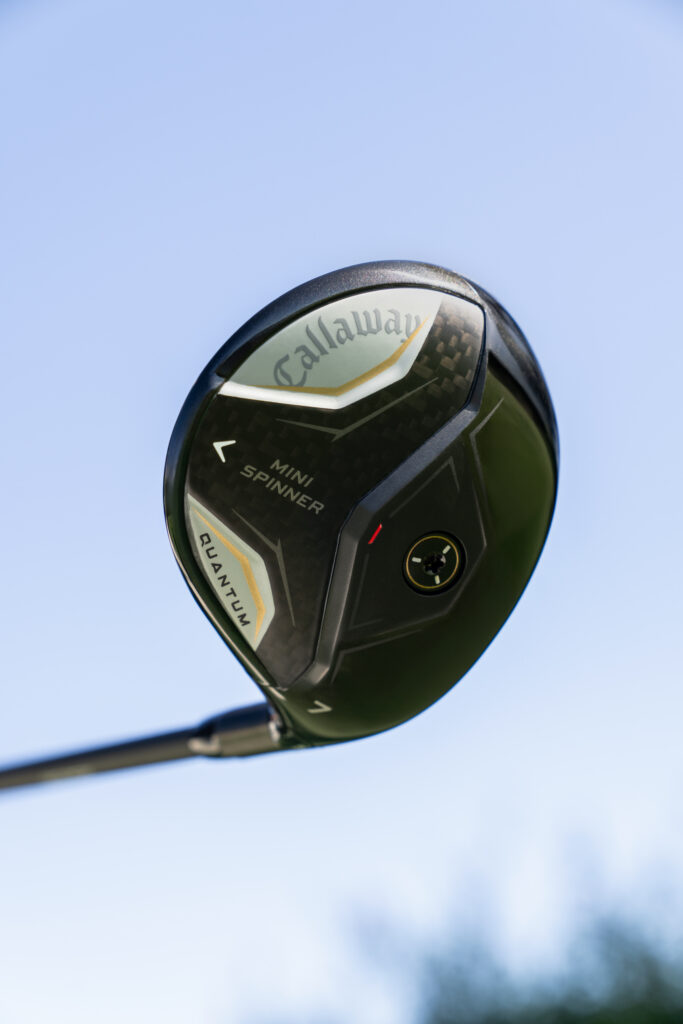
When Callaway launched the new Mini Spinner, one question immediately came to mind.

Where does it actually fit?

Today’s golfer has more long game options than ever before. Four irons, hybrids, utility woods, seven woods and now “Mini Spinners”. For many golfers, deciding what belongs in the bag has become just as difficult as hitting the shots themselves.

Rather than speculate, we decided to let the data answer the question.

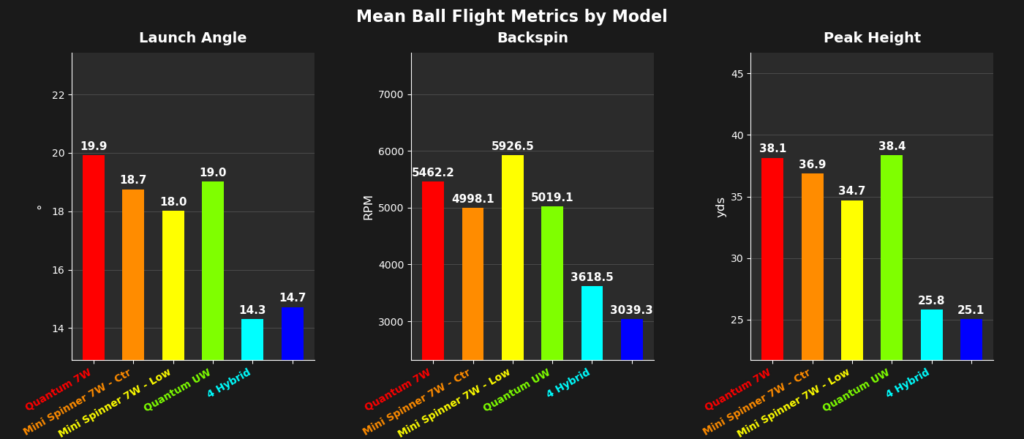
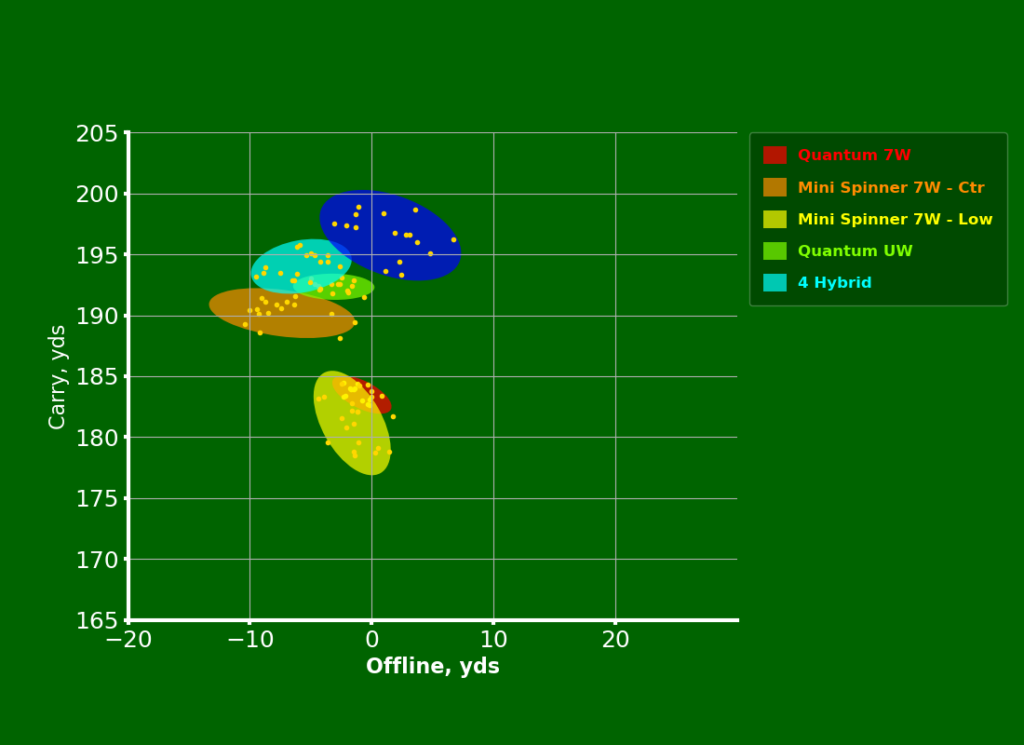
Using the Cool Clubs ADC Robot, we compared the Callaway Mini Spinner against the 4 Iron, 4 Hybrid, Utility Wood, and Quantum 7 Wood using realistic club speeds and repeatable swings. The goal wasn’t simply to find the longest club. It was to understand how each club flies through the air, lands on the green, and ultimately helps golfers hit different shots.

The Family Starts to Make Sense

Looking at the data, a very clear progression appears.

The 4 Iron produces the flattest trajectory with the least spin and the most rollout. It is designed to chase down the fairway and perform in windy conditions.

The 4 Hybrid adds roughly 600 rpm of spin while maintaining a very similar launch window. It lands slightly steeper and offers more forgiveness without dramatically changing distance.

Then comes the Utility Wood.

This is where the trajectory changes dramatically. Launch jumps nearly five degrees, peak height increases by more than 12 yards, and descent angle approaches 48 degrees. Rollout drops from almost 20 yards with the 4 Iron to just over 12 yards.

The Utility Wood is clearly designed to help golfers launch the ball higher and stop it faster.

So where does the Mini Spinner fit?

The Mini Spinner Is Not Just Another Fairway Wood

At first glance, the Mini Spinner’s center strike looked remarkably similar to the Utility Wood.

Launch, peak height, carry distance and rollout all sat within a very narrow window.

That initially left us wondering why Callaway would produce another club that appeared to overlap so closely.

The answer came after speaking with Callaway’s engineering team.

Unlike a traditional fairway wood, the Mini Spinner features a noticeably deeper face. Because of this design, Callaway expects many golfers, even better players, to strike the ball slightly below the true geometric center of the face during normal play.

That prompted us to run another robot test.

Instead of striking the exact center of the face, we moved impact just six millimeters lower.

The results completely changed our understanding of the club.

The Shot It Was Designed For

The lower impact location produced almost 5,930 rpm of spin, the highest spin of any club in this category.

Interestingly, launch angle remained very playable, while descent angle stayed close to 47 degrees and rollout remained just over 11 yards.

This tells us something important.

The Mini Spinner wasn’t simply designed to produce maximum distance.

It was designed to produce a very specific golf shot.

A player wanting to attack long par fives, hold firm greens from over 200 yards, or replace a long iron without watching the ball bounce through the back now has another option.

Instead of relying on perfect center contact to achieve this flight, the deeper face actually works with the strike pattern Callaway expects many golfers to produce.

That is an intentional piece of engineering rather than an accident.

The Importance of Roll

One of the most revealing numbers from our testing wasn’t carry distance at all.

It was rollout.

The 4 Iron rolled approximately 20 yards after landing.

The 4 Hybrid rolled around 18 yards.

The Utility Wood and Mini Spinner rolled roughly 12 yards.

The lower strike Mini Spinner rolled only about 11 yards while generating the highest spin in the test.

Those eight or nine yards of rollout represent the difference between running through the back of a green and stopping next to the flag.

For many golfers, that’s far more important than gaining a couple of extra yards of carry.

What We Learned

The Mini Spinner isn’t replacing the Utility Wood.

It isn’t replacing the 7 Wood.

And it certainly isn’t replacing a Hybrid.

Instead, Callaway has created another launch and spin window that gives golfers, particularly stronger players, another way to control trajectory and stopping power.

The robot testing reinforced something we talk about all the time at Cool Clubs.

Distance is only one part of the equation.

How high the ball flies, how much it spins, how steeply it lands, and how far it rolls after landing often have a much bigger influence on scoring.

The Mini Spinner may look like another option on the shelf.

The data shows it’s actually another shot.

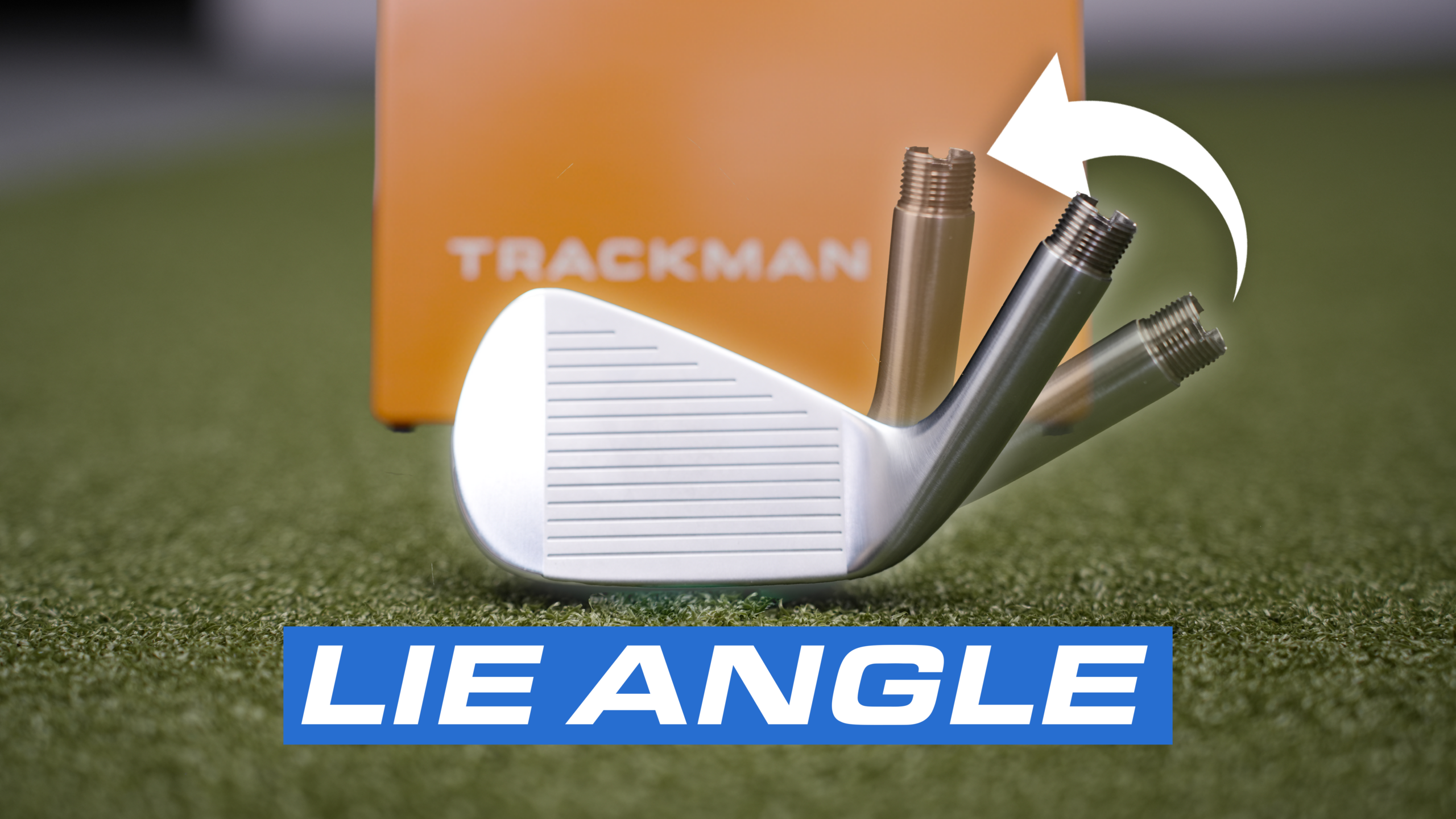
Lie Angle: One of the Most Important Fitting Variables Golfers Misunderstand

When golfers talk about lie angle, the conversation is usually pretty simple.

Too upright and the ball goes left.

Too flat and the ball goes right.

For decades, that has been the standard explanation.

And while there is truth to it, the reality is far more complicated.

At Cool Clubs, we wanted to understand exactly what happens when lie angle changes. Not just what physics predicts should happen, but what actually happens when a golfer reacts to those changes.

So we took a player into the fitting bay and tested three different lie angles:

Standard

2° Flat

2° Upright

The results were fascinating.

What we learned reinforced something we see every day in fittings.

Lie angle matters tremendously, but maybe not in the way most golfers think.

The Traditional Understanding of Lie Angle

Historically, lie angle has been viewed through two lenses.

The first is turf interaction.

If a club is too upright, the heel tends to strike the ground first.

If a club is too flat, the toe tends to strike the ground first.

The second is face direction.

When a club is more upright, the loft plane points more left for a right handed golfer.

When a club is flatter, the loft plane points more right.

Those concepts are absolutely true.

Physics still applies.

But those explanations only tell part of the story.

Length and Lie Angle are Directly Connected

One of the first things we discussed in the fitting bay was how closely length and lie angle are related.

Every time you grip down on a golf club, you effectively make it flatter.

Every time you shorten a golf club, you effectively make it flatter.

Every time you lengthen a golf club, you effectively make it more upright unless the lie angle is adjusted to compensate.

This is one reason why length and lie angle should never be evaluated independently.

A player may think they need a different lie angle when the real issue is the length of the golf club.

Or vice versa.

Lie Angle Changes More Than Ball Flight

Most golfers expect a flatter lie angle to produce shots that start farther right.

They expect a more upright lie angle to produce shots that start farther left.

What we found was much more interesting.

As the club became flatter, the player immediately felt the need to swing farther from the inside.

The club looked flatter.

It felt flatter.

The player’s body reacted to it.

The result?

Instead of hitting more pushes, the player actually began turning the ball over harder.

The swing path changed more dramatically than the face angle.

The player’s reaction to the club outweighed the simple physics.

Now let’s look at the opposite side.

As the club became more upright, the player felt the need to swing on a more vertical plane.

The club appeared taller.

The player felt steeper.

In some cases, that encouraged a more over the top move.

Rather than eliminating cut spin, the player actually created more.

Again, the player’s reaction to what they saw and felt became more important than the theoretical ball flight model.

Swing Weight Changes Too

Another factor that often gets overlooked is swing weight.

As lie angle becomes significantly flatter, swing weight can increase.

As lie angle becomes significantly more upright, swing weight can decrease.

These changes may be small, but golfers are incredibly sensitive to feel.

A player may think they are reacting to lie angle when they are actually reacting to a change in club balance.

This is why fitting decisions should never be made in isolation.

Everything works together.

Dynamic Lie Angle Is What Matters

One of the biggest mistakes in golf fitting is relying on static measurements.

Height.

Wrist to floor.

Knuckle to floor.

How the club rests on the ground at address.

These measurements can provide a starting point, but they should never be the final answer.

Golf is a dynamic movement.

The club head is moving at speed.

The shaft is bending.

The player is rotating.

The club is drooping.

The lie angle at impact is often very different from the lie angle seen at address.

The only lie angle that truly matters is the one delivered dynamically.

Small Changes Can Create Massive Results

Two degrees may not sound like much.

But in our testing, two degrees dramatically changed how the player moved the golf club.

How they delivered the club.

How they shaped the ball.

How comfortable they felt.

And ultimately, how they performed.

Lie angle is one of the smallest adjustments you can make to a golf club.

It can also be one of the most powerful.

If you want to unlock your best ball flight, improve consistency, and ensure your clubs are helping rather than hurting your swing, make sure lie angle is properly evaluated during your fitting.

Book your iron fitting with Cool Clubs today and experience the difference that truly optimized lie angles can make.

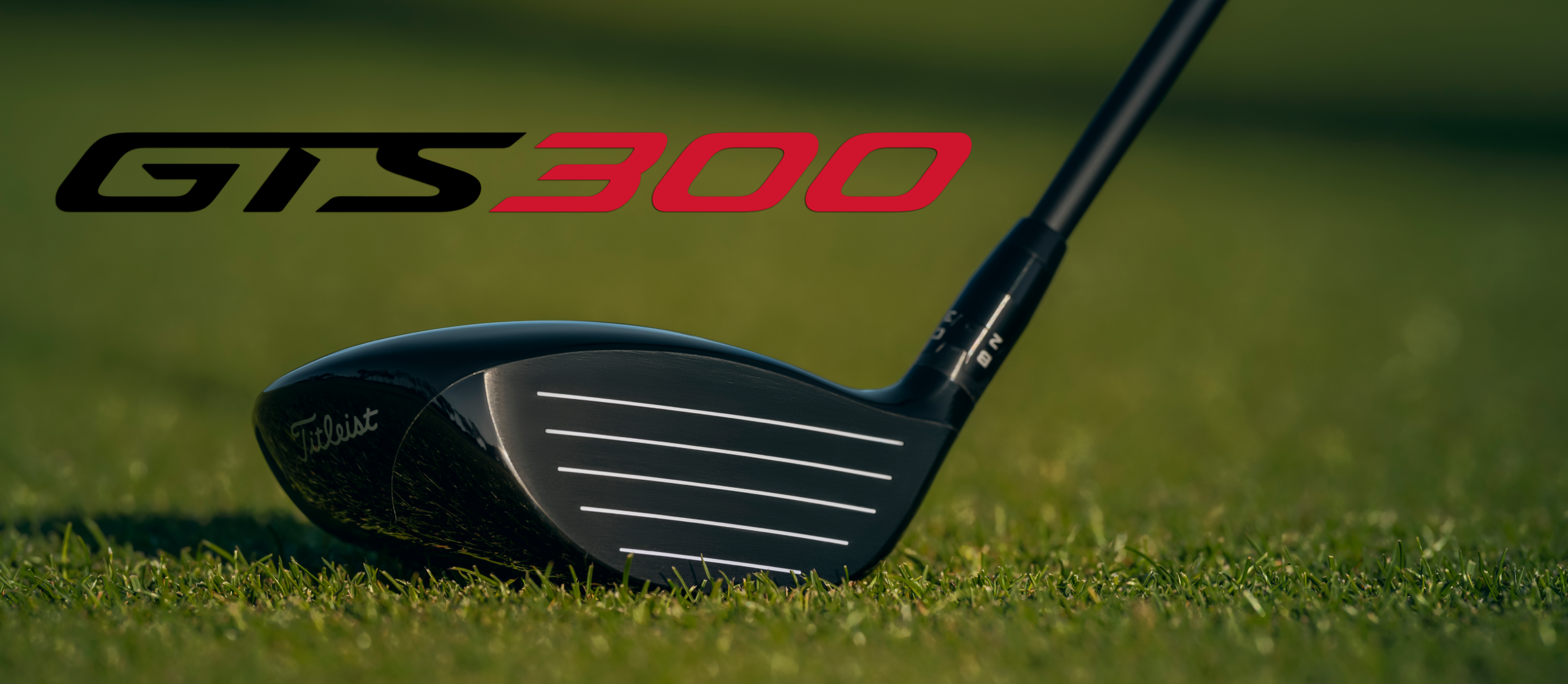
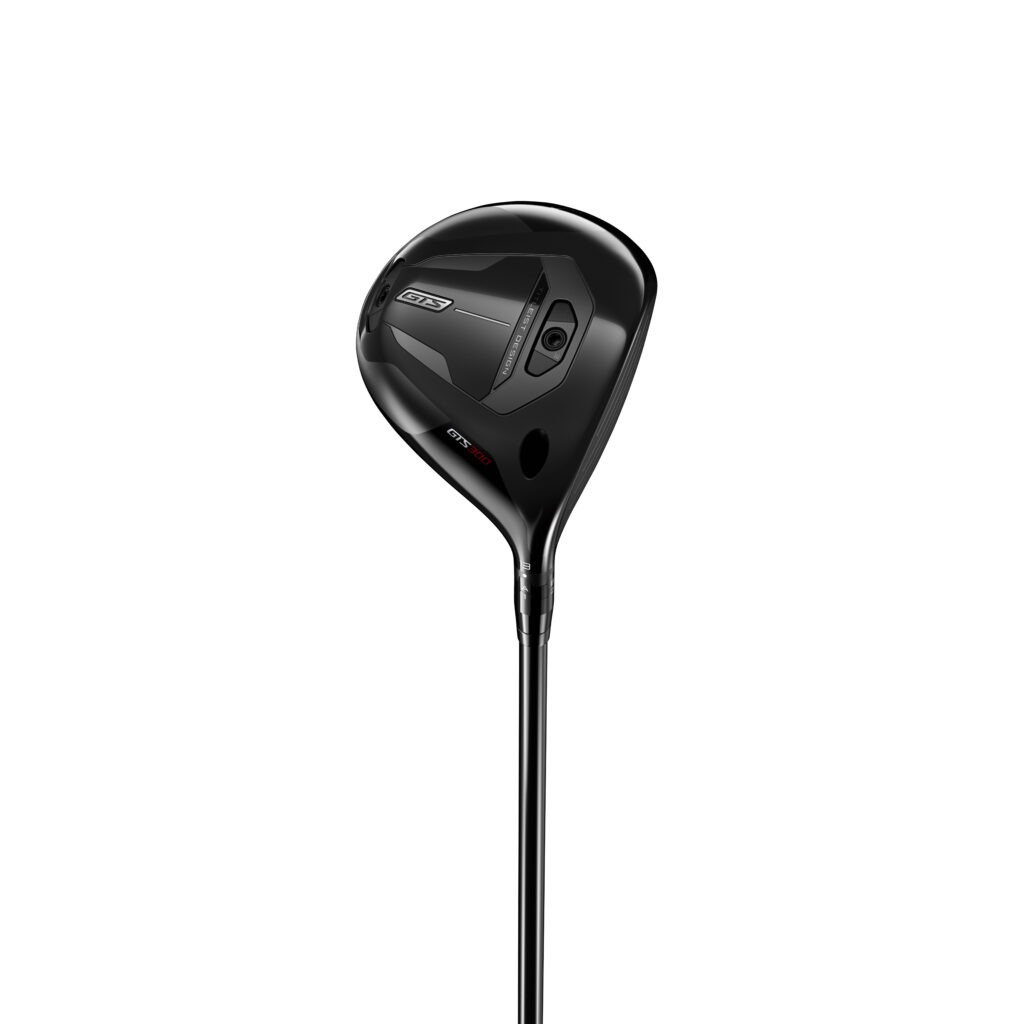
Titleist GTS 300 Mini Driver Review: Bigger Head. Different Performance.

The mini driver category continues to gain momentum, and Titleist’s new GTS 300 is another step forward in what has become one of the most interesting segments in golf equipment.

For this test, we put the new GTS 300 head to head against its predecessor, the GT 280, both from the tee and off the ground to find out what the design changes actually mean in the real world.

On paper, the updates look simple enough. Titleist has increased the head size to 300cc for added forgiveness, refined the aerodynamics to improve clubhead speed, and introduced a forged L Cup face designed to preserve ball speed, particularly from low face strikes.

But do those changes actually matter?

The GT 280 Was Better Than We Expected

Before hitting the new model, we spent time with the GT 280.

One thing immediately stood out.

It was far easier to hit off the ground than we expected.

Mini drivers often get pigeonholed as clubs built only for the tee box, but the GT 280 proved there is genuine performance available from the fairway. The compact head inspires confidence for some players, while others appreciate that it sits somewhere between a traditional fairway wood and a modern driver.

The ball flight told a very clear story.

Launch was low. Spin stayed controlled. This is a club built for players who want to keep the ball under the wind and produce plenty of rollout after landing.

One important point we would make is that there is definitely a speed requirement.

Players with higher clubhead speed are likely to unlock the biggest advantages of a mini driver. Moderate speed players can still benefit, particularly from the tee with a positive Angle of Attack, but producing enough speed is critical to getting the best flight characteristics from this type of club.

Forgiveness also surprised us.

Despite the smaller profile, the GT 280 was much more stable than we anticipated. We intentionally tried to move the ball both directions and found it noticeably easier to produce a controlled fade than a draw. The fade increased spin slightly while creating a very predictable flight.

The GTS 300 Makes an Immediate Impression

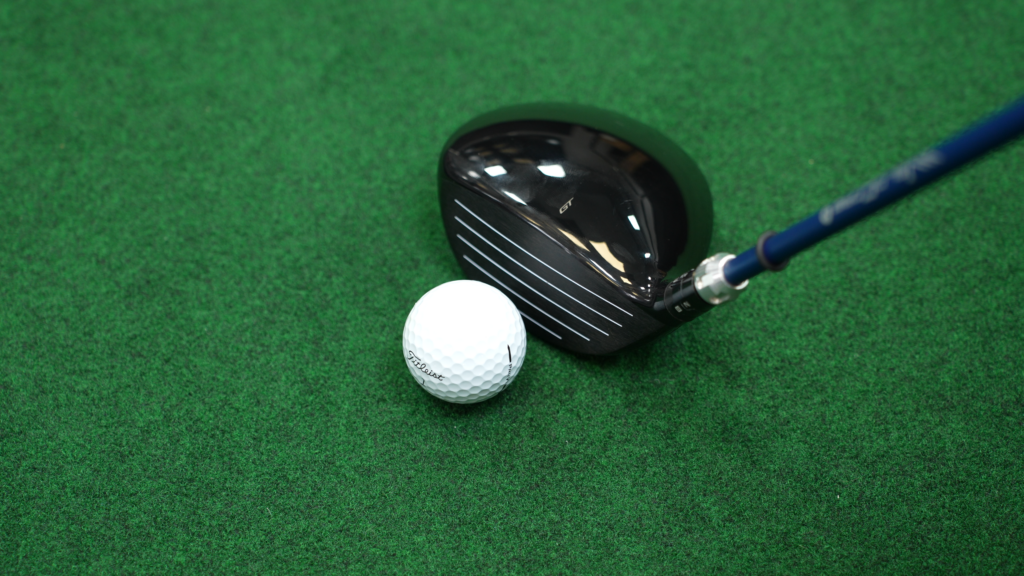
The moment you place the GTS 300 behind the ball, the larger head is obvious.

Interestingly, that additional size doesn’t just increase confidence from the tee.

It actually looked more inviting from the fairway as well.

The profile stretches further from front to back, making it feel easier to sweep the ball cleanly from a tight lie rather than feeling like you have to trap it perfectly.

Then the launch monitor confirmed what our eyes were already suggesting.

More Launch

The first thing we noticed was a meaningful increase in launch from both the tee and the fairway.

That is significant.

More launch generally means more carry distance for the overwhelming majority of golfers and immediately broadens the appeal of the mini driver category beyond only the highest speed players.

More Consistent Spin

The second standout wasn’t higher or lower spin.

It was consistency.

Spin rates became noticeably tighter from shot to shot, suggesting the new face technology is doing exactly what it was designed to do by maintaining performance across a larger area of the face.

That consistency gives golfers confidence. Instead of wondering which flight you’re going to get, you begin to trust the window the golf ball launches into.

Ball Speed Was Strong Across Both Models

One thing that didn’t disappoint was ball speed.

Both mini drivers produced excellent speed, showing just how efficient this category has become.

The decision between the two wasn’t really about maximum ball speed.

It came down to launch characteristics, forgiveness and consistency.

Those are often the factors that determine whether a club stays in the bag.

It Isn’t a Replacement. It’s a Different Fit.

Perhaps the biggest takeaway from our testing wasn’t that the GTS 300 was “better” than the GT 280.

In reality, it feels like Titleist has created two mini drivers that can comfortably exist alongside one another.

The GTS 300 launches higher, inspires more confidence with its larger profile and produces more consistent spin. It behaves much like a GTS2 style product, favoring stability, forgiveness and a higher launch window.

The GT 280, on the other hand, behaves much more like a GTS3. It launches lower, presents a more compact look behind the ball and feels like the choice for golfers who prefer a flatter, more penetrating flight with greater shot shaping potential.

That is probably the easiest way to think about these two clubs.

Rather than replacing the GT 280, Titleist has expanded the mini driver lineup to fit two different types of golfer.

Neither is necessarily better.

They’re simply designed with different players in mind.

Don’t Forget the Adjustable Weight

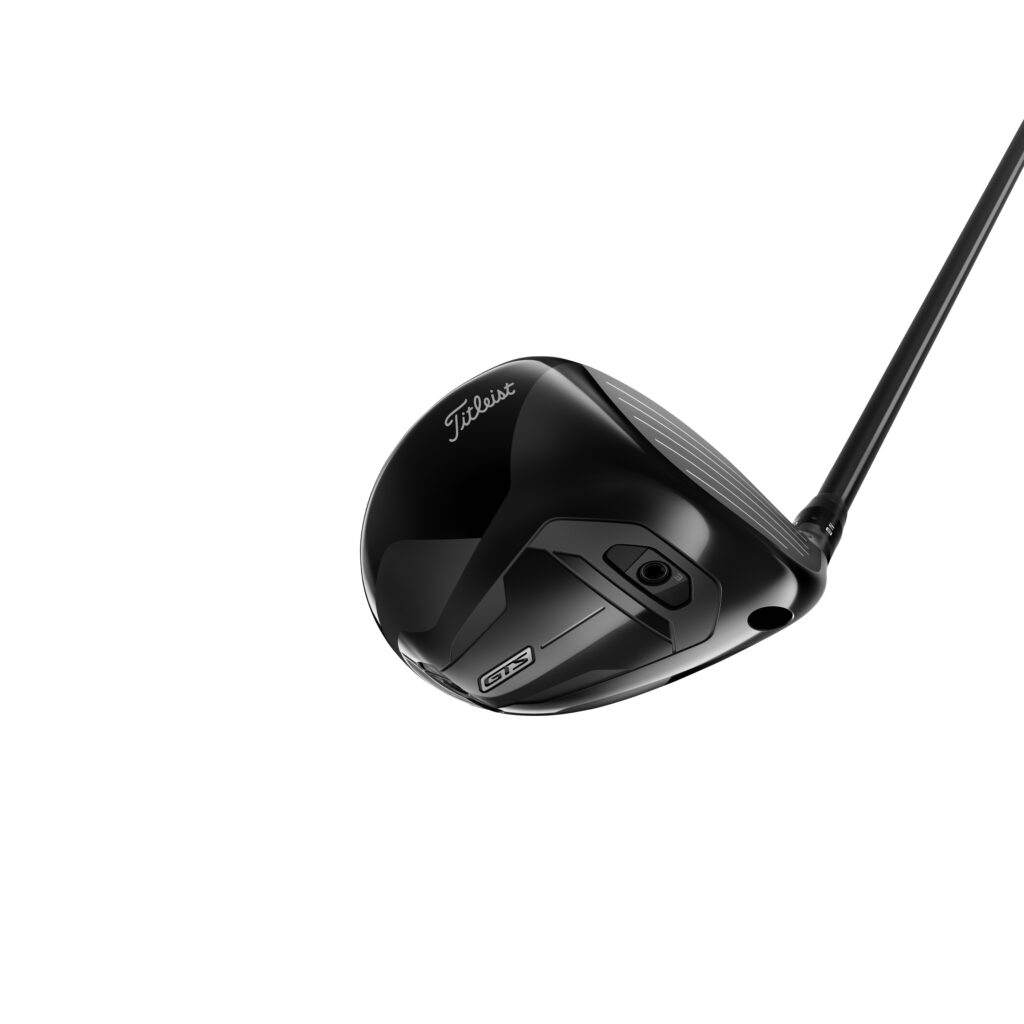
The GTS 300 also features dual weight adjustability.

For our testing, we left the heavier weight in the rear position to maximize stability and forgiveness.

However, stronger players looking to reduce spin even further can move that weight forward.

Doing so should lower dynamic loft, reduce launch, and may even produce a slight increase in ball speed.

It’s another fitting variable that makes this club far more versatile than many golfers realize.

Who Is the GTS 300 For?

The more we test mini drivers, the more use cases we continue to find.

The GTS 300 could be an excellent option for golfers who:

– Want more confidence than a traditional fairway wood inspires.
– Need more distance than a traditional fairway would offers.
– Play regularly in windy conditions
– Prefer the look of older, smaller drivers.
– Want a lower spinning alternative to a fairway wood with more launch than previous minis.
– Want more workability than a driver with low launch and spin

Meanwhile, the GT 280 remains a fantastic option for golfers who naturally produce speed, prefer a lower launch window and enjoy shaping the golf ball (possibly with a steeper angle of attack).

Neither club replaces the other.

They simply fill different roles.

The Most Important Part Is Still the Fitting

That was the biggest lesson from this test.

The GTS 300 isn’t simply an updated GT 280.

It is a different interpretation of what a mini driver can be.

Having both options available gives golfers more choice than ever before, but also makes fitting more important.

Loft, shaft length, shaft profile, head weighting and, most importantly, how you intend to use the club all influence which model is right for you.

Whether you’re looking for a reliable fairway finder, a powerful option off the deck or a club that bridges the gap between driver and fairway wood, the answer won’t be the same for everyone.

If you’re considering adding a mini driver to your bag, book a Driver or Long Game Fitting at Cool Clubs. We’ll help you investigate the GTS 300 to find the setup that best complements your swing.

Watch our full YouTube review to see Jack put both mini drivers head-to-head from the tee and off the deck, and discover which one comes out on top.