Cavity Back vs Blade Wedges: Is It Time to Rethink Your Short Game?

When golfers think about cavity back clubs versus blades, the conversation usually starts with irons.

Cavity backs offer more forgiveness.

Blades offer more precision.

Most golfers understand that trade off.

But what about wedges?

Surprisingly, this is a topic that rarely gets discussed, despite the fact that it may impact more golfers than almost any other equipment decision in the bag.

At Cool Clubs, we recently decided to put this question to the test.

Do the same cavity back benefits we see in irons carry over into wedges?

And if they do, how far down the bag should cavity back technology go?

The results were eye opening.

The Test

For this comparison, we took two very different approaches to wedge design.

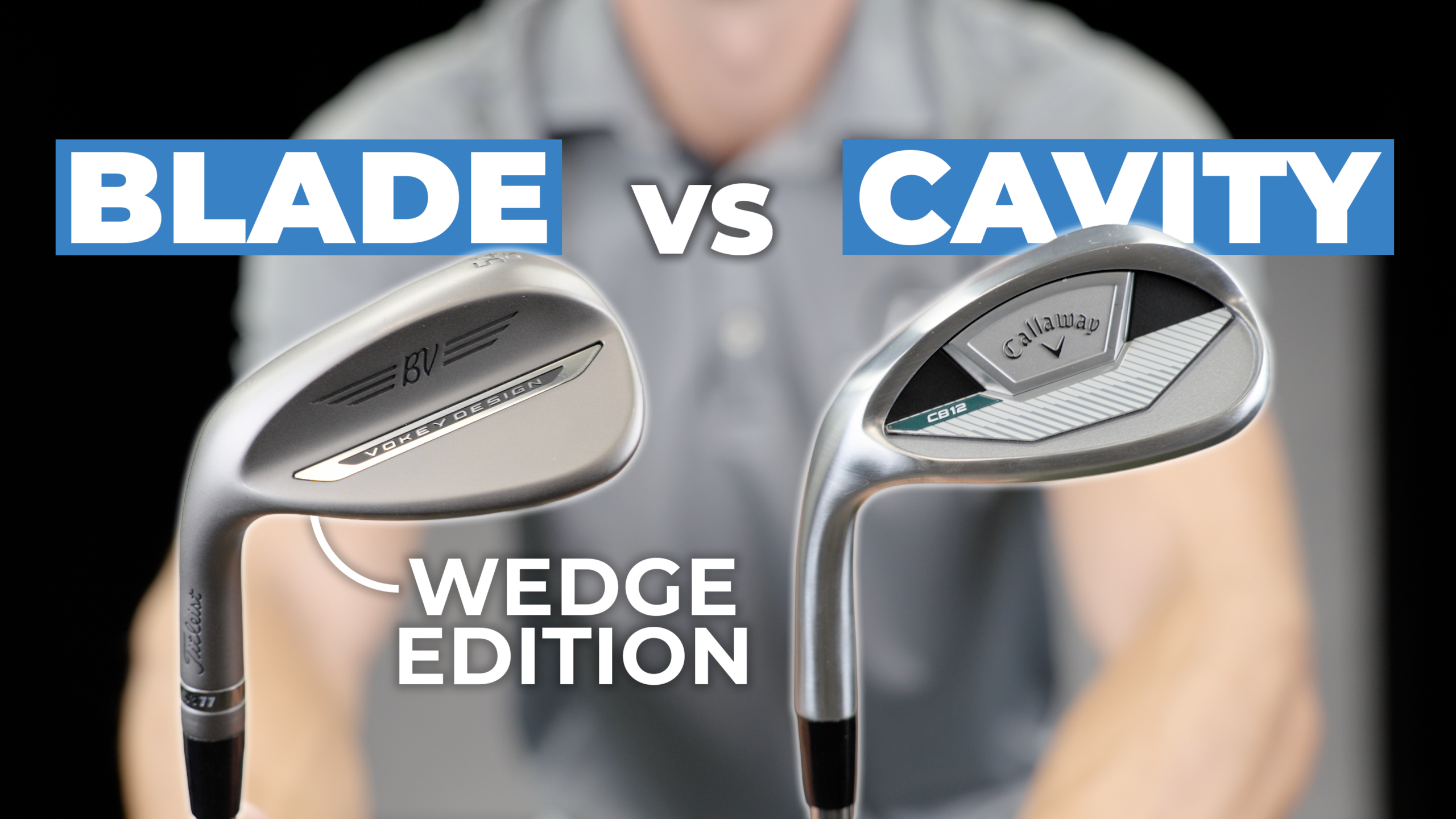
On one side was one of the most respected blade wedges in golf, the Titleist Vokey SM11 54°.

On the other was one of the most technology packed wedges on the market, the Callaway CB12 cavity back wedge.

At first glance, these clubs could not be more different.

One is compact, traditional, and designed with maximum shot making versatility in mind.

The other is larger, more forgiving, and built around helping golfers make more consistent contact.

The question was simple:

Does forgiveness matter in wedges the same way it matters in irons?

Why Most Golfers Already Play a Cavity Back Gap Wedge

Most quality club fittings already acknowledge the importance of forgiveness in scoring clubs.

When a golfer is fit into a modern game improvement or players distance iron set, most fitters will recommend a cavity back gap wedge.

Why?

Because it creates a smoother transition from the pitching wedge.

Distance gapping improves.

Confidence improves.

The club looks familiar at address.

Full swing performance remains consistent.

But what happens once we move into the sand wedge and lob wedge?

Traditionally, most golfers immediately transition back into blade wedges.

That’s simply how the industry has operated for years.

But should it?

The Results Were Clear
Our testing showed a very clear trend.

When impact quality started to vary, the cavity back wedge maintained carry distance significantly better than the blade wedge.

This was true even on shorter wedge shots.

Interestingly, launch angles varied more with the cavity back wedge, but the resulting carry distances stayed remarkably consistent.

That matters.

A lot.

Most golfers are not trying to hit a specific launch angle with their 54 degree wedge.

They’re trying to hit the ball the correct distance.

When distance control improves, confidence improves.

And confidence often leads to lower scores.

Why Better Players Still Love Blade Wedges

That doesn’t mean blade wedges are going anywhere.

Far from it.

Elite players have different priorities.

Many highly skilled golfers manipulate trajectory constantly.

They flight wedges down.

They hit them high.

They hit soft cuts.

They hit little draws.

They use trajectory and spin to create specific landing conditions.

Blade wedges continue to offer tremendous versatility for players who have the skill to take advantage of it.

In many cases, those players are willing to give up some forgiveness in exchange for maximum control.

That trade off still exists.

Technology Changes the Equation

When you compare a blade wedge and a cavity back wedge, there is much more happening than simply adding forgiveness. Even if you match:

Loft
Length
Lie angle
Shaft
Swing Weight

The Clubs are still fundamentally different. Most cavity back wedges feature:

Low centers of gravity
Wider Soles
Increased perimeter weighting
More forgiving face designs

Meanwhile, blade wedges rely heavily on mass placement through the forging or casting process to create feel, spin, and versatility.

The design goals are completely different.

And the golfer each club serves is often completely different as well.

The Bounce and Grind Conversation

One area golfers absolutely need to consider is sole design.

Many cavity back wedges require wider soles to accommodate their technology.

That often results in higher bounce designs.

For some golfers, that’s fantastic.

For others, it can create challenges.

Players with steep attack angles who play softer conditions often benefit tremendously from wide sole, high bounce designs.

The extra forgiveness through the turf can be a major advantage.

However, golfers who play firm conditions, tight lies, or hardpan surfaces may need something more versatile.

The good news is that modern cavity back wedges are improving rapidly in this area.

The Callaway CB12 we tested featured a surprisingly versatile sole design that allowed for much more shot making capability than many golfers would expect from a cavity back wedge.

This is why fitting matters.

Not all cavity backs are created equal.

Which Wedge Is Right for You?

The answer depends entirely on your game.

If you’re a highly skilled player who manipulates trajectory and spin constantly, a blade wedge may still provide the ultimate toolset.

If you’re primarily focused on making solid contact, controlling carry distance, and improving consistency around the greens, a cavity back wedge deserves serious consideration.

What our testing proved is that cavity back wedges are no longer just a beginner’s option.

Modern technology has advanced to the point where many golfers can gain meaningful performance benefits without giving up nearly as much versatility as they once did.

The only way to know for sure is to test them.

Get Fit for Your Wedges

Wedges are scoring clubs.

Small differences can have a huge impact on your performance.

Whether you’re considering a traditional blade wedge, a modern cavity back design, or a blend of both, a proper fitting can help you understand exactly what works best for your swing, your course conditions, and your scoring goals.

Book your wedge fitting with Cool Clubs and discover the ideal wedge setup for your game.

You may find that the biggest game changer in your bag isn’t your driver.

It might be your sand wedge.

Stronger Lofts: Marketing Gimmick or Real Technology?

For years, golfers have made the same argument.

“Manufacturers aren’t making clubs better. They’re just making them stronger.”

The logic seems simple enough. A modern 7 iron often has the loft of a 6 iron from ten or fifteen years ago. If the loft is stronger, of course it goes farther. Right?

At Cool Clubs, we decided to stop guessing and start testing.

Over the last several months, we’ve conducted two separate experiments designed to answer this question once and for all.

In our first test, we took the entire new Srixon ZXi iron lineup and bent every model to the exact same 7 iron loft. If loft is the only thing that matters, every club should perform essentially the same.

In our second test, Jackson compared his older Srixon 6 iron head to head against a brand new Titleist T350 7 iron with nearly identical lofts. Again, if loft is the only factor, the performance should be virtually identical.

The results told a very different story.

The Evidence Is Clear: There Is More Going On

Yes, lofts have become stronger.

But the technology behind modern irons has evolved dramatically at the same time.

One of the biggest advancements is center of gravity placement.

The lower the center of gravity can be positioned within the clubhead, and the farther it can be moved away from the shaft axis, the easier it becomes to launch the golf ball higher into the air.

Traditionally, stronger lofts would reduce launch and make it more difficult to hold greens. Modern iron design has largely overcome that challenge.

Manufacturers are now producing irons that launch higher despite having stronger lofts.

That is not marketing.

That is engineering.

Face Technology Has Changed Everything

The face of a modern iron is dramatically different from what most golfers played ten or fifteen years ago.

Today’s faces are designed to maintain ball speed across a much larger area of the clubface.

That means shots struck slightly toward the toe or heel retain more speed, more launch, and more consistency than ever before.

The result is simple.

More ball speed.

More forgiveness.

More predictable carry distances.

More consistency throughout the set.

Even when the loft is identical.

The Hidden Advantage Nobody Talks About

There is another factor most golfers overlook.

Length.

When comparing an older 6 iron to a modern distance oriented 7 iron, you’re often comparing clubs with very similar lofts but different shaft lengths.

In many cases, the modern club is approximately half an inch shorter.

Think about what that means.

You’re swinging a shorter club that is easier to control.

You’re finding the center of the face more often.

You’re launching the ball higher.

You’re producing faster ball speeds.

You’re creating more stopping power on the green.

In other words, you’re gaining distance without sacrificing control.

That is a very different outcome than simply strengthening lofts and hoping for the best.

Are Stronger Lofts Right for Everyone?

Absolutely not.

There will always be golfers who prefer traditional iron designs.

Compact shapes.

Thin toplines.

Narrow soles.

Minimal offset.

Maximum feedback.

For highly skilled players, those characteristics can provide exceptional precision and shot-making control.

There is nothing wrong with that.

But it is equally important to recognize what modern technology is accomplishing for millions of golfers.

Engineers are creating clubs that help players launch the ball higher, maintain speed across the face, generate more consistent carry distances, and stop the ball faster on the green.

For many golfers, these advancements are helping recover performance they thought was lost forever.

The Best Time Ever To Get Fit

The most important takeaway from our testing is not that stronger lofts are good or bad.

It’s that loft alone does not tell the story.

Modern golf clubs are the product of sophisticated engineering, advanced materials, face technologies, and center of gravity optimization that simply did not exist a generation ago.

The smartest minds in golf are solving problems that golfers have struggled with for decades.

The technology is real.

The data proves it.

The question is not whether modern clubs are better.

The question is whether the technology fits your swing.

That’s why there has never been a better time to get fit.

When you combine modern technology with measured data and expert fitting, you gain something every golfer is searching for:

Confidence.

Confidence in your distances.

Confidence in your ball flight.

Confidence in your equipment.

The technology is there.

Now it’s time to see it for yourself.

Check Out The Video!

We Robot Tested New Titleist GTS Fairway Metals

More Control, Better Launch, Smarter Fitting

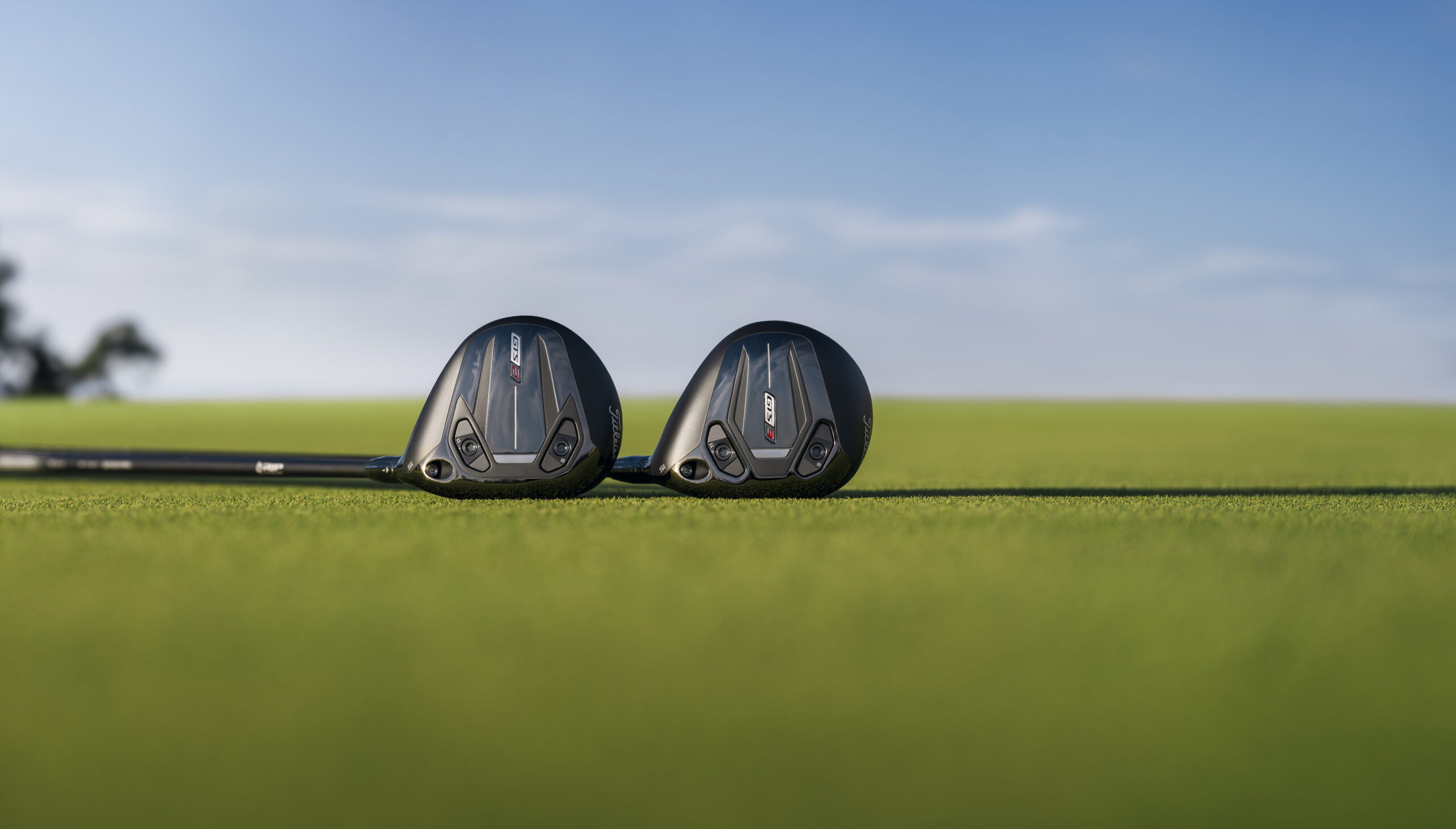
When Titleist launches a new generation of fairway woods, golfers naturally expect more distance, more ball speed, and groundbreaking technology. However, the story of the new GTS2 and GTS3 fairway woods is a little more nuanced, and perhaps more important for golfers looking to shoot lower scores.

After extensive robot testing and player evaluations, the biggest takeaway is not dramatic gains in ball speed. Instead, Titleist has focused on something that matters far more in real world performance: consistency, launch optimization, and distance control.

Better Launch Without More Spin

One of the clearest trends we observed comparing GT2 and GT3 against the new GTS2 and GTS3 was improved launch conditions.

The new designs launch slightly higher while simultaneously producing slightly less spin. That combination is difficult to achieve and highly beneficial for golfers.

What this effectively means is less spin per degree of launch with no sacrifice in peak height. Players can enjoy a higher launching flight that still maintains a penetrating trajectory and predictable carry distances.

This is not an accident.

The new head shapes appear designed to encourage golfers to see more loft at address. The visual presentation of the club inspires confidence and promotes the feeling that getting the ball airborne is easier. When golfers see loft, they tend to use loft more effectively, resulting in improved launch conditions throughout the bag.

Tour Driven Development

Much of this evolution comes directly from trends we continue to see at the highest levels of the game.

Fairway woods are playing a larger role than ever before, particularly among elite players. Higher lofted fairway woods, seven woods, and specialty fairway configurations have become increasingly common on professional tours around the world.

Titleist’s research and feedback from tour players appears to have heavily influenced the direction of the GTS line. Rather than chasing raw speed gains, the engineering effort has focused on creating more playable launch conditions and more consistent performance from a wider range of strikes.

The Biggest Win: Improved Distance Control

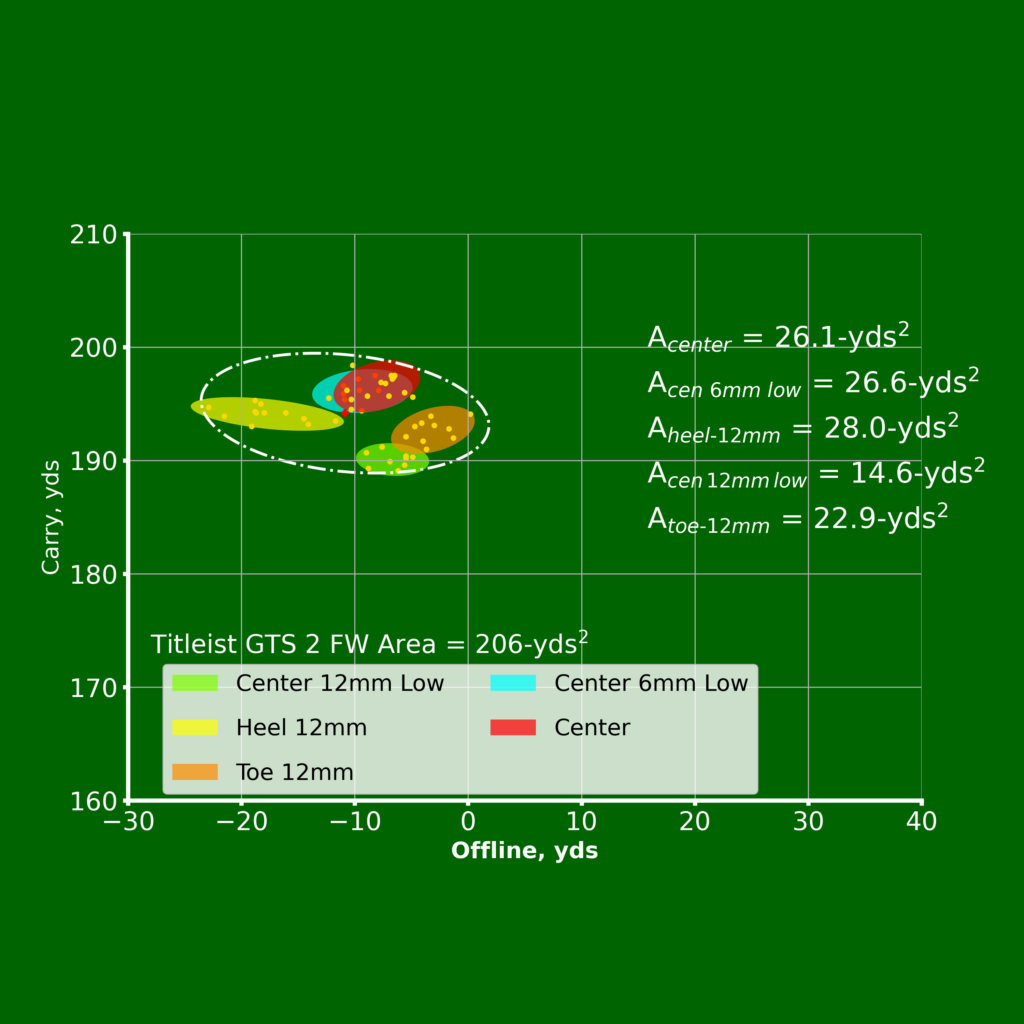
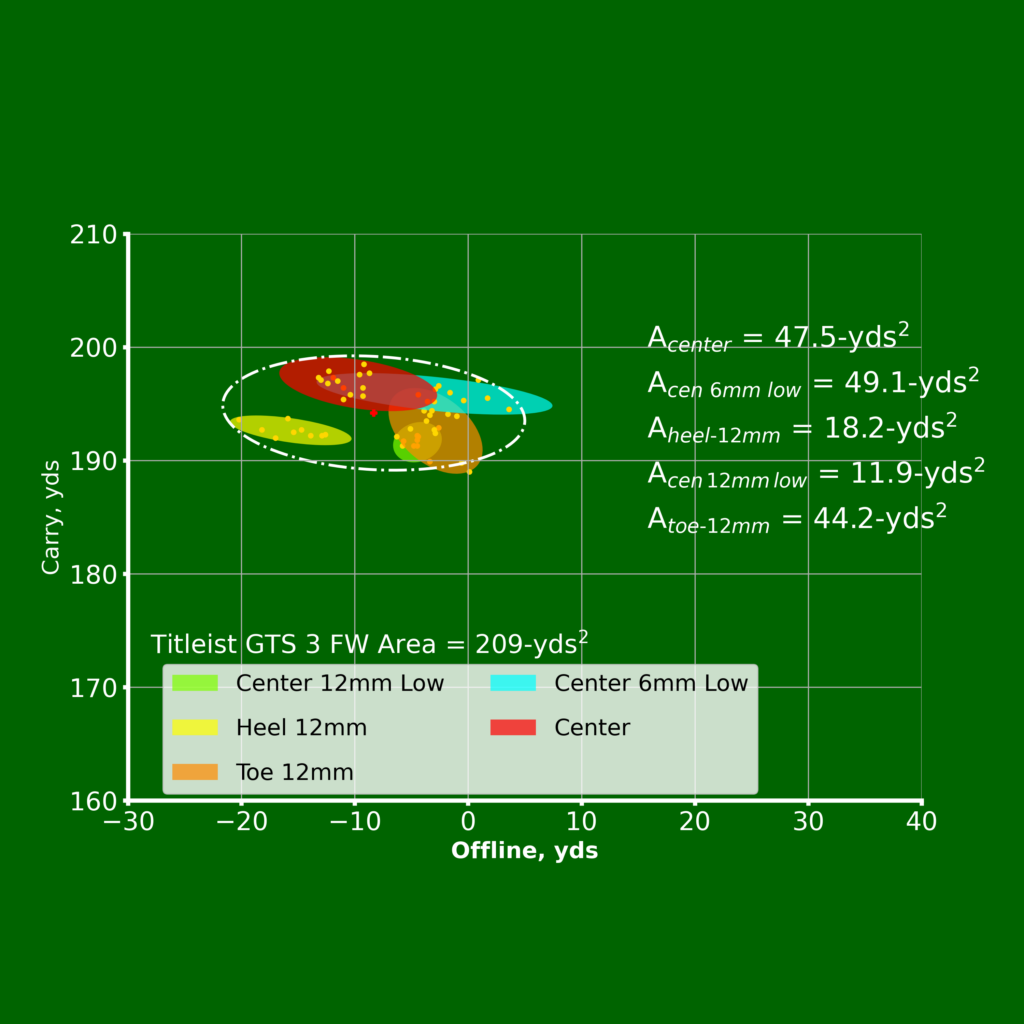
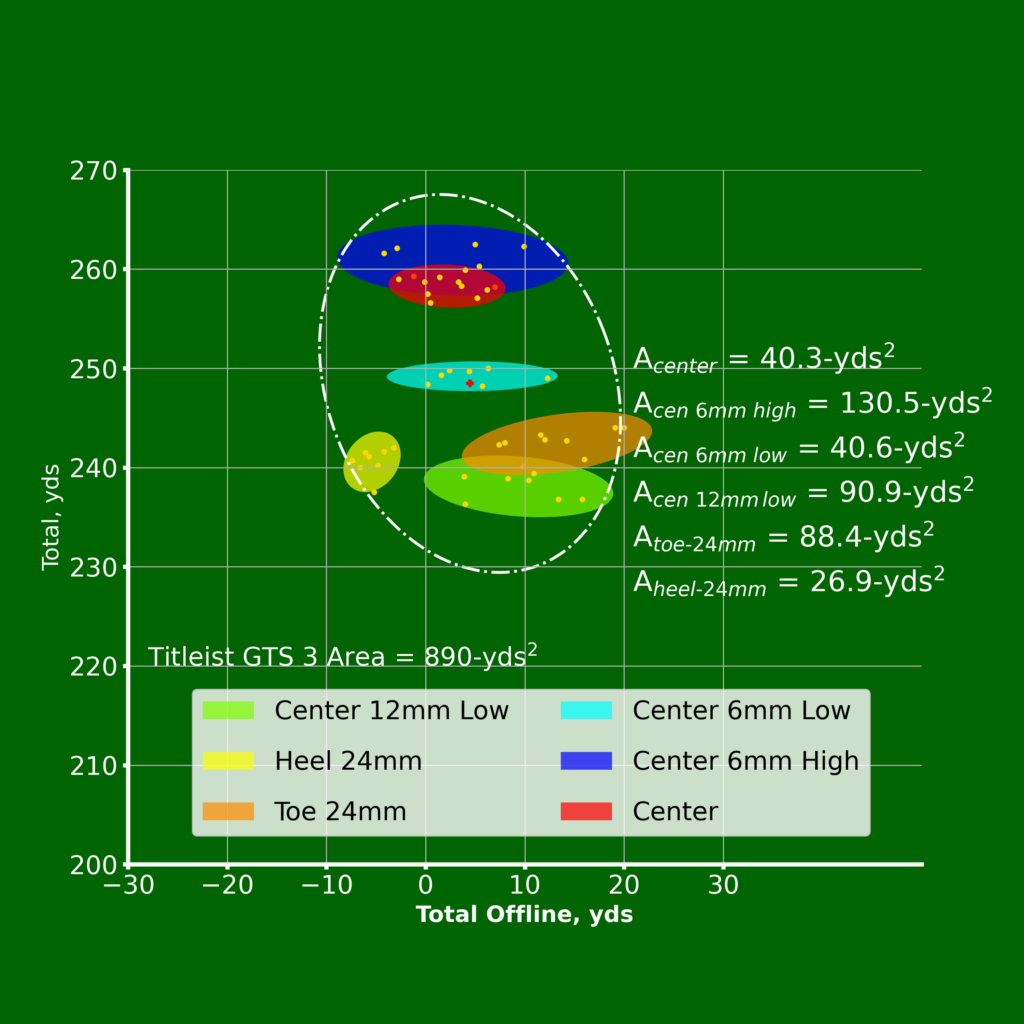
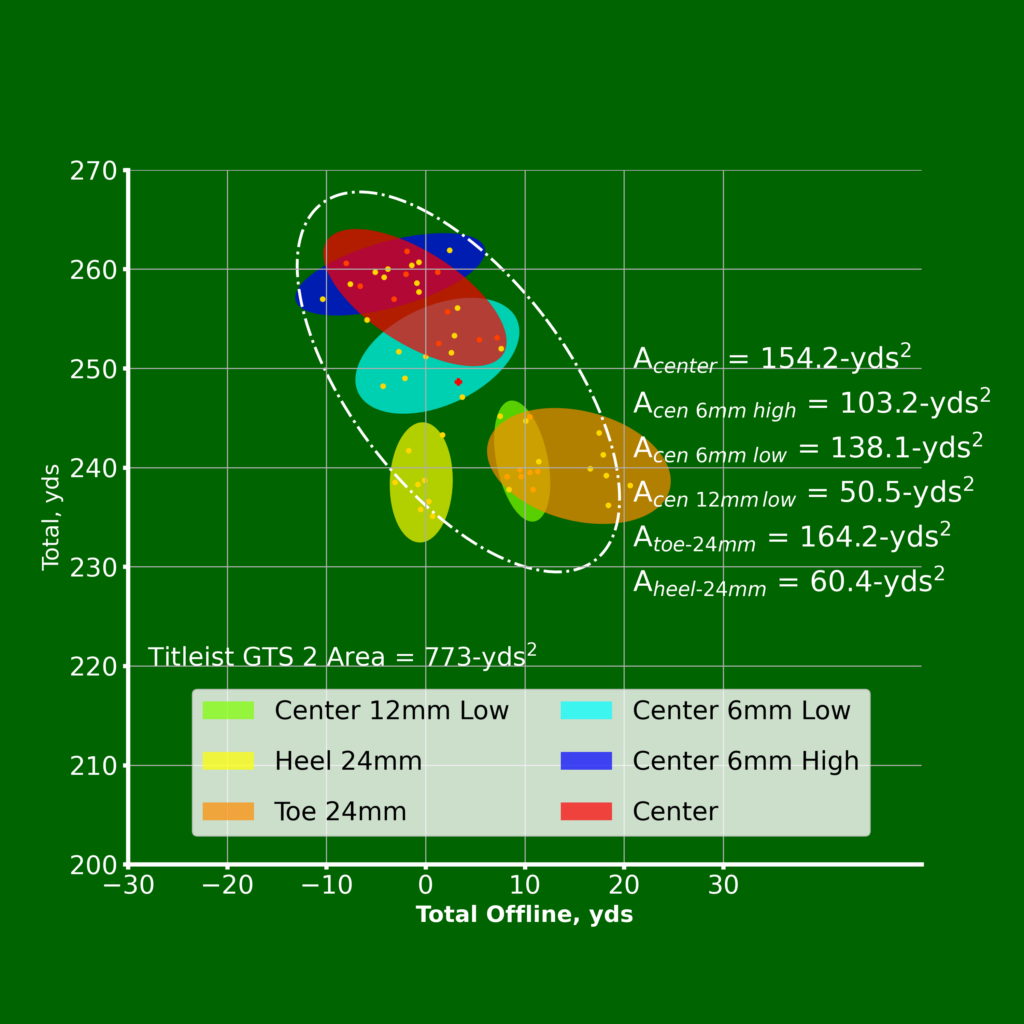
While center strike performance remains excellent, the real story emerges when impact moves away from the sweet spot.

Across nearly every impact location, front to back dispersion improved with the new models. The improvements were noticeable in heel strikes and particularly impressive on thin strikes.

Thin shots are among the most common misses for golfers using fairway woods. Traditionally, these strikes can launch low with excessive spin, producing unpredictable carry distances and significant yardage loss.

The new GTS models showed a much more controlled response.

Instead of seeing those ballooning shots that climb excessively and fall short, we observed a more penetrating flight that landed closer to the expected carry distance. The result is greater predictability and confidence whether the club is being used from the fairway or off the tee.

Simply put, golfers can expect more shots finishing where they intended.

Titleist Still Rewards Great Ball Striking

One characteristic that has always defined Titleist metalwoods is precision.

The company has never been afraid to demand quality strikes from players who consistently find the center of the face, and that philosophy remains intact.

Center strikes with the GTS models were remarkably controlled. The clubs delivered repeatable launch conditions, repeatable spin, and repeatable carry distances.

That consistency is exactly what better players look for when selecting a fairway wood.

GTS2 vs GTS3: Different Golfers, Different Needs

Beyond the performance numbers, there are meaningful design differences between the two models.

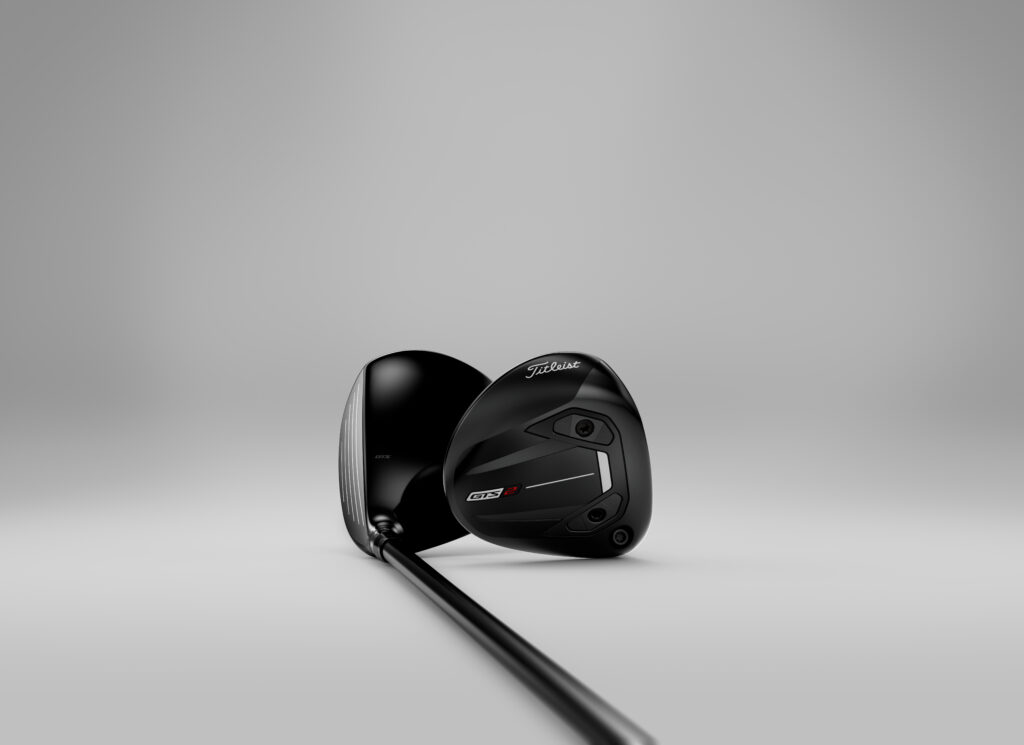
The new GTS2 features a slimmer, flatter sole design that makes it particularly appealing for players who like to sweep the ball from the turf. It sits beautifully behind the golf ball and inspires confidence when hitting from tight fairway lies.

The GTS3 retains a more traditional profile with a deeper face and a slightly more compact appearance. It continues to appeal to players who hit down on the golf ball more aggressively or primarily use their fairway wood from the tee.

Titleist has also expanded fitting opportunities with the new generation.

The addition of movable sole weights creates even greater precision during the fitting process, allowing fitters to fine tune performance more effectively than before.

Combined with the proven SureFit hosel system, golfers now have more adjustment options than ever.

The expanded loft offerings in GTS3 are particularly interesting for higher speed players experimenting with modern fairway wood setups, including seven woods and other specialty configurations that continue to gain popularity.

Why You’re Really Here: The Data

As with all new club releases, we put them to the test on our robot to see what is really improving in Golf Club Technology year over year.

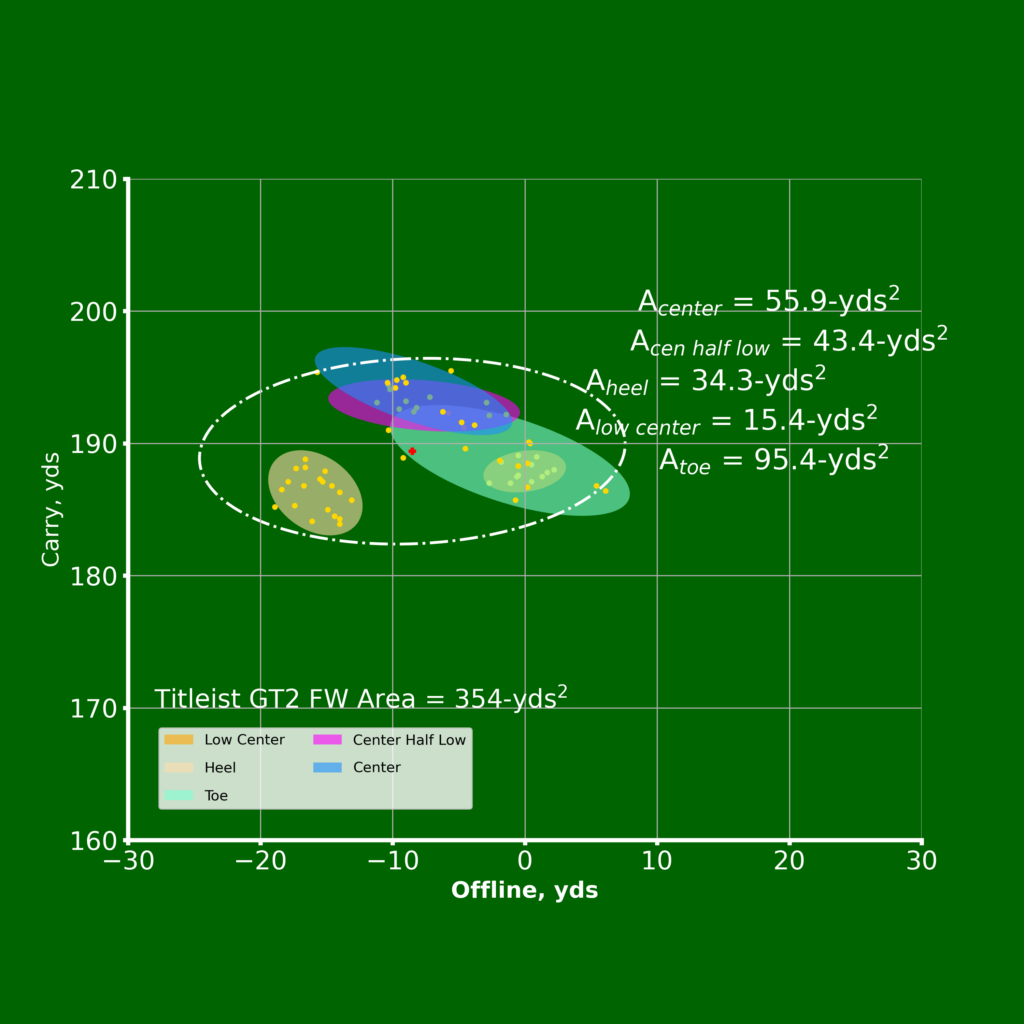
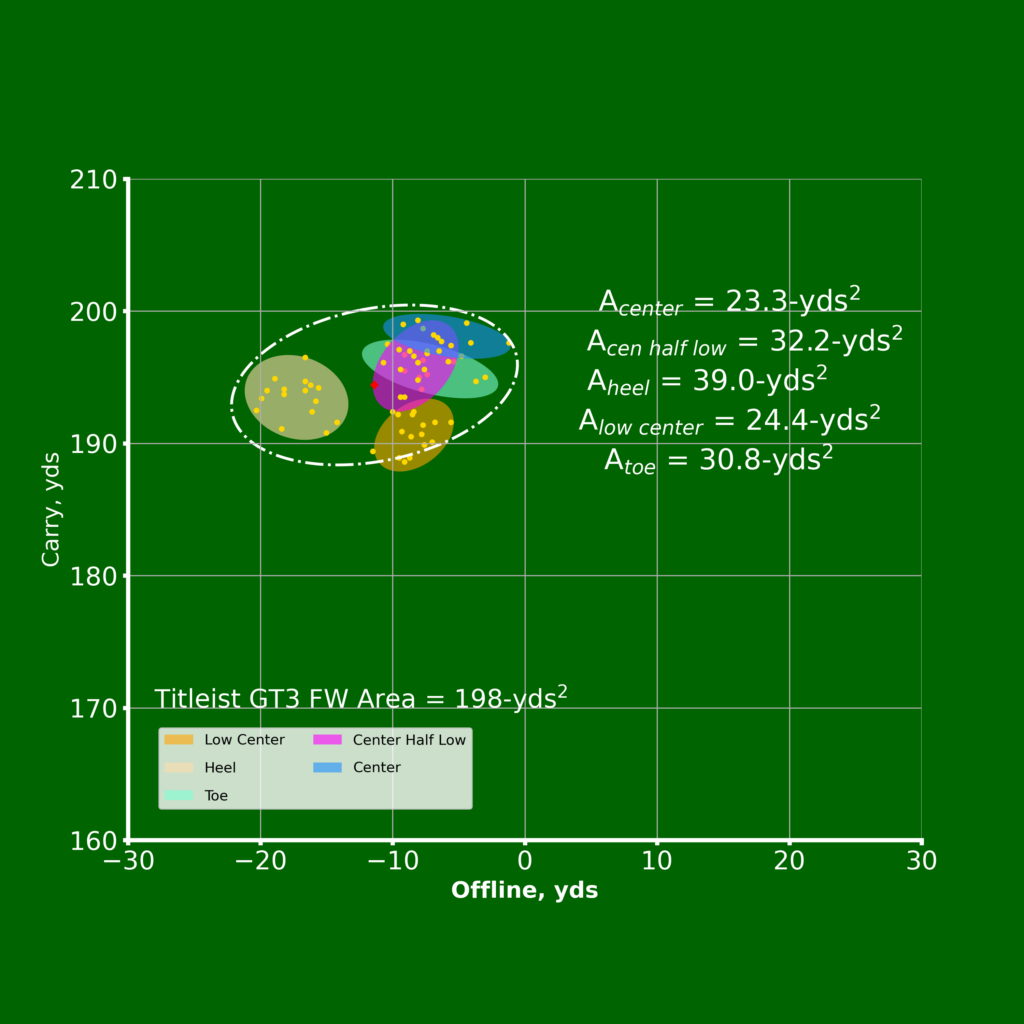
We put the new Titleist GTS Fairways Metals in a direct comparison with the older Titleist GT Model, and here are the results:

GT2 Fairway Robot Test Results

GT3 Fairway Robot Test Results

GTS2 Fairway Robot Test Results

GTS3 Fairway Robot Test Results

Final Thoughts

The new GTS2 and GTS3 fairway woods are not a revolutionary leap forward in raw speed. Two years of technology development did not suddenly unlock massive ball speed gains.

What Titleist has accomplished, however, may be more valuable.

The clubs launch a little easier. They spin a little less. They offer better distance control. They deliver tighter front to back dispersion. Most importantly, they inspire confidence through improved visuals and improved consistency.

The differences are not massive, but they are measurable.

Our robot testing confirms it.

As always, the key question is whether those differences are meaningful for your game. The only way to know is through a proper fitting.

Be sure to head over to our YouTube channel and watch the full robot review. Also check out Jackson’s fitting experience as he compares the GTS2 and GTS3 in the fitting bay and highlights the differences golfers are most likely to notice.

If you enjoy unbiased equipment testing and in-depth fitting insights, make sure to like, subscribe, and follow along for some of the best golf equipment content in the industry.

Titleist GTS Drivers Review: A Fitter’s Dream

As with every new driver release, the marketing stories arrive quickly. With the new Titleist GTS lineup, there are three major talking points.

The first is the new Split Mass Frame construction. Titleist has now transitioned the thermoform crown into a much larger body structure, allowing engineers to move weight more aggressively throughout the head. This gives the GTS lineup much more extreme CG positioning possibilities than previous generations. The clearest example of this is that all three models now feature a dual weighting system, giving fitters significantly more control over CG depth and MOI positioning.

The second major story is the new SpeedSync face technology. This face design is intended to create more consistent speed retention across the face, particularly on strikes higher in the face where many modern players miss with the driver.

Finally, the accelerated aerodynamics package smooths the edges of the driver and lifts the tail section of the head to help the club move faster through the air.

We hear marketing claims every year. What we really appreciate about the GTS drivers is that Titleist did not completely reinvent what was already a very successful lineup with GT. Instead, they refined it, expanded fitting adjustability, and improved specific performance areas that mattered.

GTS4 Might Be the Story of the Year

The GTS4 could quietly become one of the biggest driver stories of 2026.

Moving away from the smaller, more demanding low spin designs of previous generations, the GTS4 now takes on a shape much closer to the old TSi3 style profile. The result is a driver that still maintains a low spin identity while becoming dramatically more forgiving.

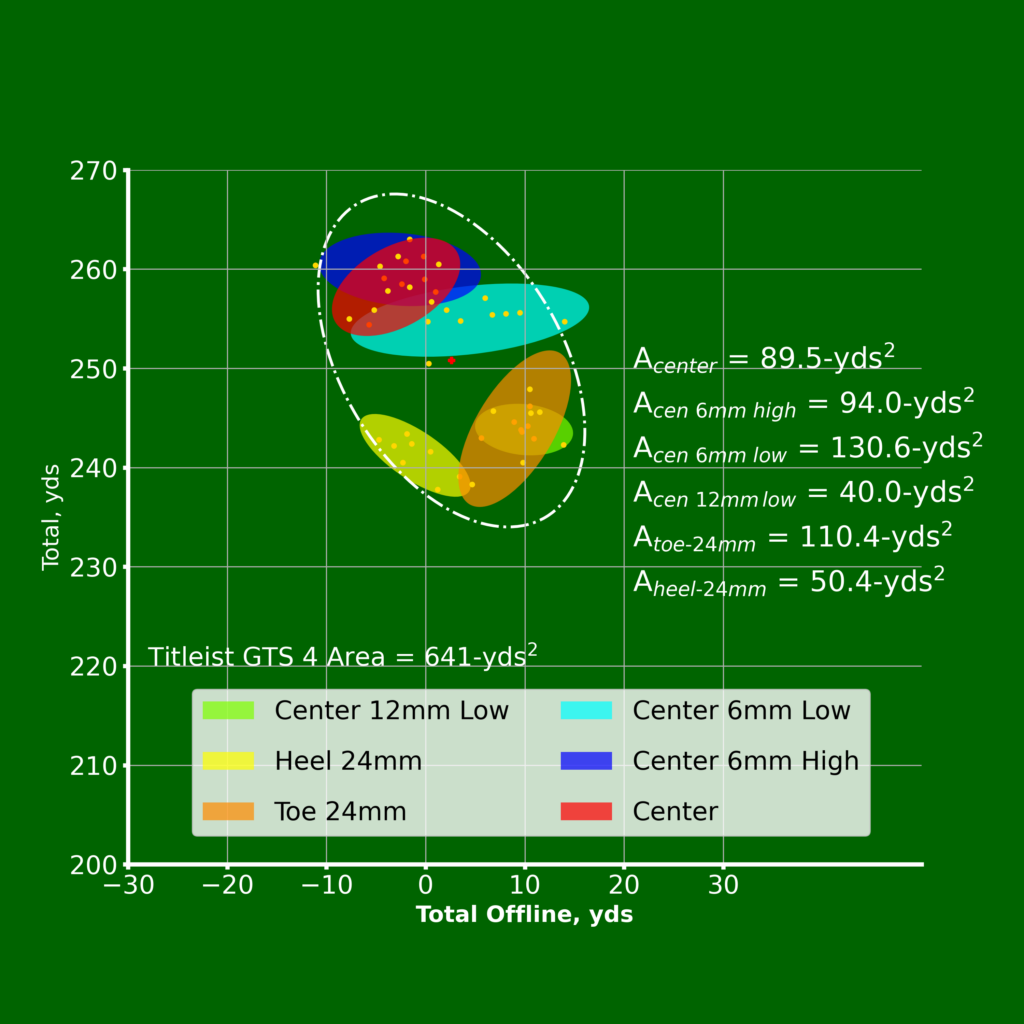
This is where we saw some of the biggest improvements in our testing. The dispersion charts tighten considerably, making GTS4 a much more playable low spin option for a wider range of golfers. It still gives better players the ability to shape shots, but now with forgiveness levels that bring it much closer to the rest of the GTS family.

For tour players and stronger golfers looking for low spin without sacrificing stability, this could become one of the most important heads in the lineup.

GTS3 Adds Speed and Stability

The GTS3 continues to sit in that ideal middle ground between workability and forgiveness.

With the improved aerodynamics and the expanded dual weighting system, fitters now have the ability to aft weight the GTS3 and create more forgiveness than prior generations ever allowed. In our 95 mph robot testing, we saw noticeable improvements in centerline consistency, especially on heel and toe strikes.

This is important because GTS3 players often prioritize control and shaping ability first. Now they are getting additional forgiveness without sacrificing that identity.

The combination of faster aerodynamics and improved weighting flexibility makes GTS3 a very complete modern driver.

GTS2 Continues to Offer Forgiveness

The GT2 has been one of our best-selling drivers for the last two years, so improving it was never going to be easy.

What we found with the GTS2 is that the new dual weighting system gives fitters the ability to create truly deep CG configurations for maximum forgiveness.

At the same time, when the weight is positioned forward, the driver actually becomes slightly more penetrating than the previous generation while still improving stability.

Toe misses are noticeably better and resist hooking more effectively, while heel strikes maintain a more consistent launch pattern.

From a raw data perspective, all three GTS models generally launched about one degree higher in our testing while maintaining very similar spin rates. In the GTS2 specifically, spin actually reduced slightly.

That combination of higher launch with stable or lower spin is extremely beneficial for many golfers. In our 95 mph robot testing, carry distance increased slightly, largely because launch conditions became more optimized.

The Real Story Is Fitting

The biggest takeaway with the GTS lineup is not one single technology. It is fitting flexibility.

Every driver now features a dual weight system combined with the SureFit hosel. With proper weight kits on site, fitters can now optimize:

• CG location

• MOI balance

• Launch and spin windows

• Face closure rates

• Shot shape tendencies

• Overall forgiveness profiles

Finding the perfect combination of hosel setting, CG placement, and MOI balance has never been more important.

Titleist had a difficult task ahead of them. The GT lineup was already extremely good. Instead of chasing radical redesigns, they refined the package, improved fitting versatility, and brought the lineup into a new era of adjustability.

In our opinion, this new GTS lineup is a fitter’s dream.

The challenge for golfers in 2026 is that every major manufacturer now has an excellent driver lineup. There are no bad products anymore. Every driver has its own nuances, and every golfer needs a different balance of speed, launch, spin, forgiveness, and shot shape.

That means fitting matters more than ever.

Book your Cool Clubs fitting today and find out which GTS setup is actually right for your game.

The Truth About Hybrids

Our First Ever Hybrid Test Reveals What Really Matters

For the first time, we’ve taken a full lineup of ‘4 hybrids (21 to 23 degrees)’ from every major manufacturer and tested them under the same conditions.

This is the start of our hybrid testing, and even at our first test speed, the results are already telling a very clear story.

We tested at 85 mph club speed, which fits directly into our standardized testing matrix across the bag. Driver at 95, fairway at 90, hybrid at 85, and irons at 80. This allows us to evaluate performance in a way that actually reflects how a real player swings through the set.

Not All Hybrids Are the Same

One of the biggest misconceptions in golf is that clubs labeled the same must perform the same.

That is not the case here.

Across the category, 4 hybrids ranged from 21 to 23 degrees of loft, which immediately introduces differences in launch, spin, and distance. So while they sit in the same slot in the bag, they are not delivering the same ball flight.

Distance Is Closer Than You Think

When optimized for this speed, the total distance difference between the longest and shortest hybrid in the test was only about seven yards.

The standout distance performers included:
– Ping G440
– Titleist GT2 and GT3
– Quantum Max

But the key takeaway is simple. Distance alone isn’t enough to separate these clubs.

Spin and Flight Tell a Bigger Story

If you look at raw spin numbers, the Titleist GT2 and GT3 produced the lowest spin. These are your more penetrating, lower flight hybrids.

However, when we look deeper at spin relative to launch “SpinLaunch”, a different standout appears.

The Quantum Max delivered the lowest spin per degree of launch. It launches higher than most but does not add excessive spin, creating a very efficient high flight window.

This is an important distinction. High launch with controlled spin is often what players need to maximize carry and stopping ability.

Stopping Power Comes From Descent

Most players rely on hybrids to land softly into greens. From a performance standpoint that comes down to land angle.

The best performers for stopping power in this test were:
– Cobra OPTM
– Qi4D Max

These produced the steepest descent angles, making them strong options for players who need their hybrid to hold greens consistently.

Dispersion Is Where the Real Differences Show Up

While distance and spin numbers are important, dispersion tells you what actually happens on the golf course.

The most consistent hybrids in this test in terms of dispersion were:
– Qi4D Max
– Ping G440

These produced the tightest overall groupings and the most predictable outcomes.

At the other end, we saw much wider dispersion patterns from certain heads, especially when the strike moved away from the center. (See Data Below)

Strike Location Change Everything

One of the most important insights from this test is how each hybrid performs on low face strikes.

This is where the separation between clubs becomes very clear.

When you isolate center strikes, several heads perform extremely well, including:
– Qi4D
– Quantum Max
– GT2 and GT3

But once the impact drops low on the face, dispersion increases dramatically in some models, while others remain far more stable.

This highlights a key point for some players.

Not all forgiveness is created equally. Some hybrids are significantly better at protecting ball speed and direction on thin strikes.

The Takeaway

Every hybrid in this test does something well. Some are built for
– Lower spin and penetrating flight
– Higher launch efficiency
– Maximum stopping power
– Tight dispersion and consistency

But none of them do everything the same. The difference is not in the perfect shot, it is in what happens when you miss it.

Explore the Full Data

This is just the start of our hybrid testing.

We have included the full dispersion charts below for each model so you can see exactly how they compare.

If you are choosing a hybrid, the goal is not to find the longest one.

It is to find the one that performs best for your strike pattern and your ball flight needs.

The Dispersion Charts

Book Your Long Game Fitting Today

Comparing Two Oddly Similar Golf Clubs…

Mizuno Pro M15 vs Ping i540

Two of the best irons in the world… but what actually separates them?
Off the back of huge engagement on our YouTube Channel, one questions kept coming up from the Cool Clubs Community:
How do the Mizuno Pro M15 and Ping i540 really compare?
At first glance, this looks like a simple comparison, But once we dug into the data, it turned into something much more interesting.

On Paper, They Are Almost Identical

When you look at the manufacturer specs, these two irons are nearly twins.

– Similar loft and lie packages
– Very similar blade length from heel to toe
– Comparable top-line thickness
– Nearly matching offset numbers

Even when we moved beyond spec sheets and into 3D scanning, the story stayed the same.

From a shape and geometry standpoint, these clubs live in the same category.

Interestingly, while the Ping i540 may look slightly larger to the eye, our scans show that the Mizuno actually has a slightly larger sole footprint. The Ping reduces its effective footprint through camber and shaping in specific areas, rather than outright size.

Then one number jumped out.

The One Spec Difference That Matters… Or Does It?

Using our 3D measurement method, we found:

Ping i540 has 5.8 degrees more bounce than the Mizuno Pro M15

That is a meaningful difference.
Naturally, you might expect that to create a clear separation in performance. So we tested it.

Robot Testing: Where Things Get Interesting

We put both irons through our robot testing at 80 miles per hour, looking at performance across multiple strike locations.

Off-Center Performance

The first thing that stood out: They are incredibly similar.

Both irons produced tight dispersion patterns across the face.

– M15 total dispersion area: 57 Yards Squared
– i540 total dispersion area: 72 Yards Squared

Yes, the Mizuno is slight tighter overall, but both are exceptionally controlled.

Center Strike Differences

When we isolated center strikes, subtle differences began to appear.

– Ping i540 launched higher
– Ping i540 spun slightly less
– Mizuno produced more RPM per degree of launch

But here is the key point: They still delivered almost identical peak height and landing angle.

So while the delivery is different, the end result is effectively the same.

Distance: Not the Deciding Factor

We then looked at carry distance.

– Mizuno Pro M15 was about 2.5 yards longer

That is measurable, but not meaningful in a fitting context. Which raises a bigger question:

Are golfers really chasing distance in irons… or control?

So What Actually Separates Them?

After all the data, testing, and analysis, here is the truth:

– It is not loft
– It is not shape
– It is not forgiveness
– It is not distance
– It is not even ball flight in a meaningful way

These two irons are far closer than most golfers would ever expect.

Even the 5.8 degrees of additional bounce in the Ping does not create a clear winner. It simply means that they will interact with turf differently depending on your delivery.

Taking It One Step Further

The robot gave us an incredible amount of insight, but numbers alone never tell the full story.

So we took this one step further.

We brought both irons into the Cool Clubs hitting bay to see how they perform in the real world, with real swings, and real delivery differences.

Because ultimately, that is where the separation happens.

Click here to watch the full YouTube deep dive and see these two irons go head to head

The Real Answer

This is exactly why our community has been so interested in this comparison.

Because when two irons are this close, there is only one way to separate them:

A proper fitting.

The right answer is not which iron is better.

The right answer is: Which iron is better for you.

Ready to Find Out?

If you are serious about your iron performance, guessing is not good enough.

Book your Cool Clubs iron fitting today and let the data decide.